

















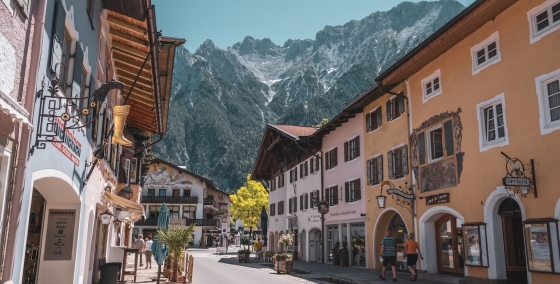
 The 10 most beautiful towns in Germany
Explore Germany's hidden gems with our guide to 10 stunning cities beyond Berlin. Discover historic towns, unique culture, and cozy atmospheres."
Average temperatures, rainfall, sunshine and the best time to visit Tangermünde.
 –
–
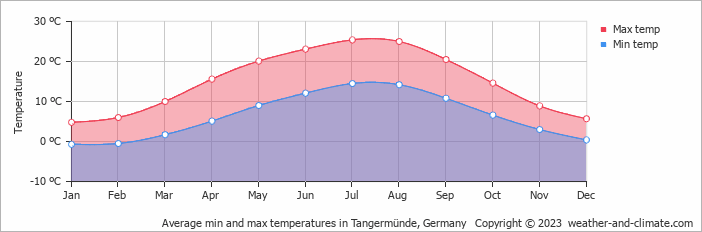
The climate in Tangermünde, Saxony-Anhalt, Germany, is marked by large temperature swings across the seasons, ranging from 25°C (77°F) in July to 5°C (41°F) in January.
Tangermünde sees a moderate amount of rain/snowfall, totalling around 685 mm (27 in) per year. It experiences warm summers and cold winters, creating some seasonal variation. The most sunshine falls in June, with an average of 7.7 hours of daily sunshine.
Pick a month to see the average temperature, rainfall and sunshine in Tangermünde - and find the best time to visit.
In Tangermünde, temperatures differ significantly between summer and winter months. Average maximum daytime temperatures range from a comfortable 25°C (77°F) in July, the warmest time of the year, to a chilly 5°C (41°F) during cooler months like January.
At night, you can expect temperatures ranging from 15°C (59°F) in July to around -1°C (30°F) during January.
Check out our detailed temperature page for more information.
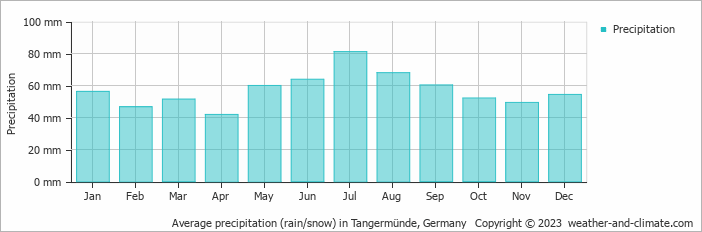
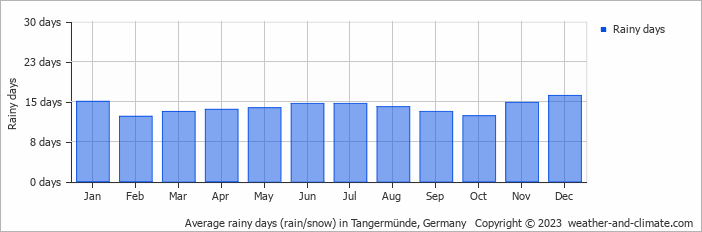
On average, Tangermünde receives a reasonable amount of rain/snowfall, with an annual precipitation of 685 mm (27 in). While rainfall varies throughout the year, each season offers its own charm. July brings wetter days averaging 81 mm (3.2 in) of precipitation, spread over 15 rainy days.
In contrast, the driest month April experiences a drier climate, with about 42 mm (1.7 in) of rainfall spread across 14 rainy days. For more details, please visit our Tangermünde Precipitation page.
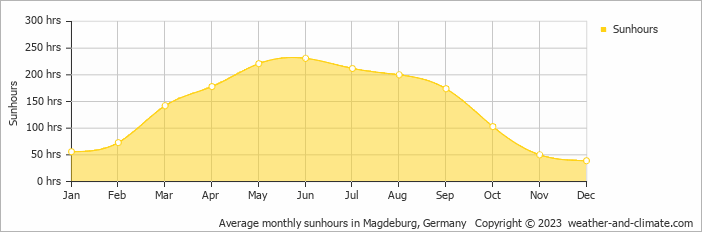
Seasonal changes in sunshine hours are quite dramatic in Tangermünde. While June receives considerable daily sunshine with up to 7.7 hours, December marks the darkest time of the year, where sunshine is scarce with only 1.3 hours of sunlight per day.
Visit our detailed sunshine hours page for more information.
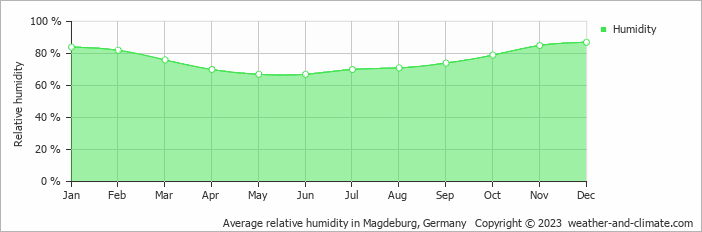
The relative humidity is high throughout the year in Tangermünde.
The city experiences its highest humidity in December, reaching 87%. In May, the humidity drops to its lowest level at 67%. What does this mean? Read our detailed page on humidity levels for further details.
Monthly ratings reflect general weather comfort, based on daytime temperature and rainfall. Swimming and winter conditions are highlighted separately where relevant.
May, June, July, August and September typically offer the most optimal weather in Tangermünde. In contrast, January, February, March, November and December tend to have less optimal conditions. Tangermünde has warm summers and cold winters.
Daytime highs range from 5°C (41°F) in January to 25°C (77°F) in July. Nighttime lows range from -1°C (30°F) to 15°C (59°F). Temperatures vary considerably through the year.
Annual rainfall is around 685 mm (27 in). July is the wettest month with 81 mm (3.2 in), while April is the driest with 42 mm (1.7 in).
Tangermünde receives around 1,679 hours of sunshine per year. June is the sunniest month with 231 hours, while December is the cloudiest with just 39 hours.
Tangermünde is highlighted - select any city to see its climate.
Where to go in October - average daytime high across popular destinations.
Düsseldorf 15°C (59°F) Cologne15°C (59°F) Hamburg14°C (57°F) Hanover15°C (59°F) Munich15°C (59°F) Berlin15°C (59°F) Binz14°C (57°F) Winterberg13°C (55°F)
 Need travel inspiration? Check out our bucket list articles and be inspired.
The 10 most beautiful towns in Germany
Explore Germany's hidden gems with our guide to 10 stunning cities beyond Berlin. Discover historic towns, unique culture, and cozy atmospheres."
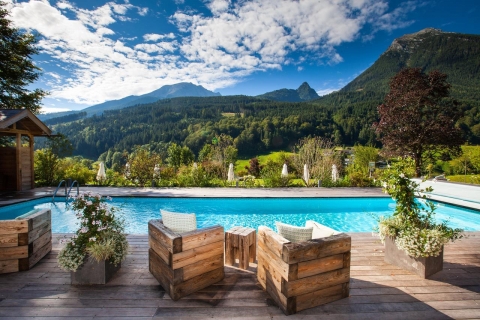 The dreamlike scenery of the German Alps
Nature in the most south-eastern part of Germany is impressive. The German Alps, with their diversity of landscapes, are an ideal destination for a wonderful holiday in nature.
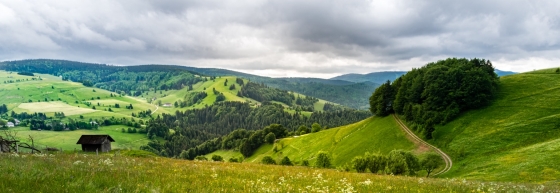 Discover Germany's Black Forest
Immerse yourself in nature and enjoy sustainable tourism practices in Germany's Black Forest. Hike, do yoga, and savor local organic cuisine and beer.
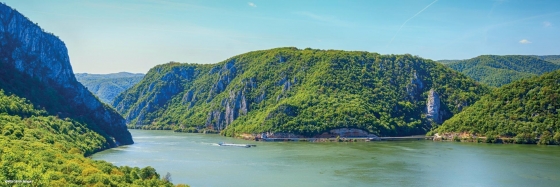
 Cycle the Danube trail
The Danube cycle route is one of the most popular cycling routes in Europe, and rightly so, because it is a varied route that is interesting both in terms of culture and nature.