Reynosa Weather & Climate: Best Time to Visit
Average temperatures, rainfall, sunshine and the best time to visit Reynosa.
Climate overview of Reynosa
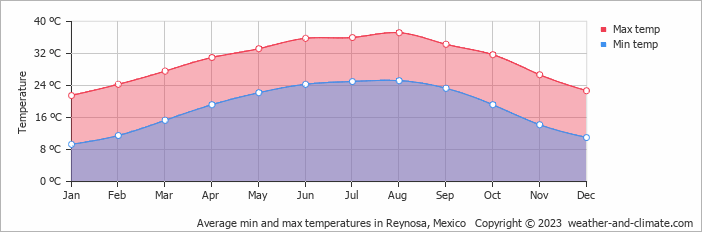
Reynosa, Tamaulipas, Mexico, sees big temperature differences between seasons, with August peaking at 37°C (99°F) and January dropping to 22°C (72°F).
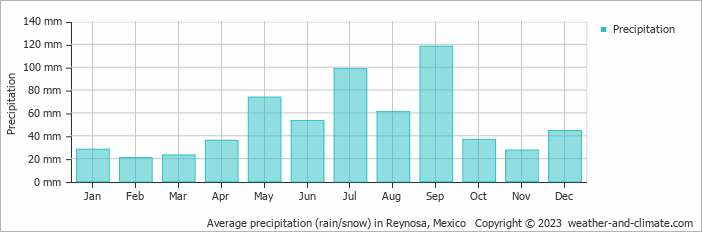
With around 621 mm (24 in) of annual rainfall, the city has moderate precipitation levels. September is the wettest month and February the driest. It also has two distinct dry seasons, January to April and October to November, with very hot summers and pleasant winters.
Reynosa Weather by Month
Pick a month to see the average temperature, rainfall and sunshine in Reynosa - and find the best time to visit.
Monthly Temperature in Reynosa
Visitors to Reynosa can expect significant temperature changes throughout the year. Typically, average maximum daytime temperatures range from a very hot 37°C (99°F) in August to a pleasant 22°C (72°F) in the coolest month, January.
Nights vary from 25°C (77°F) in August to around 9°C (48°F) during the colder months.
Check out our detailed temperature page for more information.
Temperature ranges by month
Rainfall in Reynosa
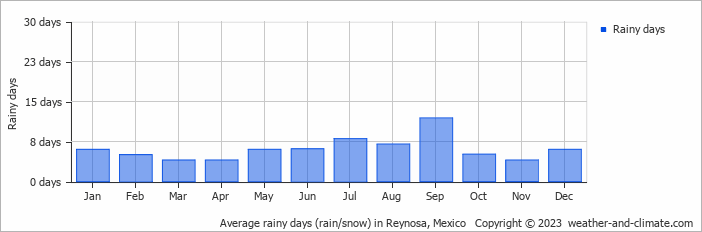
Generally, Reynosa experiences moderate precipitation patterns, averaging 621 mm (24 in) yearly. The climate in Reynosa shows significant variation throughout the year. Expect high rainfall in September, the wettest month, with an average of 118 mm (4.6 in) of precipitation over 12 rainy days.
In contrast, the driest month February offers drier and sunnier days, with around 21 mm (0.8 in) of rainfall over 5 rainy days. For more details, please visit our Reynosa Precipitation page.
The mean monthly precipitation over the year, including rain, hail, and snow
The average number of days each month with precipitation
Best Time to Visit Reynosa
Monthly ratings reflect general weather comfort, based on daytime temperature and rainfall. Swimming and winter conditions are highlighted separately where relevant.
- Best overall: January, February, March, November and December
- Warmest weather: June, July and August
- Wettest months: May, June, July, August and September, when rainfall is highest.
- Seasonal pattern: Two distinct dry seasons, January to April and October to November, with very hot summers and pleasant winters
Frequently asked questions about the climate in Reynosa
What is the best time to visit Reynosa?
January, February, March, November and December typically offer the most optimal weather in Reynosa. In contrast, June, July, August and September tend to have less optimal conditions. Reynosa has two distinct dry seasons, January to April and October to November, with very hot summers and pleasant winters.
What temperatures can I expect in Reynosa?
Daytime highs range from 22°C (72°F) in January to 37°C (99°F) in August. Nighttime lows range from 9°C (48°F) to 25°C (77°F). Temperatures vary considerably through the year.
How much rain does Reynosa get?
Annual rainfall is around 621 mm (24 in). September is the wettest month with 118 mm (4.6 in), while February is the driest with 21 mm (0.8 in).
Reynosa 3-Day Forecast
Reynosa on the map
Reynosa is highlighted - select any city to see its climate.
Popular this month
Where to go in August - average daytime high across popular destinations.
 Puerto Peñasco
 35°C (95°F) Los Cabos34°C (93°F) Playa del Carmen
 31°C (88°F) Tulum31°C (88°F) Cancún
 31°C (88°F) Puerto Vallarta
 30°C (86°F) San Miguel de Allende28°C (82°F) Mexico City23°C (73°F)















Bucket list
Need travel inspiration? Check out our bucket list articles and be inspired.
Explore the Majestic Copper Canyons of Mexico
Explore the vast Copper Canyons in Chihuahua, Mexico—larger than the Grand Canyon. Discover scenic train rides, hikes, and the Tarahumara people.
These are the most beautiful Mayan ruins and Mayan temples in Mexico
Mexico is a destination where you can immerse yourself in ancient cultures and civilizations. In this article we have listed our favorite Mayan ruins.
Tips, to-do's and nicest restaurants in Mexico City
Mexico City, one of the most famous and notorious cities of the world. The best time to visit is between March and May, but it can be visited year round.
Zihuatanejo: A Pacific paradise with beautiful beaches
Zihuatanejo has some of Mexico's top beaches. Unlike other off-the-beaten-path destinations in Mexico, Zihua is very accessible and sustainable.