

















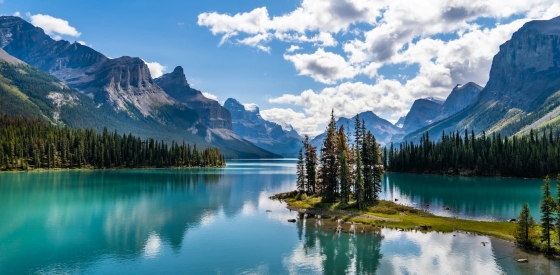
 The 5 most beautiful lakes in Canada
Explore Canada's stunning lakes: Lake Louise, Lake Superior, Maligne Lake, Emerald Lake, and Lake Okanagan, each offering unique beauty and activities.
To truly understand a climate, we must look at its sunshine. This page shows the total number of hours of direct sunlight per month and the average hours per day in Niagara Falls, Ontario, Canada. This average is based on long-term data collected between 1990 and 2020.
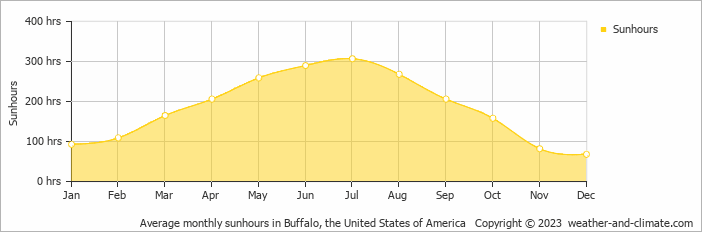
Those who love seasonal contrasts will appreciate Niagara Falls. Expect long, bright days with 307 hours in July and darker periods with just 68 hours in December. The total annual amount of sun is 2211 hours.
For those who appreciate different seasons, Niagara Falls serves as an ideal destination. Expect longer, more sun-filled days in July with an average of 10.2 hours of sunshine daily, and embrace the darker days in December, offering only 2.3 hours of daily sunlight.
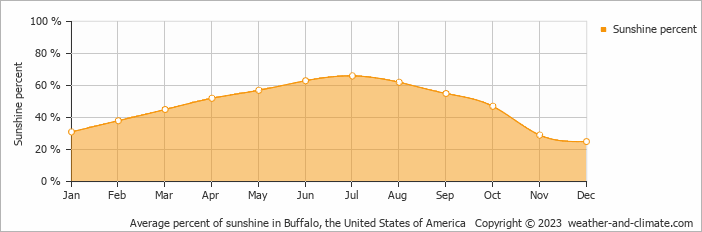
On average the sun shines 66% of the time during the day in July, the highest percentage of any month. December has the lowest percentage at 25%.
Niagara Falls enjoys an average of 2211 hours of sunshine annually. Let’s compare this with some popular tourist destinations:
Athens, Greece, enjoys 2769 hours of sunshine each year, making it one of the sunniest destinations in the Mediterranean region.
In contrast, Tromsø , Norway, receives only about 1270 hours of sunshine per year, known for the polar night with no sunlight for weeks during winter.
Beijing, China, has 2505 hours of sunshine annually, with clear, sunny days in winter.
Melbourne, Australia, has 2380 hours of sunshine annually, with its famous “four seasons in a day” weather pattern.
October, Niagara Falls’s wettest month, receives 90 mm (3.5 in) of rainfall and has a maximum daytime temperature of 15°C (59°F). During the driest month March you can expect a temperature of 6°C (43°F).
For more detailed insights into the city’s temperatures, check out our Temperature page. To explore more about precipitation patterns, visit our Niagara Falls Precipitation page.
Pick a month to see the average temperature, rainfall and sunshine in Niagara Falls - and find the best time to visit.
Temperature Rainfall Sunshine Humidity
See the full Niagara Falls climate overview or explore weather in Canada.
Where to go in September - average daytime high across popular destinations.
Toronto 22°C (72°F) Niagara Falls23°C (73°F) Montréal
 22°C (72°F) Ottawa22°C (72°F) Quebec City
 20°C (68°F) Vancouver19°C (66°F) Calgary19°C (66°F) Whistler15°C (59°F)
 Need travel inspiration? Check out our bucket list articles and be inspired.
The 5 most beautiful lakes in Canada
Explore Canada's stunning lakes: Lake Louise, Lake Superior, Maligne Lake, Emerald Lake, and Lake Okanagan, each offering unique beauty and activities.
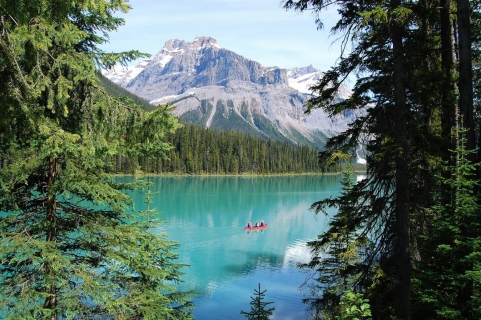 Canada in September: Where Is the Best Weather?
Compare September weather in Toronto, Montreal, Vancouver, Quebec City and Osoyoos to find Canada's warmest, driest and sunniest destinations.
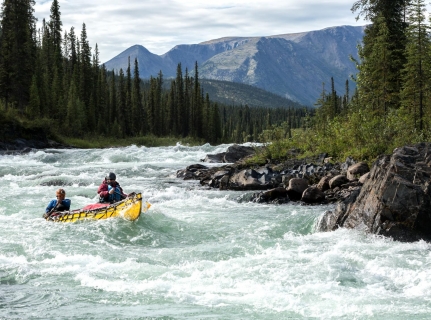 Canoeing the south Nahannii
The South Nahanni in the northwest of Canada is one of the most impressive wilderness rivers in the world. Canoeing the south Nahanni is something you must add to your bucket list.
 See Polar Bears in Churchill Canada
Thousands of bears gather at the small town of Churchill. In the evening the northern lights give a light show against the dark evening sky. An unforgettable experience.