













 The 10 best wildlife viewing sites in Kenya
Explore Kenya's top 10 safari parks in this guide, featuring the Maasai Mara, Amboseli, and more, for a spectacular wildlife adventure
Average temperatures, rainfall, sunshine and the best time to visit Kitale.
 –
–
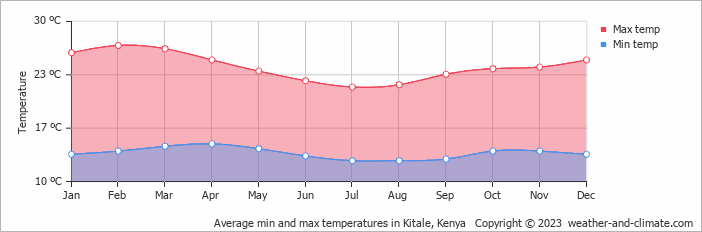
The climate in Kitale, Mount Elgon National Park, Kenya, is remarkably consistent, with temperatures year-round averaging 24°C (75°F). The warmest month is February at 27°C (81°F), and the coolest is July at 22°C (72°F).
The city has a wet climate, receiving around 1877 mm (74 in) of rainfall per year. Despite the high annual total, it has a distinct rainy season from April to October. August is the wettest month. Sunshine peaks in January, when the city sees around 9.3 hours of sunshine per day.
Pick a month to see the average temperature, rainfall and sunshine in Kitale - and find the best time to visit.
In Kitale temperatures are generally consistent throughout the year. On average, daytime temperatures range from a comfortable 27°C (81°F) in February to a pleasant 22°C (72°F) in July.
Nighttime temperatures range from 15°C (59°F) in February to 13°C (55°F) in July.
Check out our detailed temperature page for more information.
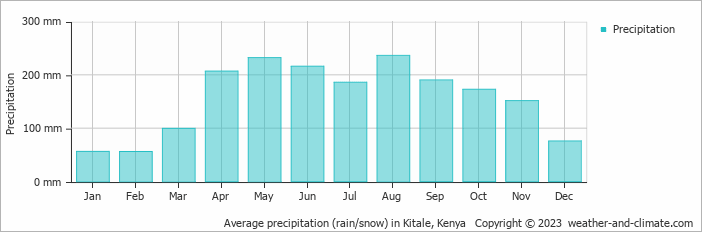
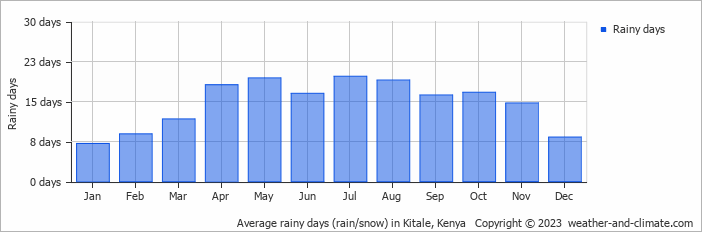
Kitale experiences significant rainfall throughout the year, averaging 1877 mm (74 in) of precipitation annually. The seasons in Kitale bring significant changes in precipitation. The wettest month, August, receives heavy rainfall, with an average of 236 mm (9.3 in) of precipitation. This rainfall is distributed across 19 rainy days.
In contrast, the driest month, February, experiences much less rainfall, totaling 56 mm (2.2 in) over 9 rainy days. These distinct seasonal differences provide diverse experiences throughout the year. For more details, please visit our Kitale Precipitation page.
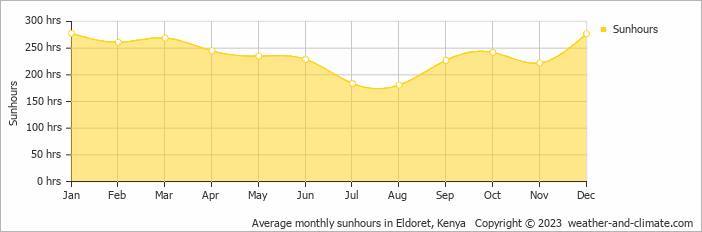
Kitale enjoys sunny spells year-round. January sees up to 9.3 hours of daily sunshine, perfect for a sunny trip. August, the least sunny month, still offers a generous 6.0 hours of sun despite this cloudier time of the year.
Visit our detailed sunshine hours page for more information.
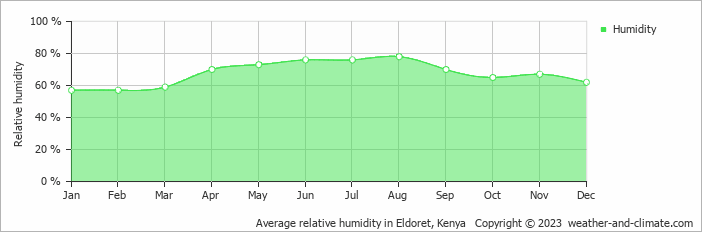
The relative humidity is high throughout the year in Kitale.
The city experiences its highest humidity in August, reaching 78%. In January, the humidity drops to its lowest level at 57%. What does this mean? Read our detailed page on humidity levels for further details.
Monthly ratings reflect general weather comfort, based on daytime temperature and rainfall. Swimming and winter conditions are highlighted separately where relevant.
January, February, March and December typically offer the most optimal weather in Kitale. In contrast, April, May, June and August tend to have less optimal conditions. Kitale has a distinct rainy season from April to October.
Daytime highs range from 22°C (72°F) in July to 27°C (81°F) in February. Nighttime lows range from 13°C (55°F) to 15°C (59°F). Temperatures stay relatively stable year-round.
Annual rainfall is around 1877 mm (74 in). August is the wettest month with 236 mm (9.3 in), while February is the driest with 56 mm (2.2 in).
Kitale receives around 2,850 hours of sunshine per year. January is the sunniest month with 278 hours, while August is the cloudiest with just 181 hours. Overall, Kitale enjoys abundant sunshine.
Kitale is highlighted - select any city to see its climate.
Where to go in October - average daytime high across popular destinations.
Mombasa 30°C (86°F) Diani Beach29°C (84°F) Watamu29°C (84°F) Malindi29°C (84°F) Kisumu
 27°C (81°F) Nairobi
 27°C (81°F) Nakuru
 25°C (77°F) Naivasha22°C (72°F)
 Need travel inspiration? Check out our bucket list articles and be inspired.
The 10 best wildlife viewing sites in Kenya
Explore Kenya's top 10 safari parks in this guide, featuring the Maasai Mara, Amboseli, and more, for a spectacular wildlife adventure
 Not on the map - Yoga Teacher Training in Kenya
A yoga training with the rawness of mother Africa. In a place so untouched we really are walking on the same earth elephants roamed not so long ago.
 Tsavo National Park in Kenia
From mid-July to September and December to mid-March are the best months to visit both Tsavo National Parks. This park is a must see. The park is mountainous and green.
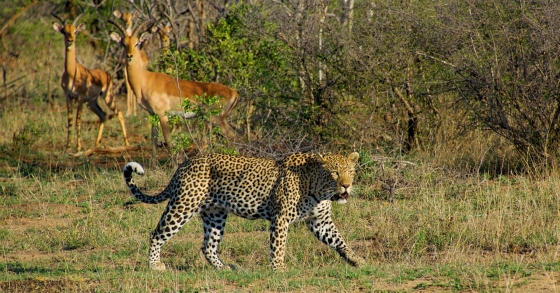
 Visit Kruger Park in South Africa
Are you going to South Africa, then you cannot skip the Kruger Park. The Kruger Park is one of the most beautiful and largest safari parks in the world.