


















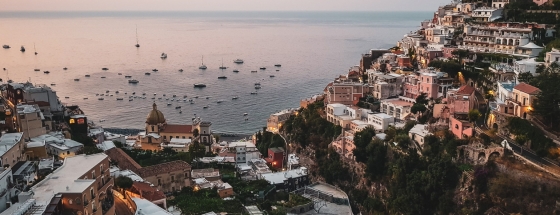
 The 10 most beautiful historical towns in Italy
Discover Italy's top 10 historic towns, featuring breathtaking medieval architecture and deep-rooted history, ideal for enthusiasts of extraordinary cities.
The amount of sunshine is fundamental to comprehending a place's climate. This page shows the total number of hours of direct sunlight per month and the average hours per day in Tambre dʼAlpago, Italy. The figures are based on a 30-year period (1990–2020) to provide a reliable average.
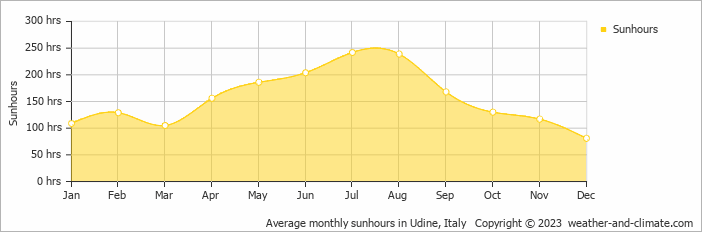
If you're visiting Tambre dʼAlpago, timing is key. In July, you can enjoy up to 242 hours of sunshine, while the shorter days of December provide just 81 hours. The total annual amount of sun is 1866 hours.
Seasonal changes in sunshine hours are quite obvious in Tambre dʼAlpago. While July receives considerable daily sunshine with up to 8.1 hours, December marks the darkest time of the year, where sunshine is scarce with only 2.7 hours of sunlight per day.

On average the sun shines 57% of the time during the day in July, the highest percentage of any month. November has the lowest percentage at 28%.
Tambre dʼAlpago enjoys an average of 1866 hours of sunshine annually. Let’s compare this with some popular tourist destinations:
Athens, Greece, enjoys 2769 hours of sunshine each year, making it one of the sunniest destinations in the Mediterranean region.
In contrast, Brussels, Belgium, receives only about 1590 hours of sunshine per year, known for its frequently overcast and rainy skies.
Meanwhile, Buenos Aires, Argentina, enjoys a humid subtropical climate with 2520 hours of sunshine annually.
Melbourne, Australia, has 2380 hours of sunshine annually, with its famous “four seasons in a day” weather pattern.
November, Tambre dʼAlpago’s wettest month, receives 142 mm (5.6 in) of rainfall and has a maximum daytime temperature of 10°C (50°F). During the driest month January you can expect a temperature of 5°C (41°F).
For more detailed insights into the city’s temperatures, check out our Temperature page. To explore more about precipitation patterns, visit our Tambre dʼAlpago Precipitation page.
Pick a month to see the average temperature, rainfall and sunshine in Tambre dʼAlpago - and find the best time to visit.
Temperature Rainfall Sunshine Humidity
See the full Tambre dʼAlpago climate overview or explore weather in Italy.
Where to go in September - average daytime high across popular destinations.
Need travel inspiration? Check out our bucket list articles and be inspired.
The 10 most beautiful historical towns in Italy
Discover Italy's top 10 historic towns, featuring breathtaking medieval architecture and deep-rooted history, ideal for enthusiasts of extraordinary cities.
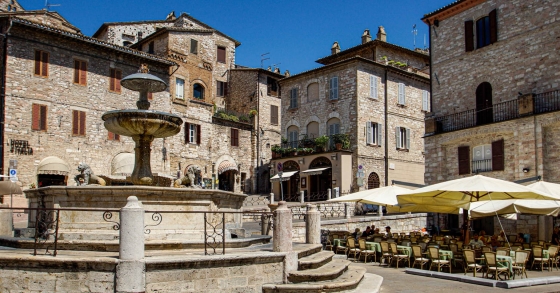 Experience mystical Assisi
Assisi is the most famous town in Umbria and best known because of Saints Francis and Clare of Assisi. Many visitors come to see the breathtaking San Francesco basilica.
 The Battle of Oranges
This is one of the most unusual festivals in Italy. The festival is held in the middle of winter during the winter carnival. The entire city of Ivrea near Turin turns into a battlefield.
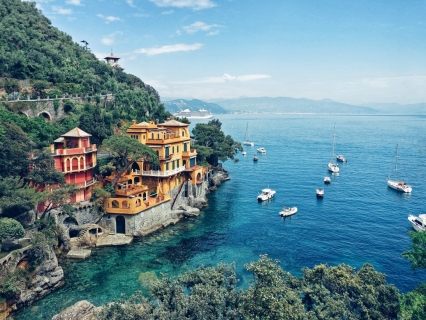 The most beautiful fishing village of Italy
Portofino is the most beautiful fishing village in Italy and maybe even in the world. We absolutely recommend that you add this beautiful place to your bucket list.