St. Peter's (NS) Weather & Climate: Best Time to Visit
Average temperatures, rainfall, sunshine and the best time to visit St. Peter's.
Climate overview of St. Peter's
St. Peter's, Nova Scotia, Canada, experiences significant temperature variation throughout the year. Summers bring daytime highs of 23°C (73°F) in August, while winters cool to 0°C (32°F) in February.
The city has a wet climate, receiving around 1414 mm (56 in) of rain/snowfall per year. Despite the high annual total, it has warm summers and very cold winters. December is the wettest month.
St. Peter's Weather by Month
Pick a month to see the average temperature, rainfall and sunshine in St. Peter's - and find the best time to visit.


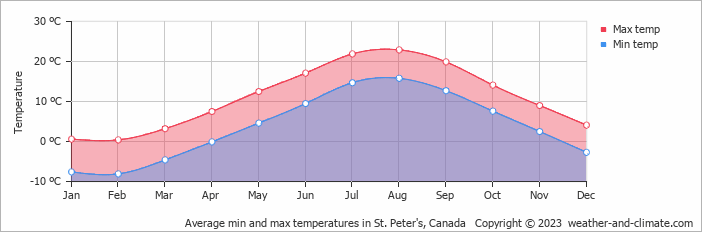
Monthly Temperature in St. Peter's
Depending on the time of the year, temperatures range from comfortable to very cold in St. Peter's. On average, daytime temperatures range from a comfortable 23°C (73°F) in August to a very cold 0°C (32°F) in February.
Nighttime temperatures range from 16°C (61°F) in August to -8°C (18°F) in February.
Check out our detailed temperature page for more information.
Temperature ranges by month
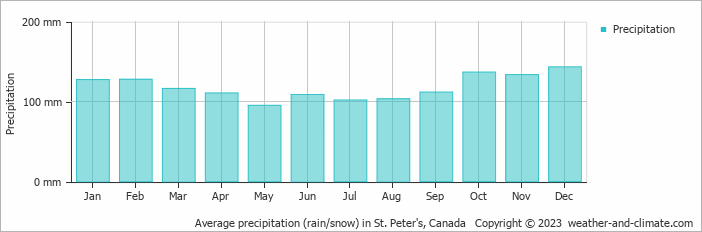
Rainfall in St. Peter's
St. Peter's has a relatively rain/snowy climate with high precipitation levels, averaging 1414 mm (56 in) of rain/snowfall annually. The wettest period in St. Peter's occurs in December, which receives around 143 mm (5.6 in) of precipitation. During the driest month, May, St. Peter's experiences moderate rainfall, totaling 95 mm (3.7 in). The consistent precipitation levels throughout the year contribute to a relatively stable climate. For more details, please visit our St. Peter's Precipitation page.
The mean monthly precipitation over the year, including rain, hail, and snow
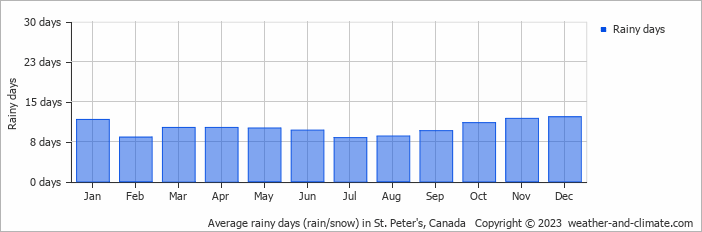
The average number of days each month with precipitation
Best Time to Visit St. Peter's
Monthly ratings reflect general weather comfort, based on daytime temperature and rainfall. Swimming and winter conditions are highlighted separately where relevant.
- Best overall: July, August and September
- Warmest weather: July and August
- Seasonal pattern: Warm summers and very cold winters
- Coldest conditions: February, with freezing nights around -8°C (18°F).
Frequently asked questions about the climate in St. Peter's
What is the best time to visit St. Peter's?
July, August and September typically offer the most optimal weather in St. Peter's. In contrast, January, February, March, April, November and December tend to have less optimal conditions. St. Peter's has warm summers and very cold winters.
What temperatures can I expect in St. Peter's?
Daytime highs range from 0°C (32°F) in February to 23°C (73°F) in August. Nighttime lows range from -8°C (18°F) to 16°C (61°F). Temperatures vary considerably through the year.
How much rain does St. Peter's get?
Annual rainfall is around 1414 mm (56 in). December is the wettest month with 143 mm (5.6 in), while May is the driest with 95 mm (3.7 in). In the coldest months, precipitation may fall as snow/rain.
St. Peter's 3-Day Forecast
St. Peter's on the map
St. Peter's is highlighted - select any city to see its climate.
Popular this month
Where to go in August - average daytime high across popular destinations.















Bucket list
Need travel inspiration? Check out our bucket list articles and be inspired.
 The 5 most beautiful lakes in Canada
Explore Canada's stunning lakes: Lake Louise, Lake Superior, Maligne Lake, Emerald Lake, and Lake Okanagan, each offering unique beauty and activities.
Canoeing the south Nahannii
The South Nahanni in the northwest of Canada is one of the most impressive wilderness rivers in the world. Canoeing the south Nahanni is something you must add to your bucket list.
See Polar Bears in Churchill Canada
Thousands of bears gather at the small town of Churchill. In the evening the northern lights give a light show against the dark evening sky. An unforgettable experience.
Banff National Park
Snowy mountains, clear blue lakes and green forests make Banff National Park a wonderful bucket list destination. The pristine wilderness is a mecca for walkers.