















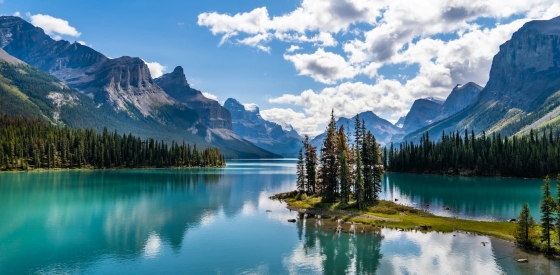
 The 5 most beautiful lakes in Canada
Explore Canada's stunning lakes: Lake Louise, Lake Superior, Maligne Lake, Emerald Lake, and Lake Okanagan, each offering unique beauty and activities.
Average temperatures, rainfall, sunshine and the best time to visit Godbout.
 –
–
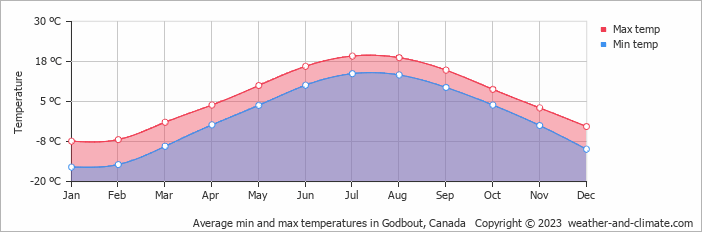
Godbout, Quebec, Canada, sees big temperature differences between seasons, with July peaking at 19°C (66°F) and January dropping to -7°C (19°F).
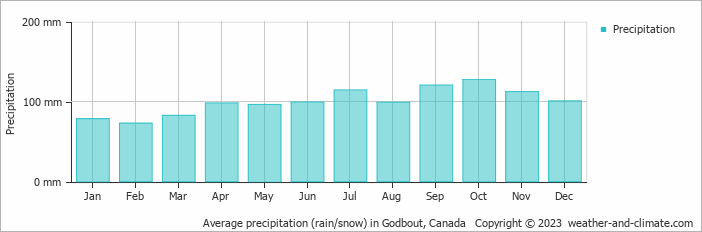
The city has a wet climate, receiving around 1201 mm (47 in) of rain/snowfall per year. Despite the high annual total, it has pleasant summers and very cold winters. October is the wettest month.
Pick a month to see the average temperature, rainfall and sunshine in Godbout - and find the best time to visit.
Visitors to Godbout can expect significant temperature changes throughout the year. On average, daytime temperatures range from a pleasant 19°C (66°F) in July to a very cold -7°C (19°F) in January.
Nighttime temperatures range from 14°C (57°F) in July to -16°C (3°F) in January.
Check out our detailed temperature page for more information.
Godbout is known for its substantial rain/snowfall, with annual precipitation reaching 1201 mm (47 in). The amount of precipitation varies moderately throughout the year. The wettest month, October, sees around 127 mm (5 in) of rainfall, perfect for those who enjoy a bit of rain now and then. The driest month, February, still receives a respectable 73 mm (2.9 in) of snowfall. For more details, please visit our Godbout Precipitation page.
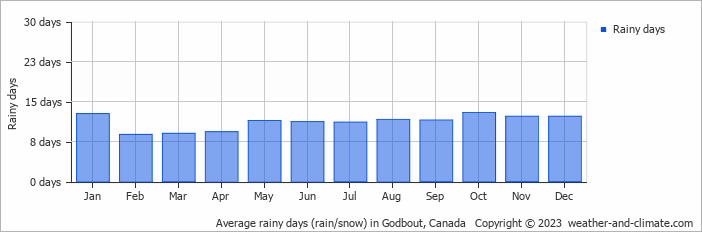
Monthly ratings reflect general weather comfort, based on daytime temperature and rainfall. Swimming and winter conditions are highlighted separately where relevant.
August typically offers the most optimal weather in Godbout. In contrast, January, February, March, April, May, October, November and December tend to have less optimal conditions. Godbout has pleasant summers and very cold winters.
Daytime highs range from -7°C (19°F) in January to 19°C (66°F) in July. Nighttime lows range from -16°C (3°F) to 14°C (57°F). Temperatures vary considerably through the year.
Annual rainfall is around 1201 mm (47 in). October is the wettest month with 127 mm (5 in), while February is the driest with 73 mm (2.9 in).
Godbout is highlighted - select any city to see its climate.
Where to go in September - average daytime high across popular destinations.
Toronto 22°C (72°F) Niagara Falls23°C (73°F) Montréal
 22°C (72°F) Ottawa22°C (72°F) Quebec City
 20°C (68°F) Vancouver19°C (66°F) Calgary19°C (66°F) Whistler15°C (59°F)
 Need travel inspiration? Check out our bucket list articles and be inspired.
The 5 most beautiful lakes in Canada
Explore Canada's stunning lakes: Lake Louise, Lake Superior, Maligne Lake, Emerald Lake, and Lake Okanagan, each offering unique beauty and activities.
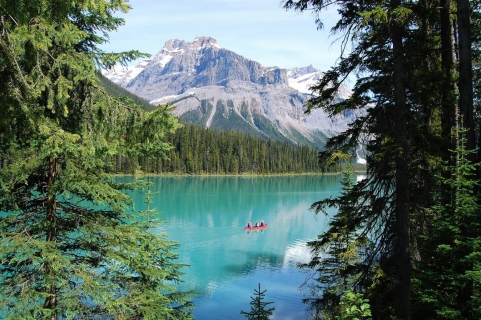 Canada in September: Where Is the Best Weather?
Compare September weather in Toronto, Montreal, Vancouver, Quebec City and Osoyoos to find Canada's warmest, driest and sunniest destinations.
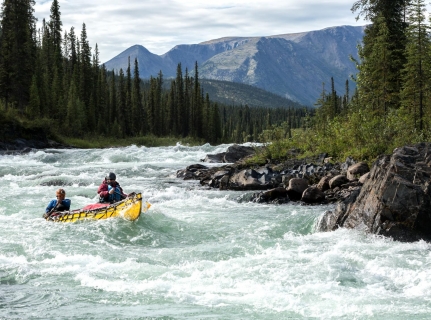 Canoeing the south Nahannii
The South Nahanni in the northwest of Canada is one of the most impressive wilderness rivers in the world. Canoeing the south Nahanni is something you must add to your bucket list.
 See Polar Bears in Churchill Canada
Thousands of bears gather at the small town of Churchill. In the evening the northern lights give a light show against the dark evening sky. An unforgettable experience.