
















 The 10 most alternative cities in South America
Discover South America's top 10 alternative cities! From Valparaíso's vibrant streets to La Paz's high-altitude charm and Medellín's innovative spirit.
Average temperatures, rainfall, sunshine and the best time to visit Santa Cruz de la Sierra.
 –
–
The climate in Santa Cruz de la Sierra, Santa Cruz, Bolivia, is remarkably consistent, with temperatures year-round averaging 30°C (86°F). The warmest month is October at 32°C (90°F), and the coolest is June at 26°C (79°F).
Rainfall is high, totalling around 1201 mm (47 in) per year. January is the wettest month and August the driest.
Pick a month to see the average temperature, rainfall and sunshine in Santa Cruz de la Sierra - and find the best time to visit.
In Santa Cruz de la Sierra temperatures are generally consistent throughout the year. Average maximum daytime temperatures range from a very warm 32°C (90°F) in October, the warmest time of the year, to a comfortable 26°C (79°F) during cooler months like June.
At night, you can expect temperatures ranging from 23°C (73°F) in October to around 16°C (61°F) during June.
Check out our detailed temperature page for more information.

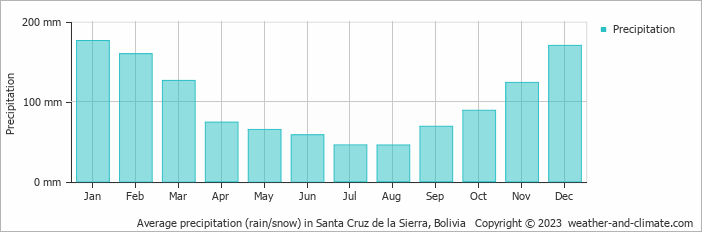
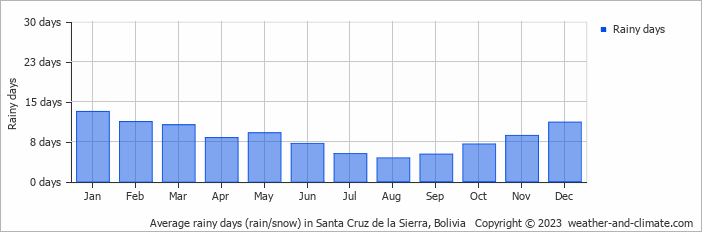
Santa Cruz de la Sierra experiences significant rainfall throughout the year, averaging 1201 mm (47 in) of precipitation annually. Significant seasonal changes in precipitation occur throughout the year. In the wettest month, January it receives heavy rainfall, averaging 176 mm (6.9 in) of precipitation, recorded across 13 rainy days. In contrast, the driest month August brings less rainfall, with 46 mm (1.8 in) over 4 rainy days. For more details, please visit our Santa Cruz de la Sierra Precipitation page.
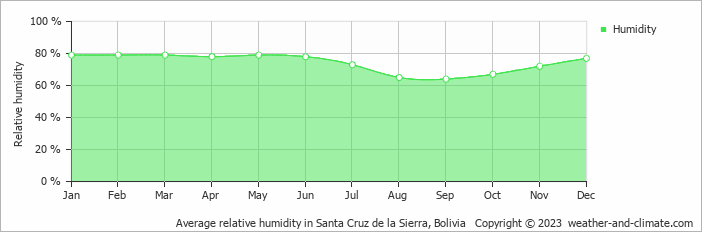
The relative humidity is high throughout the year in Santa Cruz de la Sierra.
The city experiences its highest humidity in January, reaching 79%. In September, the humidity drops to its lowest level at 64%. What does this mean? Read our detailed page on humidity levels for further details.
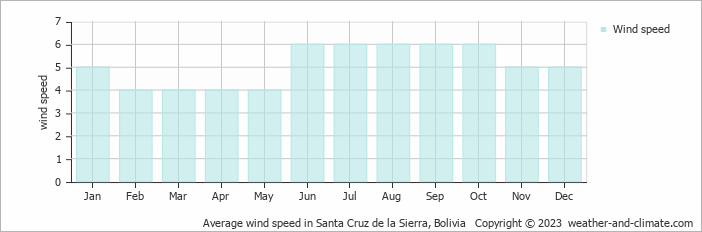
The mean wind speed varies between 4 m/s (8 knots) and 6 m/s (12 knots) throughout the year. It is lowest in February, March, April and May and highest during June, July, August, September and October. What does this mean?
Monthly ratings reflect general weather comfort, based on daytime temperature and rainfall. Swimming and winter conditions are highlighted separately where relevant.
May, June, July and August typically offer the most optimal weather in Santa Cruz de la Sierra. In contrast, January, February, March, November and December tend to have less optimal conditions.
Daytime highs range from 26°C (79°F) in June to 32°C (90°F) in October. Nighttime lows range from 16°C (61°F) to 23°C (73°F). Temperatures stay relatively stable year-round.
Annual rainfall is around 1201 mm (47 in). January is the wettest month with 176 mm (6.9 in), while August is the driest with 46 mm (1.8 in).
Santa Cruz de la Sierra is highlighted - select any city to see its climate.
Where to go in September - average daytime high across popular destinations.
 Santa Cruz de la Sierra31°C (88°F) Sucre23°C (73°F) Tarija21°C (70°F) Cochabamba19°C (66°F) Potosí18°C (64°F) Uyuni17°C (63°F) La Paz
 15°C (59°F) Copacabana14°C (57°F)
 Need travel inspiration? Check out our bucket list articles and be inspired.
The 10 most alternative cities in South America
Discover South America's top 10 alternative cities! From Valparaíso's vibrant streets to La Paz's high-altitude charm and Medellín's innovative spirit.
 The best place in Bolivia to spot a jaguar
Bolivia is a beautiful country for spotting animals. The chance that you will see a jaguar is very likely if you go to the right places.
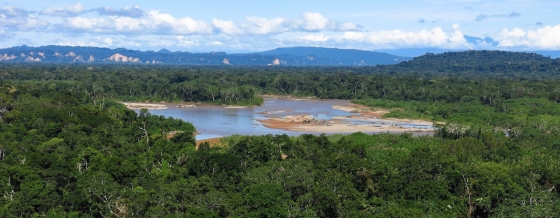 Madidi National Park: a must-visit for nature lovers
Explore Bolivia's biodiverse Madidi National Park, with untouched wilderness from snow-capped peaks to Amazonian rainforest.
 The Witches' Market of La Paz
Discover the Witches' Market in La Paz, where Andean magic meets tradition. Explore mystical rituals, herbal remedies, and sacred offerings to Pachamama.