













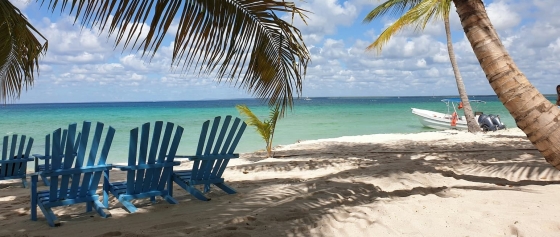
 5 Tranquil Spots in the Dominican Republic
Explore the hidden gems of the Dominican Republic, from Bahía de Las Águilas to Constanza. Discover tranquil beaches, mountains, and green landscapes.
Average temperatures, rainfall, sunshine and the best time to visit Isabel de Torres National Park.
 –
–
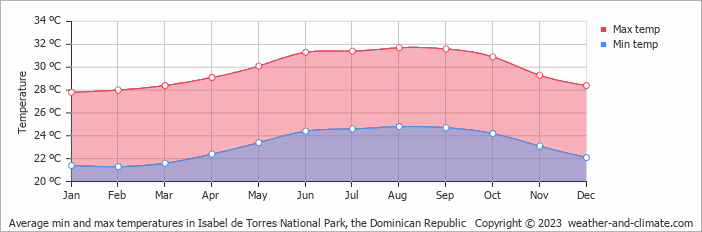
Isabel de Torres National Park, Greater Santo Domingo, Dominican Republic, has a stable climate with little temperature variation across the year. Average daytime temperatures hover around 30°C (86°F), peaking in August at 32°C (90°F) and dipping in January to 28°C (82°F).
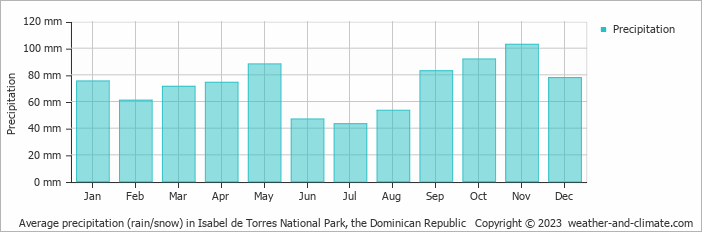
With around 869 mm (34 in) of annual rainfall, the city has moderate precipitation levels. November is the wettest month and July the driest.
Pick a month to see the average temperature, rainfall and sunshine in Isabel de Torres National Park - and find the best time to visit.
With minimal seasonal shifts, Isabel de Torres National Park experiences a constant climate year-round. Typically, average maximum daytime temperatures range from a very warm 32°C (90°F) in August to a comfortable 28°C (82°F) in the coolest month, January.
Nights vary from 25°C (77°F) in August to around 21°C (70°F) during the colder months.
Check out our detailed temperature page for more information.
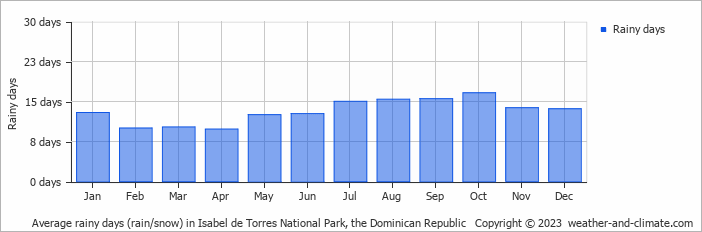
Generally, Isabel de Torres National Park receives mid-range precipitation levels, with 869 mm (34 in) annually. The climate in Isabel de Torres National Park shows significant variation throughout the year. Expect high rainfall in November, the wettest month, with an average of 103 mm (4.1 in) of precipitation over 14 rainy days.
In contrast, the driest month July offers drier and sunnier days, with around 43 mm (1.7 in) of rainfall over 15 rainy days. For more details, please visit our Isabel de Torres National Park Precipitation page.
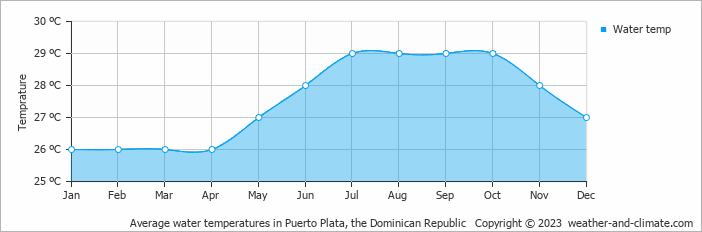
The mean water temperature over the year ranges from 26°C (79°F) in January to 29°C (84°F) in July.
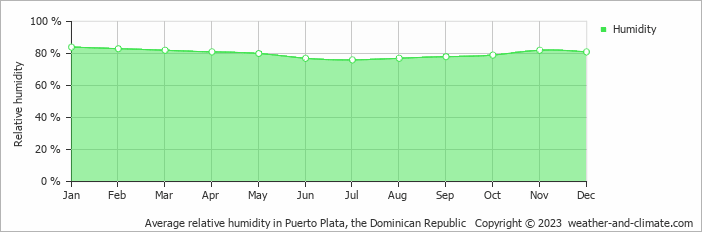
The city experiences its highest humidity in January, reaching 84%. In July, the humidity drops to its lowest level at 76%. What does this mean? Read our detailed page on humidity levels for further details.
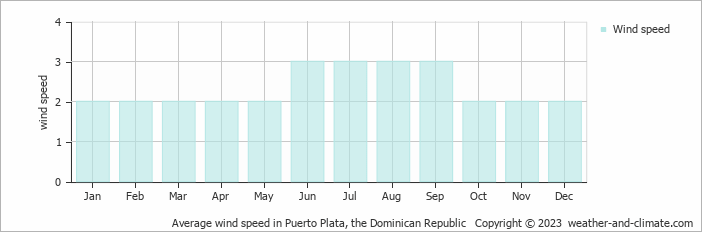
The mean wind speed over the year ranges from 2 m/s (4 knots) in January, February, March, April, May, October, November and December to 3 m/s (6 knots) in June, July, August and September. What does this mean?
Monthly ratings reflect general weather comfort, based on daytime temperature and rainfall. Swimming and winter conditions are highlighted separately where relevant.
January, February, March, April and December typically offer the most optimal weather in Isabel de Torres National Park. In contrast, May, June, July, August, September and October tend to have less optimal conditions.
Daytime highs range from 28°C (82°F) in January to 32°C (90°F) in August. Nighttime lows range from 21°C (70°F) to 25°C (77°F). Temperatures stay relatively stable year-round.
Annual rainfall is around 869 mm (34 in). November is the wettest month with 103 mm (4.1 in), while July is the driest with 43 mm (1.7 in).
Isabel de Torres National Park is highlighted - select any city to see its climate.
Where to go in October - average daytime high across popular destinations.
Bayahibe 31°C (88°F) Las Terrenas
 31°C (88°F) Santo Domingo31°C (88°F) Boca Chica30°C (86°F) Cabarete29°C (84°F) Sosúa30°C (86°F) Punta Cana30°C (86°F) Juan Dolio30°C (86°F)
 Need travel inspiration? Check out our bucket list articles and be inspired.
5 Tranquil Spots in the Dominican Republic
Explore the hidden gems of the Dominican Republic, from Bahía de Las Águilas to Constanza. Discover tranquil beaches, mountains, and green landscapes.
 Windsurf in Cabarete
The best travel time for Cabarete in the Dominican Republic is from January to April, June to October and December. If you like Wind Surfing than you must add the surf paradise Cabarete on your bucket list.
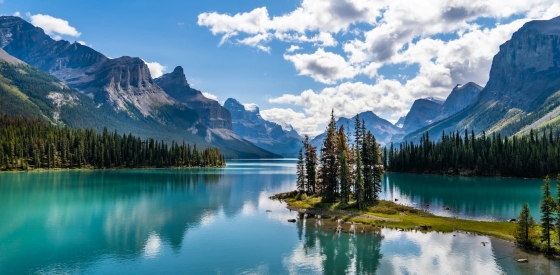
 The 5 most beautiful lakes in Canada
Explore Canada's stunning lakes: Lake Louise, Lake Superior, Maligne Lake, Emerald Lake, and Lake Okanagan, each offering unique beauty and activities.
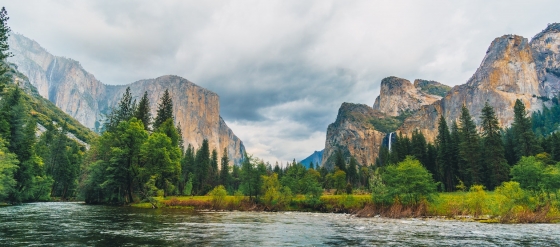
 Yosemite National Park is definitely worth a visit
Vast forests, blue lakes, towering sequoias, and majestic waterfalls hint at the beauty of Yosemite National Park—a true natural masterpiece.