

















 Explore the Majestic Copper Canyons of Mexico
Explore the vast Copper Canyons in Chihuahua, Mexico—larger than the Grand Canyon. Discover scenic train rides, hikes, and the Tarahumara people.
This page shows both the average monthly rainfall and the number of rainy days in Tzintzuntzán, Michoacan, Mexico. The figures are based on a 30-year period (1990–2020) to provide a reliable average. Let's explore the details to provide you with a complete overview.
Tzintzuntzán has a relatively rainy climate with high precipitation levels, averaging 1628 mm (64 in) of rainfall annually. Despite the high annual total, it does experience a distinct dry and rainy season during certain months. Examine our detailed charts below to understand these seasonal patterns.
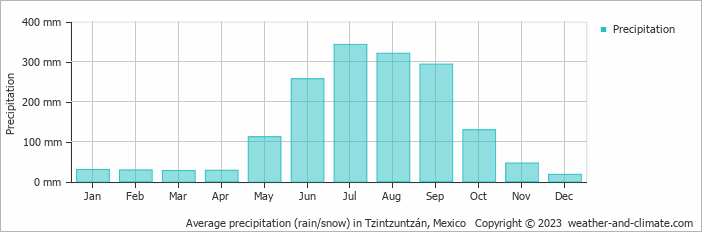
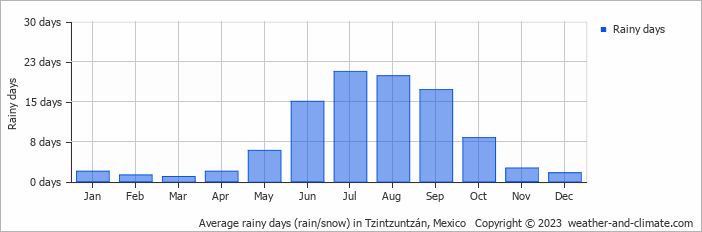
Tzintzuntzán can be quite wet during July, receiving approximately 342 mm (13 in) of precipitation over 21 rainy days.
In contrast December, experiences much drier conditions, with 17 mm (0.7 in) of rainfall, spread across 2 rainy days.
July, the wettest month, has a maximum daytime temperature of 23°C (73°F). The city receives 194 hours of sunshine in this period. During the driest month December you can expect a temperature of 22°C (72°F). For more detailed insights into the city's temperatures, visit our Tzintzuntzán Temperature page.
The map below shows the annual precipitation across Mexico. You can also select the different months in case you are interested in a specific month.
Tzintzuntzán's average annual precipitation is 1628 mm (64 in). Let's compare this to some popular worldwide tourist destinations:
The climate in San Francisco, USA, is influenced by coastal weather, with 469 mm (18 in) of rainfall mostly during the winter months.
Osaka, Japan, experiences 1507 mm (59 in) of rainfall annually, spread across the year with wetter summers.
In Tokyo, Japan, the average annual precipitation is 1528 mm (60 in), with significant summer rains due to typhoon season.
Kuala Lumpur, Malaysia, receives 2529 mm (100 in) of annual rainfall, characteristic of its equatorial tropical rainforest climate, with consistent rainfall throughout the year and peak months during March and November.
Precipitation amounts are measured using specific gauges installed at weather stations, collecting both rain and snow and any other type of precipitation. Rainfall is measured directly in millimeters, while that from snow and ice is obtained by melting it. Automated systems often incorporate heaters to make this easier.
Information from these stations is transmitted via Wi-Fi, satellite, GPS, or telephone connections to central monitoring networks. This information is immediately updated and integrated into weather models and forecasts.
The proximity of a location to a large body of water can significantly affect its rainfall patterns:
For more detailed information about Tzintzuntzán's weather, including sunshine hours, humidity levels, and temperature data, visit our Tzintzuntzán Climate page.
Pick a month to see the average temperature, rainfall and sunshine in Tzintzuntzán - and find the best time to visit.
Temperature Rainfall Sunshine Humidity
See the full Tzintzuntzán climate overview or explore weather in Mexico.
Where to go in September - average daytime high across popular destinations.
Puerto Peñasco 34°C (93°F) Los Cabos
 32°C (90°F) Tulum31°C (88°F) Cancún30°C (86°F) Playa del Carmen31°C (88°F) Puerto Vallarta29°C (84°F) San Miguel de Allende
 27°C (81°F) Mexico City23°C (73°F)
 Need travel inspiration? Check out our bucket list articles and be inspired.
Explore the Majestic Copper Canyons of Mexico
Explore the vast Copper Canyons in Chihuahua, Mexico—larger than the Grand Canyon. Discover scenic train rides, hikes, and the Tarahumara people.
 These are the most beautiful Mayan ruins and Mayan temples in Mexico
Mexico is a destination where you can immerse yourself in ancient cultures and civilizations. In this article we have listed our favorite Mayan ruins.
 Tips, to-do's and nicest restaurants in Mexico City
Mexico City, one of the most famous and notorious cities of the world. The best time to visit is between March and May, but it can be visited year round.
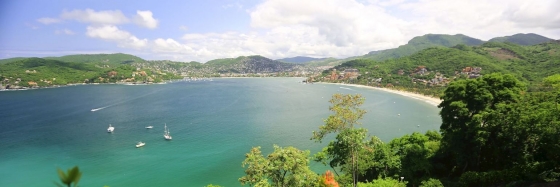 Zihuatanejo: A Pacific paradise with beautiful beaches
Zihuatanejo has some of Mexico's top beaches. Unlike other off-the-beaten-path destinations in Mexico, Zihua is very accessible and sustainable.