
















 7 of the most budget-friendly destinations in Europe
Discover Europe's top budget-friendly destinations including Budapest, Kotor, Krakow, and more, perfect for affordable and exciting travel.
This page shows both the average monthly rainfall and the number of rainy days in Sirok, Heves, Hungary. The numbers reflect climate data gathered over a 30-year period, from 1990 to 2020. Now, let's break down all the details for a clearer picture.
On average, Sirok receives a reasonable amount of rain/snowfall, with an annual precipitation of 786 mm (31 in).
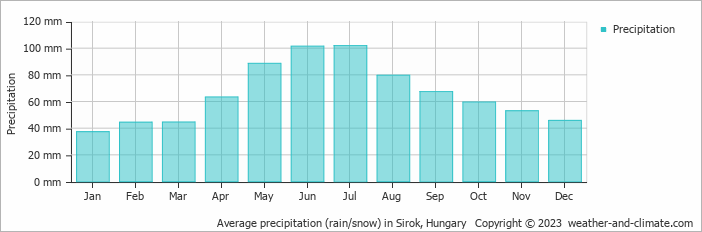
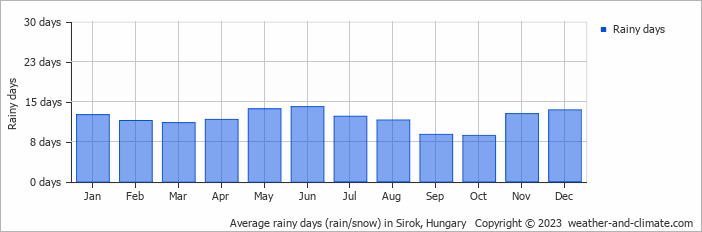
Sirok can be quite wet during July, receiving approximately 102 mm (4 in) of precipitation over 12 rainy days.
In contrast January, experiences much drier conditions, with 37 mm (1.5 in) of snow/rainfall, spread across 13 snowy/rainy days.
July, the wettest month, has a maximum daytime temperature of 28°C (82°F). The city receives 253 hours of sunshine in this period. During the driest month January you can expect a temperature of 3°C (37°F). For more detailed insights into the city's temperatures, visit our Sirok Temperature page.
The map below shows the annual precipitation across Hungary. You can also select the different months in case you are interested in a specific month.
Sirok's average annual precipitation is 786 mm (31 in). Let's compare this to some popular worldwide tourist destinations:
Athens, Greece, receives an average annual precipitation of 400 mm (16 in), making it one of the drier Mediterranean climates with rainfall mostly in winter.
Meanwhile, Buenos Aires, Argentina, enjoys a humid subtropical climate with 1000 mm (39 in) of annual rainfall, mostly in the summer.
In Tokyo, Japan, the average annual precipitation is 1528 mm (60 in), with significant summer rains due to typhoon season.
Kuala Lumpur, Malaysia, receives 2529 mm (100 in) of annual rainfall, characteristic of its equatorial tropical rainforest climate, with consistent rainfall throughout the year and peak months during March and November.
Precipitation amounts are measured using specific gauges installed at weather stations, collecting both rain and snow and any other type of precipitation. Rainfall is measured directly in millimeters, while that from snow and ice is obtained by melting it. Automated systems often incorporate heaters to make this easier.
Information from these stations is transmitted via Wi-Fi, satellite, GPS, or telephone connections to central monitoring networks. This information is immediately updated and integrated into weather models and forecasts.
For more detailed information about Sirok's weather, including sunshine hours, humidity levels, and temperature data, visit our Sirok Climate page.
Pick a month to see the average temperature, rainfall and sunshine in Sirok - and find the best time to visit.
Temperature Rainfall Sunshine Humidity
See the full Sirok climate overview or explore weather in Hungary.
Where to go in October - average daytime high across popular destinations.
Zalakaros 17°C (63°F) Budapest
 17°C (63°F) Hajdúszoboszló18°C (64°F) Balatonmáriafürdő17°C (63°F) Balatonlelle16°C (61°F) Eger16°C (61°F) Siófok17°C (63°F) Hévíz17°C (63°F)
 Need travel inspiration? Check out our bucket list articles and be inspired.
7 of the most budget-friendly destinations in Europe
Discover Europe's top budget-friendly destinations including Budapest, Kotor, Krakow, and more, perfect for affordable and exciting travel.
 Sziget Festival
Sziget Hungary is the largest open-air festival in Europe. The festival takes place seven days and you can enjoy more than 1,000 performances on 60 different stages.
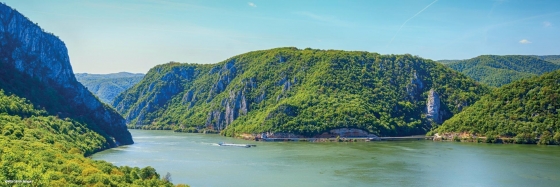
 Cycle the Danube trail
The Danube cycle route is one of the most popular cycling routes in Europe, and rightly so, because it is a varied route that is interesting both in terms of culture and nature.
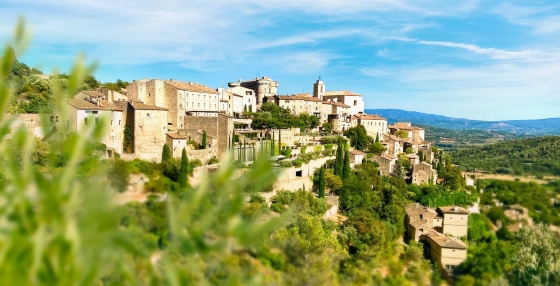
 The 10 most charming villages in France
Discover France's top 10 beautiful villages. From Normandy to the Côte d'Azur, experience quaint squares and cobbled streets. Which one will you visit this summer?