


















 Costa Rica in February: Pacific or Caribbean Coast?
Compare Costa Rica weather in February, from dry and sunny Tamarindo to wetter Puerto Viejo, plus Jacó, Arenal and San José.
This page shows both the average monthly rainfall and the number of rainy days in Matapalo, Puntarenas, Costa Rica. These values are calculated using 30 years of data (1990–2020) to ensure accuracy. Now, let's break down all the details for a clearer picture.
Matapalo has a relatively rainy climate with high precipitation levels, averaging 7640 mm (301 in) of rainfall annually.
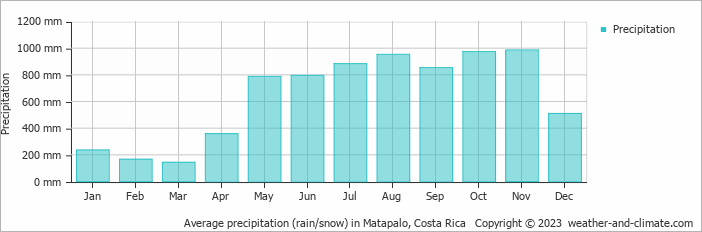
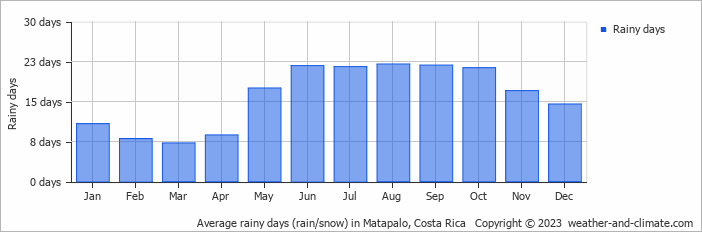
Significant seasonal changes in precipitation occur throughout the year. During the wettest month, November receives substantial rainfall, averaging 986 mm (39 in) of precipitation, recorded across 17 rainy days.
In contrast, the driest month, March brings less rainfall, with 143 mm (5.6 in) over 7 rainy days.
November, the wettest month, has a maximum daytime temperature of 26°C (79°F). The city receives 175 hours of sunshine in this period. During the driest month March you can expect a temperature of 28°C (82°F). For more detailed insights into the city's temperatures, visit our Matapalo Temperature page.
Average daily rainfall for each day of the month based on long-term records. 44-year average (1976-2025)
Browse day-by-day precipitation records for Matapalo spanning 51 years. Select any month and year to see actual rainfall and snowfall recorded on each day.
The map below shows the annual precipitation across Costa Rica. You can also select the different months in case you are interested in a specific month.
Matapalo's average annual precipitation is 7640 mm (301 in). Let's compare this to some popular worldwide tourist destinations:
Boston, USA, experiences 1238 mm (49 in) of annual precipitation, including significant snowfall during the winter.
In Seoul, South Korea, the average annual precipitation is 1237 mm (49 in), with most rain falling during the summer monsoon season.
Adelaide, Australia, enjoys 511 mm (20 in) of annual precipitation, with dry summers and wet winters.
Bangkok, Thailand, experiences a tropical monsoon climate with 1668 mm (66 in) of annual rainfall, with the heaviest precipitation occurring during September and October.
Precipitation amounts are measured using specific gauges installed at weather stations, collecting both rain and snow and any other type of precipitation. Rainfall is measured directly in millimeters, while that from snow and ice is obtained by melting it. Automated systems often incorporate heaters to make this easier.
Information from these stations is transmitted via Wi-Fi, satellite, GPS, or telephone connections to central monitoring networks. This information is immediately updated and integrated into weather models and forecasts.
Precipitation has a very strong role in determining the local climate and ecosystem:
For more detailed information about Matapalo's weather, including sunshine hours, humidity levels, and temperature data, visit our Matapalo Climate page.
Pick a month to see the average temperature, rainfall and sunshine in Matapalo - and find the best time to visit.
Temperature Rainfall Sunshine Humidity
See the full Matapalo climate overview or explore weather in Costa Rica.
Where to go in September - average daytime high across popular destinations.
Tamarindo 30°C (86°F) Cahuita29°C (84°F) Santa Teresa29°C (84°F) Herradura28°C (82°F) Puerto Viejo de Talamanca29°C (84°F) Fortuna29°C (84°F) Jacó28°C (82°F) San José24°C (75°F)
 Need travel inspiration? Check out our bucket list articles and be inspired.
Costa Rica in February: Pacific or Caribbean Coast?
Compare Costa Rica weather in February, from dry and sunny Tamarindo to wetter Puerto Viejo, plus Jacó, Arenal and San José.
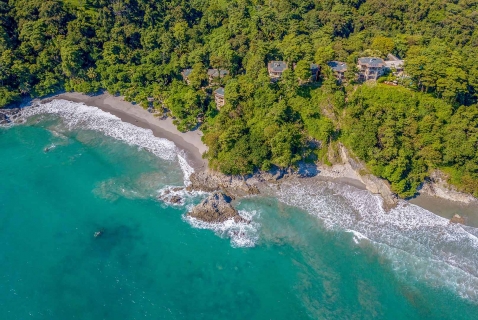 Where the rain forest meets the ocean
I promise that you will not find a better location, better views, nicer rooms or lovelier staff anywhere in Costa Rica. This place really goes above and beyond.
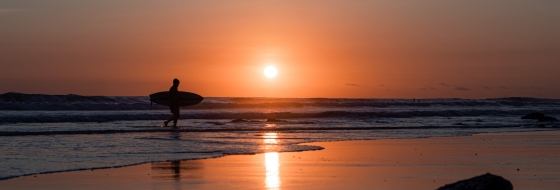 Exploring Santa Teresa, Costa Rica: A Traveler's Guide
Immerse yourself in the laid-back charm of Santa Teresa, Costa Rica. Discover stunning beaches, vibrant dining spots, unique shops, and diverse activities in our comprehensive guide
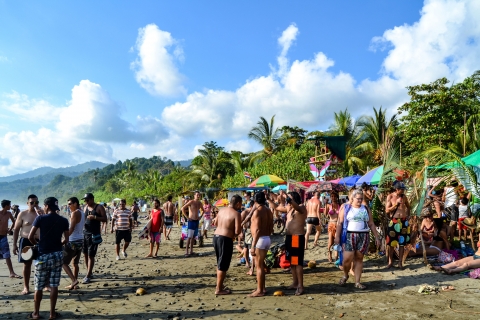 Envision Festival
This event happens once a year in Uvita de Puntarenas and attracts people from all over the world. This festival is a must add to your bucket list.