














 Warm Sea Without Extreme Heat: 8 Beach Destinations With Comfortable Weather
Love warm seawater but not extreme heat? Compare eight beach destinations where the sea stays warm while daytime temperatures remain comfortable.
This page shows both the average monthly rainfall and the number of rainy days in La Misión, Mexico. Long-term data from 1990 to 2020 was used to calculate these averages. Let's now guide you through the details for a complete overview.
La Misión typically sees modest rainfall throughout the year, with an average annual precipitation of 323 mm (13 in). The city experiences a distinct dry season during certain months, as illustrated in the graph below.


The seasons in La Misión, bring significant changes in precipitation. The wettest month, February, receives moderate rainfall, with an average of 80 mm (3.1 in) of precipitation. This rainfall is distributed across 5 rainy days.
In contrast, the driest month, August, experiences much less rainfall, totaling 1.9 mm (0.1 in) over a single rainy day. These distinct seasonal differences provide diverse experiences throughout the year.February, the wettest month, has a maximum daytime temperature of 18°C (64°F). During the driest month August you can expect a temperature of 25°C (77°F). For more detailed insights into the city's temperatures, visit our La Misión Temperature page.
The map below shows the annual precipitation across Mexico. You can also select the different months in case you are interested in a specific month.
La Misión's average annual precipitation is 323 mm (13 in). Let's compare this to some popular worldwide tourist destinations:
Seville, Spain, experiences 541 mm (21 in) of rainfall annually, with wet winters and dry summers typical of southern Spain.
In Seoul, South Korea, the average annual precipitation is 1237 mm (49 in), with most rain falling during the summer monsoon season.
Melbourne, Australia, has 690 mm (27 in) of rainfall annually, spread fairly evenly throughout the year.
Singapore, situated near the equator, gets 2581 mm (102 in) of rainfall annually, with no distinct dry season and consistent monthly precipitation.
Precipitation amounts are measured using specific gauges installed at weather stations, collecting both rain and snow and any other type of precipitation. Rainfall is measured directly in millimeters, while that from snow and ice is obtained by melting it. Automated systems often incorporate heaters to make this easier.
Information from these stations is transmitted via Wi-Fi, satellite, GPS, or telephone connections to central monitoring networks. This information is immediately updated and integrated into weather models and forecasts.
The proximity of a location to a large body of water can significantly affect its rainfall patterns:
For more detailed information about La Misión's weather, including sunshine hours, humidity levels, and temperature data, visit our La Misión Climate page.
Pick a month to see the average temperature, rainfall and sunshine in La Misión - and find the best time to visit.
Temperature Rainfall Humidity
See the full La Misión climate overview or explore weather in Mexico.
Where to go in November - average daytime high across popular destinations.
Need travel inspiration? Check out our bucket list articles and be inspired.
Warm Sea Without Extreme Heat: 8 Beach Destinations With Comfortable Weather
Love warm seawater but not extreme heat? Compare eight beach destinations where the sea stays warm while daytime temperatures remain comfortable.

 Best Spring Break Destinations for Great Weather and Fewer Crowds
Skip crowded spring break resorts. Compare March weather and travel style in Puerto Escondido, San Juan del Sur, Roatán, Caye Caulker and Curaçao.
 Warm Days, Cool Nights: 8 Destinations With the Perfect Day-Night Temperature
Prefer warm sunny days but cool evenings? Compare eight destinations with daytime temperatures of around 25–30°C, cooler nights, low rainfall and plenty of sunshine.
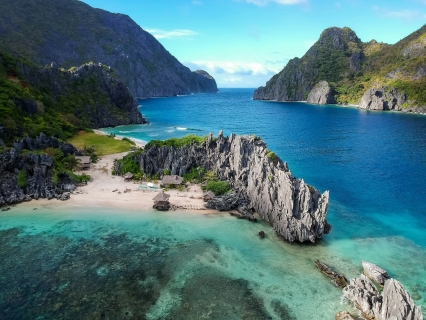
 Where to Travel in July and August: Mexico, Thailand, Indonesia or Somewhere Else?
Compare July and August weather in Mexico, Thailand, Indonesia, Zanzibar and Sri Lanka, using historical climate data for temperature, rainfall and sunshine.