















 7 of the most budget-friendly destinations in Europe
Discover Europe's top budget-friendly destinations including Budapest, Kotor, Krakow, and more, perfect for affordable and exciting travel.
This page shows both the average monthly rainfall and the number of rainy days in Csesznek, Veszprem, Hungary. The figures are based on a 30-year period (1990–2020) to provide a reliable average. Let's explore the details to provide you with a complete overview.
Generally, Csesznek receives mid-range precipitation levels, with 753 mm (30 in) annually.
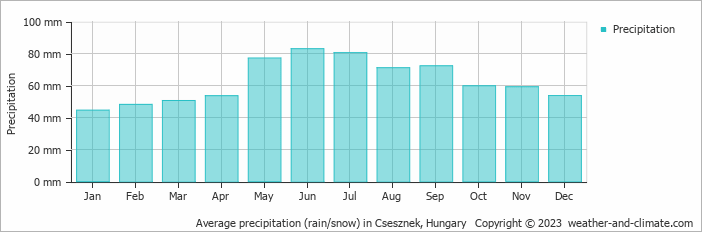
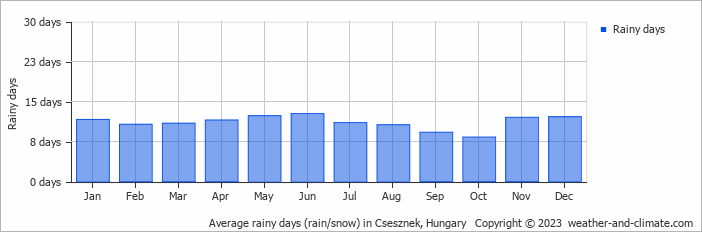
The amount of precipitation varies moderately throughout the year. The wettest month, June, sees around 83 mm (3.3 in) of rainfall, perfect for those who enjoy a bit of rain now and then. The driest month, January, still receives a respectable 45 mm (1.8 in) of snow/rainfall.
June, the wettest month, has a maximum daytime temperature of 26°C (79°F). During the driest month January you can expect a temperature of 4°C (39°F). For more detailed insights into the city's temperatures, visit our Csesznek Temperature page.
The map below shows the annual precipitation across Hungary. You can also select the different months in case you are interested in a specific month.
Csesznek's average annual precipitation is 753 mm (30 in). Let's compare this to some popular worldwide tourist destinations:
In Lisbon, Portugal, the average annual precipitation is 774 mm (30 in), characterized by wet winters and dry summers typical of the Mediterranean climate.
In Seoul, South Korea, the average annual precipitation is 1237 mm (49 in), with most rain falling during the summer monsoon season.
In Tokyo, Japan, the average annual precipitation is 1528 mm (60 in), with significant summer rains due to typhoon season.
Singapore, situated near the equator, gets 2581 mm (102 in) of rainfall annually, with no distinct dry season and consistent monthly precipitation.
Precipitation amounts are measured using specific gauges installed at weather stations, collecting both rain and snow and any other type of precipitation. Rainfall is measured directly in millimeters, while that from snow and ice is obtained by melting it. Automated systems often incorporate heaters to make this easier.
Information from these stations is transmitted via Wi-Fi, satellite, GPS, or telephone connections to central monitoring networks. This information is immediately updated and integrated into weather models and forecasts.
Precipitation has a very strong role in determining the local climate and ecosystem:
For more detailed information about Csesznek's weather, including sunshine hours, humidity levels, and temperature data, visit our Csesznek Climate page.
Pick a month to see the average temperature, rainfall and sunshine in Csesznek - and find the best time to visit.
Temperature Rainfall
See the full Csesznek climate overview or explore weather in Hungary.
Where to go in September - average daytime high across popular destinations.
Hajdúszoboszló 24°C (75°F) Budapest23°C (73°F) Balatonlelle
 22°C (72°F) Balatonmáriafürdő22°C (72°F) Eger
 23°C (73°F) Zalakaros23°C (73°F) Hévíz23°C (73°F) Siófok23°C (73°F)
 Need travel inspiration? Check out our bucket list articles and be inspired.
7 of the most budget-friendly destinations in Europe
Discover Europe's top budget-friendly destinations including Budapest, Kotor, Krakow, and more, perfect for affordable and exciting travel.
 Sziget Festival
Sziget Hungary is the largest open-air festival in Europe. The festival takes place seven days and you can enjoy more than 1,000 performances on 60 different stages.
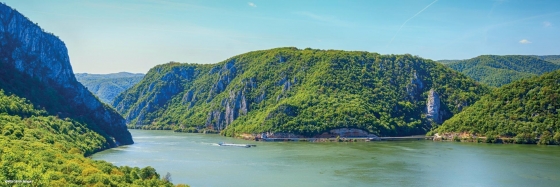
 Cycle the Danube trail
The Danube cycle route is one of the most popular cycling routes in Europe, and rightly so, because it is a varied route that is interesting both in terms of culture and nature.
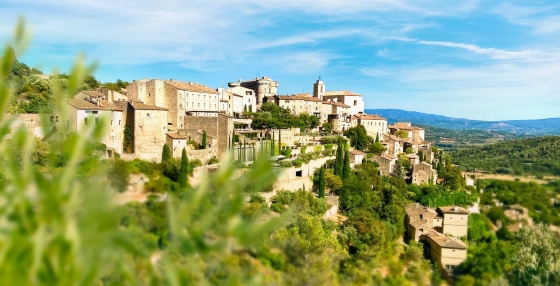
 The 10 most charming villages in France
Discover France's top 10 beautiful villages. From Normandy to the Côte d'Azur, experience quaint squares and cobbled streets. Which one will you visit this summer?