
















 Tanzania in July: Zanzibar, Safari or Kilimanjaro?
Compare Tanzania weather in July for Zanzibar, Nungwi, Jambiani, Dar es Salaam and Moshi to plan a beach, safari or Kilimanjaro trip.
Saadani in Tanzania enjoys a stable climate, with daytime temperatures staying close to 29°C (84°F) throughout the year. Explore the full monthly breakdown below.
Year-round, Saadani experiences a consistently comfortable climate. Maximum daytime temperatures range from a very warm 30°C (86°F) in March to a comfortable 28°C (82°F) in the coolest month, August. Nighttime temperatures range from 26°C (79°F) in March to 22°C (72°F) in August.
The chart below illustrates the average maximum day and minimum night temperatures in Saadani by month:
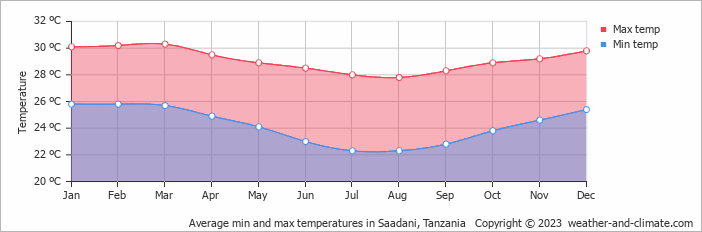
The coldest point of the day usually falls between 4 AM and 6 AM, with temperatures peaking around 3 PM.
The chart below shows the average temperature throughout the year:
Average high and low temperatures for each day of the month based on long-term records. 37-year average (1983-2025)
Browse day-by-day temperature records for Saadani spanning 51 years. Select any month and year to see actual high and low temperatures recorded on each day.
The map below shows the annual temperature across Tanzania. You can also select individual months if you want to compare a specific time of year.
Saadani's average annual maximum temperature is 29°C (84°F). To put that in context, here's how it compares to a few well-known destinations:
Lisbon, Portugal averages 21°C (70°F) annually, warm summers, mild winters, and rain mainly in the cooler months.
Zermatt, Switzerland averages just 4°C (39°F) annually due to its altitude, with very cold winters and cool summers even at its warmest.
Osaka, Japan averages 22°C (72°F) annually, with hot humid summers, mild winters, and pleasant spring and autumn seasons.
Tokyo, Japan averages 21°C (70°F) a year, with hot summers, cool winters, and a well-defined cherry blossom spring.
Climate temperature data is typically calculated as a 30-year average. This smooths out year-to-year variability and gives a more reliable picture of what a place is actually like, rather than what happened in any single unusual year.
The readings come from a range of sources, land-based weather stations, ocean buoys, ships, and satellites. That data is collected by weather services around the world, then pooled, quality-checked, and averaged to produce the climate records you see here.
Global average temperatures have risen by around 1.2°C since the pre-industrial era, and the effects are visible across many regions. Winters are milder on average, with fewer frost days and less snow in many parts of the world. Heatwaves are more frequent and more intense, and Europe's summers of 2018, 2019, and 2020 all set records.
Summers are also getting drier in some areas, while winter rainfall has increased in others. This contributies to higher river levels and more flooding. In many countries, spring arrives earlier and autumn lasts longer. It has knock-on effects for wildlife, agriculture, and local ecosystems.
For more on Saadani's weather, including monthly rainfall, sunshine hours, and humidity, visit our Saadani climate page.
Pick a month to see the average temperature, rainfall and sunshine in Saadani - and find the best time to visit.
Temperature Rainfall
See the full Saadani climate overview or explore weather in Tanzania.
Where to go in October - average daytime high across popular destinations.
Dar es Salaam 31°C (88°F) Bwejuu
 29°C (84°F) Zanzibar City30°C (86°F) Matemwe28°C (82°F) Paje29°C (84°F) Jambiani29°C (84°F) Nungwi28°C (82°F) Moshi27°C (81°F)
 Need travel inspiration? Check out our bucket list articles and be inspired.
Tanzania in July: Zanzibar, Safari or Kilimanjaro?
Compare Tanzania weather in July for Zanzibar, Nungwi, Jambiani, Dar es Salaam and Moshi to plan a beach, safari or Kilimanjaro trip.
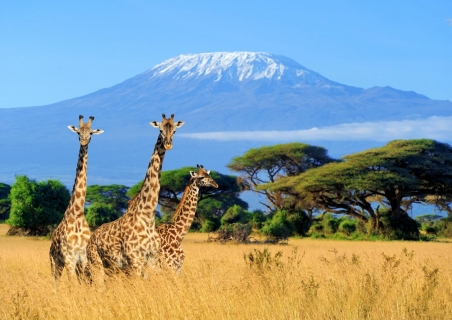 Climb the Kilimanjaro
The Kilimanjaro with its 5895 meters (19340 ft) is the roof of Africa. Climbing Kilimanjaro is a crazy experience and if you like adventure it’s an absolute must for the bucket list.
 The Serengeti
The Serengeti has wide, unending grasslands and is known for its spectacular sunsets. The park also offers the biggest wildlife population in the whole of Africa.
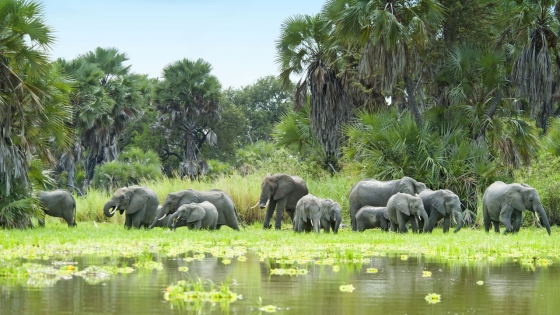 Walk Safari In the Selous Game Reserve
We feel the Selous Game Reserve is undoubtedly one of the most beautiful nature reserves in Tanzania and we recommend adding it to your bucket list. Here you can still experience the real Africa.