

Moutayiaka Temperature by Month
The average annual maximum temperature in Moutayiaka, Cyprus is 24°C (75°F), with daytime highs ranging from 16°C (61°F) in January to 32°C (90°F) in August. This page covers monthly averages, day-night differences, and how Moutayiaka compares to cities worldwide.
Moutayiaka Monthly Temperatures
The climate in Moutayiaka is dynamic, ranging widely from moderate in winter to very warm in summer. Nights are significantly colder, with lows dropping from 26°C (79°F) in August to 10°C (50°F) in January.
The chart below illustrates the average maximum day and minimum night temperatures in Moutayiaka by month:
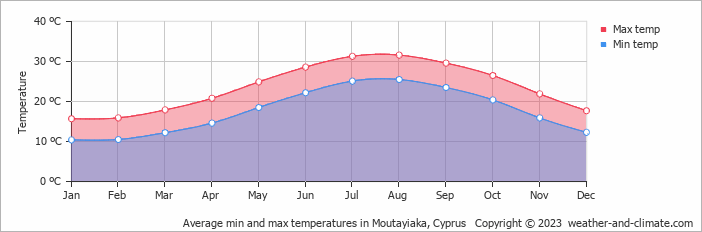
The coolest part of the day is typically between 4 AM and 6 AM, while 3 PM is usually the warmest, when solar heating is at its peak. August, the city's warmest month, averages 364 hours of sunshine.
The chart below shows the average temperature throughout the year:
Temperature: Moutayiaka vs Cyprus
The map below shows the annual temperature across Cyprus. You can also select individual months if you want to compare a specific time of year.
 very warm
 warm
warm
 pleasant
 moderate
 cold
cold
 very cold
Moutayiaka vs World: Temperature Compared
Moutayiaka's average annual maximum temperature is 24°C (75°F). To put that in context, here's how it compares to a few well-known destinations:
Rome, Italy averages 20°C (68°F) annually, with reliably warm summers and comfortable winters.
Glasgow, Scotland averages 13°C (55°F) a year — mild but often grey, with cold winters and rarely hot summers.
Boston, USA averages 16°C (61°F) annually, with four distinct seasons and cold winters that rival northern Europe.
Brisbane, Australia averages 26°C (79°F) a year, with warm winters and hot, humid summers.
Climate temperature data is typically calculated as a 30-year average. This smooths out year-to-year variability and gives a more reliable picture of what a place is actually like, rather than what happened in any single unusual year.
The readings come from a range of sources — land-based weather stations, ocean buoys, ships, and satellites. That data is collected by weather services around the world, then pooled, quality-checked, and averaged to produce the climate records you see here.
Seasonal temperature shifts influence more than just how warm it feels — they also drive changes in rainfall, cloud cover, and wind patterns throughout the year.
Warmer air holds more moisture, which tends to mean heavier or more frequent rain during the warmer months. When temperatures drop in winter, any precipitation that does fall is more likely to come as snow or sleet, though in Moutayiaka this rarely lasts long on the ground.
For more on Moutayiaka's weather — including monthly rainfall, sunshine hours, and humidity — visit our Moutayiaka climate page.