Mu Si Weather & Climate: Best Time to Visit
Average temperatures, rainfall, sunshine and the best time to visit Mu Si.
Climate overview of Mu Si
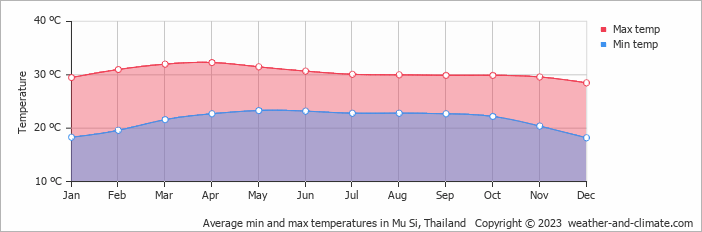
Mu Si, Nakhon Ratchasima Province, Thailand, has a stable climate with little temperature variation across the year. Average daytime temperatures hover around 30°C (86°F), peaking in April at 32°C (90°F) and dipping in December to 29°C (84°F).
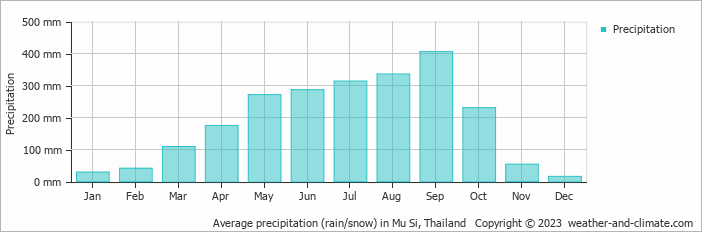
The city has a wet climate, receiving around 2264 mm (89 in) of rainfall per year. Despite the high annual total, it has distinct dry (December to January) and wet (April to October) seasons. September is the wettest month.
Mu Si Weather by Month
Pick a month to see the average temperature, rainfall and sunshine in Mu Si - and find the best time to visit.

Monthly Temperature in Mu Si
With minimal seasonal shifts, Mu Si experiences a constant climate year-round. On average, daytime temperatures range from a very warm 32°C (90°F) in April to a comfortable 29°C (84°F) in December.
Nighttime temperatures range from 23°C (73°F) in April to 18°C (64°F) in December.
Check out our detailed temperature page for more information.
Temperature ranges by month
Rainfall in Mu Si
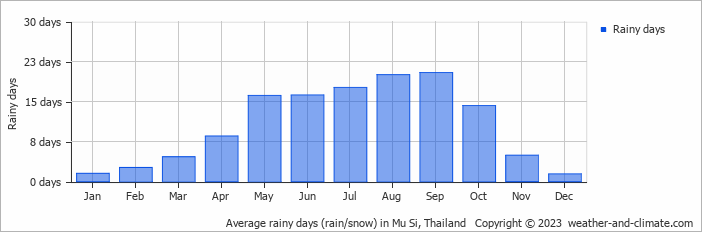
Mu Si has a notably wet climate with abundant precipitation, recording 2264 mm (89 in) of rainfall per year. The seasons in Mu Si bring significant changes in precipitation. The wettest month, September, receives heavy rainfall, with an average of 406 mm (16 in) of precipitation. This rainfall is distributed across 20 rainy days.
In contrast, the driest month, December, experiences much less rainfall, totaling 15 mm (0.6 in) over a single rainy day. These distinct seasonal differences provide diverse experiences throughout the year. For more details, please visit our Mu Si Precipitation page.
The mean monthly precipitation over the year, including rain, hail, and snow
The average number of days each month with precipitation
Best Time to Visit Mu Si
Monthly ratings reflect general weather comfort, based on daytime temperature and rainfall. Swimming and winter conditions are highlighted separately where relevant.
- Best overall: December
- Warmest weather: February, March, April and May
- Fewest rainy days: January, February and December
- Wettest months: May, June, July, August, September and October, when rainfall is highest.
- Seasonal pattern: Distinct dry (December to January) and wet (April to October) seasons
Frequently asked questions about the climate in Mu Si
What is the best time to visit Mu Si?
December typically offers the most optimal weather in Mu Si. In contrast, May, June, July, August, September and October tend to have less optimal conditions. Mu Si has distinct dry (December to January) and wet (April to October) seasons.
What temperatures can I expect in Mu Si?
Daytime highs range from 29°C (84°F) in December to 32°C (90°F) in April. Nighttime lows range from 18°C (64°F) to 23°C (73°F). Temperatures stay relatively stable year-round.
How much rain does Mu Si get?
Annual rainfall is around 2264 mm (89 in). September is the wettest month with 406 mm (16 in), while December is the driest with 15 mm (0.6 in).
Mu Si 3-Day Forecast
Mu Si on the map
Mu Si is highlighted - select any city to see its climate.
Popular this month
Where to go in September - average daytime high across popular destinations.
 Bangkok
 34°C (93°F) Chiang Mai33°C (91°F) Jomtien Beach32°C (90°F) Hua Hin32°C (90°F) Ao Nang Beach30°C (86°F) Koh Samui30°C (86°F) Ko Lanta30°C (86°F) Patong Beach29°C (84°F)
















Bucket list
Need travel inspiration? Check out our bucket list articles and be inspired.
Discover Kok Kood: a hidden gem in Thailand
Discover the hidden gem of Thailand - Koh Kood! Explore stunning beaches, waterfalls and eco-friendly resorts while enjoying a peaceful atmosphere away from the crowds.
Discover Thailand: An Ultimate Guide for Yogis
Explore Thailand's best for yogis: serene retreats, spiritual growth, and adventure. Dive into yoga, meditation, and nature's tranquility for an unforgettable journey.
Trekking in Northern Thailand
One of the most beautiful attractions in Thailand is trekking along mountain villages north of Chiang Mai. The best time to trek is November until February.
Elephant Haven in Thailand: Kindred Spirit Sanctuary
Explore the Kindred Spirit Elephant Sanctuary in Thailand. Experience hiking, observe elephants in nature, and see the positive impact on the community.