The amount of sunshine is fundamental to comprehending a place's climate.
This page shows the total number of hours of direct sunlight per month and the average hours per day in Nusa Lembongan, Indonesia.
The numbers reflect climate data gathered over a 30-year period, from 1990 to 2020.
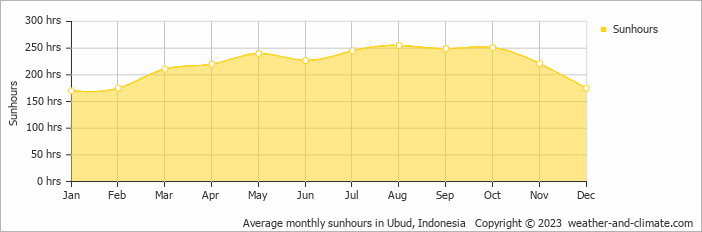
Monthly hours of sunshine
Data from: Ubud, Indonesia (28 KM, 17 Miles).
Nusa Lembongan Nusa Penida experiences both sunny and cloudy or rainy periods, with some seasonal variation. It receives
approximately 255 hours of sunshine in August
and 170 hours in January,
contributing to a total annual sunshine amount of 2639 hours.
Daily hours of sunshine
Data from: Ubud, Indonesia (28 KM, 17 Miles).
This means you can enjoy sunny spells year-round. August
sees up to 8.5 hours of daily sunshine, perfect for a sunny trip.
January, the least sunny month, still offers a generous
5.7 hours of sun despite this cloudier / rainier time of the year.
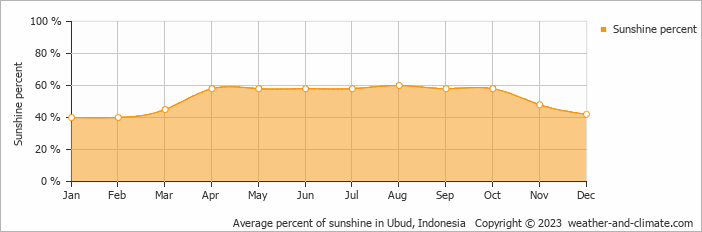
Average percent of sunshine
Data from: Ubud, Indonesia (28 KM, 17 Miles).
On average the sun shines 60% of the time during the day in August, the highest percentage of any month.
February has the lowest percentage at 40%.


















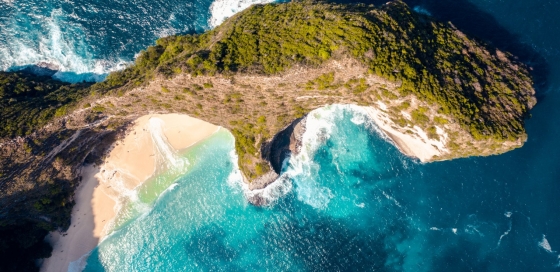
 Breathtaking Nusa Lembongan