
















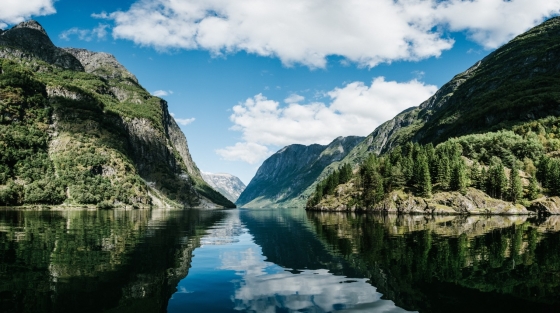
 The rugged landscape of the Norwegian fjords
This landscape is rated as the most beautiful in the world and it is something you need to experience at least once in your life.
Average temperatures, rainfall, sunshine and the best time to visit Russenes.
 –
10-day forecastForecast
Russenes, Finnmark, Norway, sees big temperature differences between seasons, with July peaking at 17°C (63°F) and February dropping to -4°C (25°F).
Annual rain/snowfall is moderate at around 729 mm (29 in), with June being the wettest month. The city also has mild summers and very cold winters.
Pick a month to see the average temperature, rainfall and sunshine in Russenes - and find the best time to visit.
Visitors to Russenes can expect significant temperature changes throughout the year. Average daytime temperatures reach a moderate 17°C (63°F) in July. In February, the coolest month of the year, temperatures drop to a very cold -4°C (25°F).
At night, temperatures range from around 9°C (48°F) in July to -11°C (12°F) in February.
Check out our detailed temperature page for more information.

Generally, Russenes experiences moderate precipitation patterns, averaging 729 mm (29 in) yearly. Despite minor fluctuations, Russenes enjoys fairly consistent precipitation throughout the year. In June, you can expect around 74 mm (2.9 in) of precipitation, while in April, Russenes receives about 49 mm (1.9 in). For more details, please visit our Russenes Precipitation page.


Monthly ratings reflect general weather comfort, based on daytime temperature and rainfall. Swimming and winter conditions are highlighted separately where relevant.
July and August typically offer the most optimal weather in Russenes. In contrast, January, February, March, April, May, October, November and December tend to have less optimal conditions. Russenes has mild summers and very cold winters.
Daytime highs range from -4°C (25°F) in February to 17°C (63°F) in July. Nighttime lows range from -11°C (12°F) to 9°C (48°F). Temperatures vary considerably through the year.
Annual rainfall is around 729 mm (29 in). June is the wettest month with 74 mm (2.9 in), while April is the driest with 49 mm (1.9 in).
Russenes is highlighted - select any city to see its climate.
Where to go in November - average daytime high across popular destinations.
Not sure yet where to go? See where to go in Europe, month by month, in our weather planner.
Need travel inspiration? Check out our bucket list articles and be inspired.
The rugged landscape of the Norwegian fjords
This landscape is rated as the most beautiful in the world and it is something you need to experience at least once in your life.
 Discover Norway's Hidden Gem: The Littleisland Lighthouse
Explore Littleisland Lighthouse in Norway - a serene getaway offering unique stays, breathtaking views, and a journey into tranquil simplicity.
 The Majestic Geirangerfjord: Norway's Crown Jewel
Explore Norway's stunning Geirangerfjord, famous for its dramatic cliffs, waterfalls, and scenic routes. Breathtaking landscapes and outdoor adventures
 Swimming with orcas in Norway
The best travel period to travel to Norway for the orcas are the months October, November December, January and February. Swimming with orcas in Norway might be the bucket list trip of your life.