
















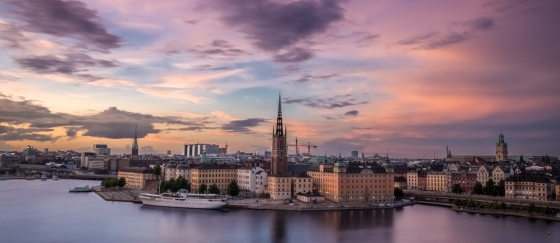
 Stockholm is one of the most beautiful cities in the world
The Swedish capital is special because of the mix of culture, nature and city. It's a city that should be on everyone's bucket list.
Average temperatures, rainfall, sunshine and the best time to visit Röstånga.
 –
–
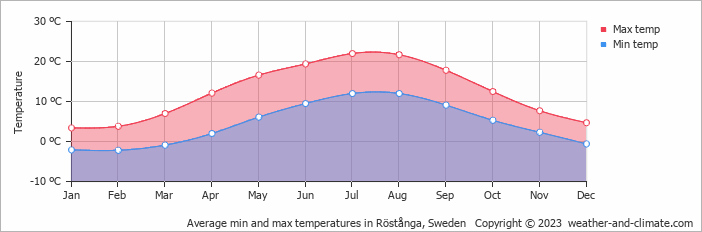
Temperatures in Röstånga, Skåne, Sweden, vary greatly throughout the year. July is the hottest month at 22°C (72°F), while January is the coldest at 3°C (37°F).
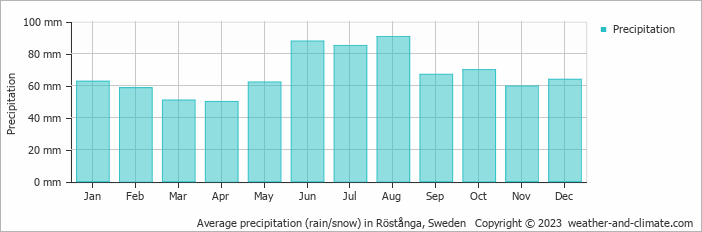
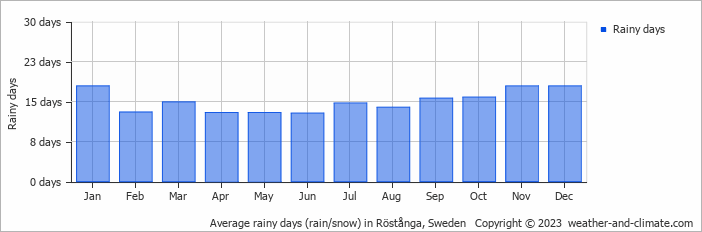
Annual rain/snowfall is moderate at around 807 mm (32 in), with August being the wettest month. The city also has warm summers and cold winters. Sunshine peaks in May, when the city sees around 9.2 hours of sunshine per day.
Pick a month to see the average temperature, rainfall and sunshine in Röstånga - and find the best time to visit.
The climate in Röstånga is known for significant temperature differences throughout the year, making the weather dynamic. Average daytime temperatures reach a comfortable 22°C (72°F) in July. In January, the coolest month of the year, temperatures drop to a chilly 3°C (37°F).
At night, temperatures range from around 12°C (54°F) in July to -2°C (28°F) in January.
Check out our detailed temperature page for more information.
Generally, Röstånga receives mid-range precipitation levels, with 807 mm (32 in) annually. Röstånga experiences moderate seasonal variation in rainfall, with monthly averages ranging from 91 mm (3.6 in) in August, the wettest month, and 50 mm (2 in) in April, the driest month. For more details, please visit our Röstånga Precipitation page.
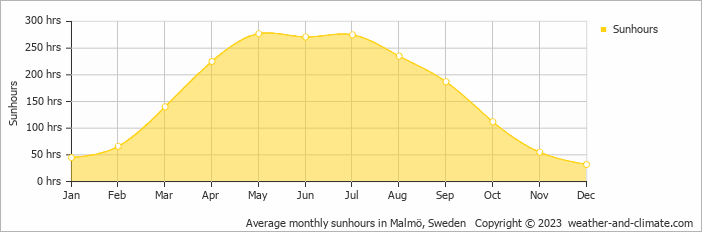
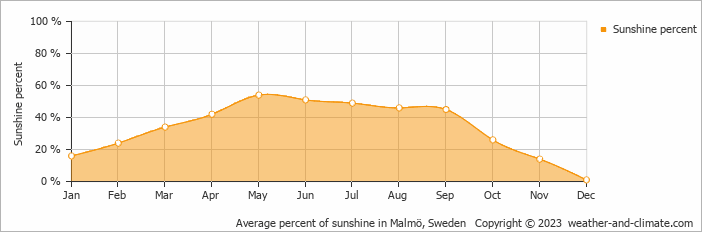
Röstånga can be enjoyed more throughout the sunniest month of May under a blue sky, with approximately 9.2 hours of sunshine daily. In contrast, the city experiences much darker days in December, with only 1.1 hours of sunlight per day.
Visit our detailed sunshine hours page for more information.
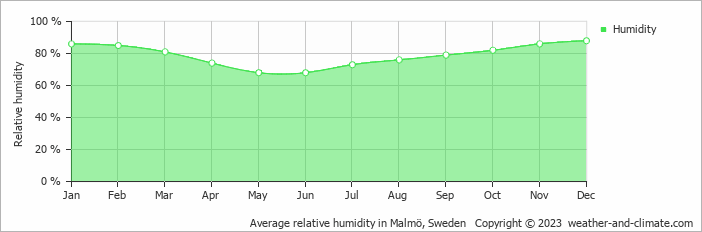
The relative humidity is high throughout the year in Röstånga.
The city experiences its highest humidity in December, reaching 88%. In May, the humidity drops to its lowest level at 68%. What does this mean? Read our detailed page on humidity levels for further details.
Monthly ratings reflect general weather comfort, based on daytime temperature and rainfall. Swimming and winter conditions are highlighted separately where relevant.
July and August typically offer the most optimal weather in Röstånga. In contrast, January, February, March, November and December tend to have less optimal conditions. Röstånga has warm summers and cold winters.
Daytime highs range from 3°C (37°F) in January to 22°C (72°F) in July. Nighttime lows range from -2°C (28°F) to 12°C (54°F). Temperatures vary considerably through the year.
Annual rainfall is around 807 mm (32 in). August is the wettest month with 91 mm (3.6 in), while April is the driest with 50 mm (2 in).
Röstånga receives around 1,920 hours of sunshine per year. May is the sunniest month with 277 hours, while December is the cloudiest with just 32 hours.
Röstånga is highlighted - select any city to see its climate.
Where to go in September - average daytime high across popular destinations.
Lund 18°C (64°F) Malmö19°C (66°F) Gothenburg
 18°C (64°F) Karlskrona17°C (63°F) Falkenberg18°C (64°F) Simrishamn17°C (63°F) Stockholm17°C (63°F) Visby
 17°C (63°F)
 Need travel inspiration? Check out our bucket list articles and be inspired.
Stockholm is one of the most beautiful cities in the world
The Swedish capital is special because of the mix of culture, nature and city. It's a city that should be on everyone's bucket list.
 Nordic skating in Sweden
In between the snowy hills and dense pine forests you will find an innumerable amount of lakes in Sweden, large and small ones on which you can skate wonderfully.
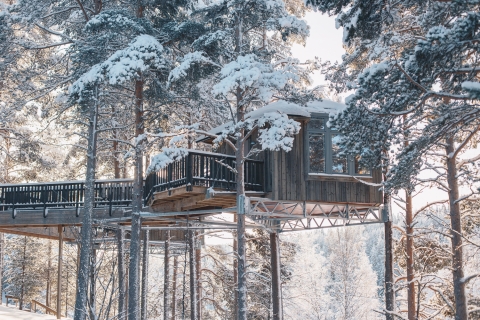 Sleep among the trees in Sweden
If you are looking for a tranquil retreat in Swedish Lapland we recommend to stay at Granó Beckasin. It has a fantastic location on the Ume river where you will experience silence and tranquility.
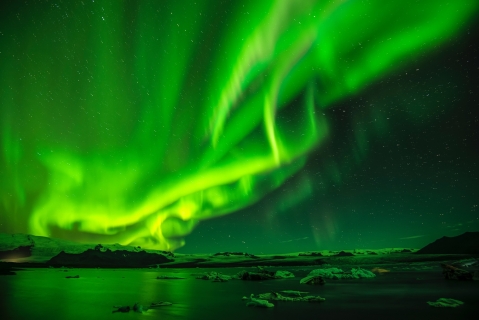
 See the northern lights
The northern lights, polar light or Aarora Borealis is a true spectacle of nature! Green, sometimes purple, red and yellow streaks of light colors the dark skies.