
















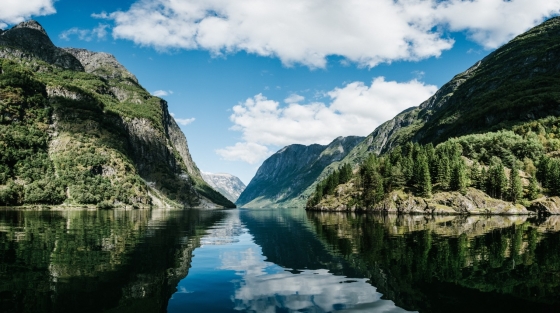
 The rugged landscape of the Norwegian fjords
This landscape is rated as the most beautiful in the world and it is something you need to experience at least once in your life.
Average temperatures, rainfall, sunshine and the best time to visit Oggevatn.
 –
10-day forecastForecast
Oggevatn, Aust-Agder, Norway, experiences significant temperature variation throughout the year. Summers bring daytime highs of 21°C (70°F) in July, while winters cool to 3°C (37°F) in January.
The city has a wet climate, receiving around 1382 mm (54 in) of rain/snowfall per year. Despite the high annual total, it has pleasant summers and cold winters. October is the wettest month. Sunshine peaks in June, when the city sees around 9.2 hours of sunshine per day.
Pick a month to see the average temperature, rainfall and sunshine in Oggevatn - and find the best time to visit.
Depending on the time of the year, temperatures range from pleasant to chilly in Oggevatn. On average, daytime temperatures range from a pleasant 21°C (70°F) in July to a chilly 3°C (37°F) in January.
Nighttime temperatures range from 12°C (54°F) in July to -3°C (27°F) in January.
Check out our detailed temperature page for more information.

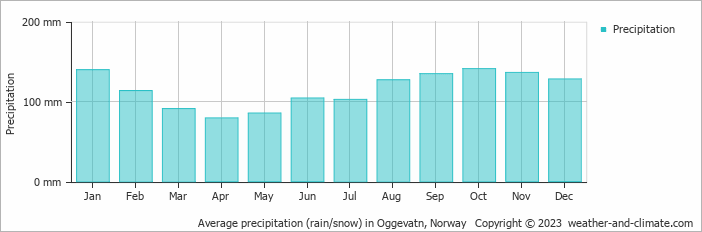
Oggevatn has a relatively rain/snowy climate with high precipitation levels, averaging 1382 mm (54 in) of rain/snowfall annually. The amount of precipitation varies moderately throughout the year. The wettest month, October, sees around 141 mm (5.6 in) of rainfall, perfect for those who enjoy a bit of rain now and then. The driest month, April, still receives a respectable 79 mm (3.1 in) of rainfall. For more details, please visit our Oggevatn Precipitation page.

In Oggevatn, summer days are longer and more sunny, with daily sunshine hours peaking at 9.2 hours in June. As the darker season arrives, the brightness of the sun becomes less. December sees a soft sun for only 1.3 hours per average day.
Visit our detailed sunshine hours page for more information.

Monthly ratings reflect general weather comfort, based on daytime temperature and rainfall. Swimming and winter conditions are highlighted separately where relevant.
July and August typically offer the most optimal weather in Oggevatn. In contrast, January, February, March, October, November and December tend to have less optimal conditions. Oggevatn has pleasant summers and cold winters.
Daytime highs range from 3°C (37°F) in January to 21°C (70°F) in July. Nighttime lows range from -3°C (27°F) to 12°C (54°F). Temperatures vary considerably through the year.
Annual rainfall is around 1382 mm (54 in). October is the wettest month with 141 mm (5.6 in), while April is the driest with 79 mm (3.1 in).
Oggevatn receives around 1,785 hours of sunshine per year. June is the sunniest month with 275 hours, while December is the cloudiest with just 39 hours.
Oggevatn is highlighted - select any city to see its climate.
Where to go in November - average daytime high across popular destinations.
Not sure yet where to go? See where to go in Europe, month by month, in our weather planner.
Need travel inspiration? Check out our bucket list articles and be inspired.
The rugged landscape of the Norwegian fjords
This landscape is rated as the most beautiful in the world and it is something you need to experience at least once in your life.
 Discover Norway's Hidden Gem: The Littleisland Lighthouse
Explore Littleisland Lighthouse in Norway - a serene getaway offering unique stays, breathtaking views, and a journey into tranquil simplicity.
 The Majestic Geirangerfjord: Norway's Crown Jewel
Explore Norway's stunning Geirangerfjord, famous for its dramatic cliffs, waterfalls, and scenic routes. Breathtaking landscapes and outdoor adventures
 Swimming with orcas in Norway
The best travel period to travel to Norway for the orcas are the months October, November December, January and February. Swimming with orcas in Norway might be the bucket list trip of your life.