



















 Chase the autumn leaves in Japan
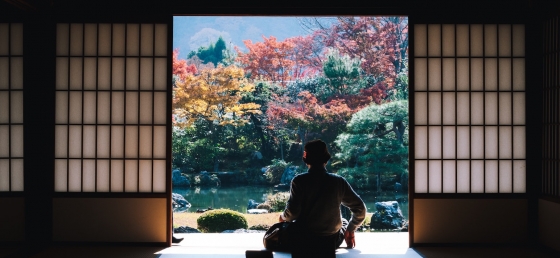
Japan is one of these cases which turns into a gold, yellow and orange fairy tale starting from September. And we can honestly say: We cannot imagine a more beautiful season to visit Japan.
Average temperatures, rainfall, sunshine and the best time to visit Fukuyama.
 –
–
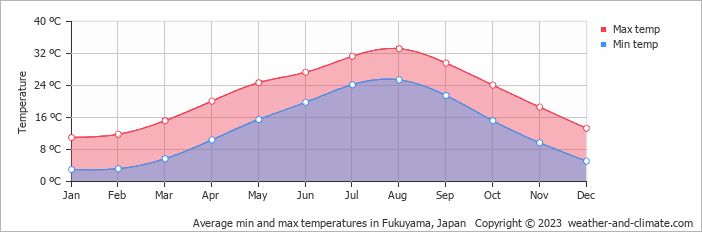
The climate in Fukuyama, Hiroshima, Japan, is marked by large temperature swings across the seasons, ranging from 33°C (91°F) in August to 11°C (52°F) in January.
The city receives considerable rainfall, with around 1329 mm (52 in) annually. June is the wettest month. It has very warm summers and cold winters. The sunniest month is May, with 7.1 hours of sunshine per day on average.
Pick a month to see the average temperature, rainfall and sunshine in Fukuyama - and find the best time to visit.
In Fukuyama, temperatures differ significantly between summer and winter months. Typically, average maximum daytime temperatures range from a very warm 33°C (91°F) in August to a chilly 11°C (52°F) in the coolest month, January.
Nights vary from 25°C (77°F) in August to around 3°C (37°F) during the colder months.
Check out our detailed temperature page for more information.
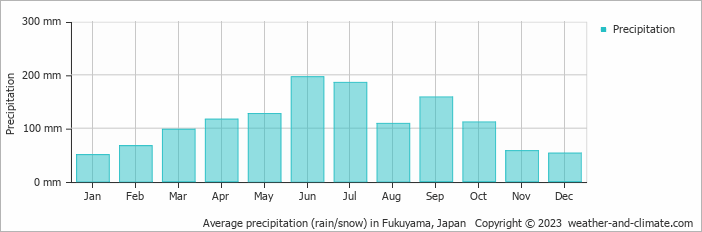
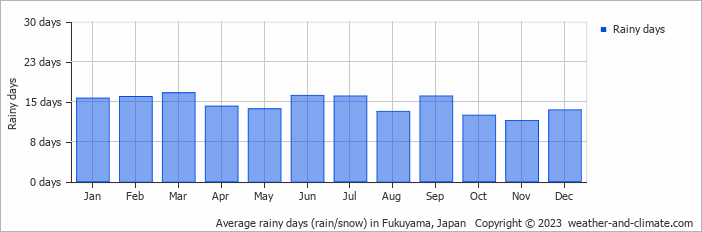
Fukuyama experiences significant rainfall throughout the year, averaging 1329 mm (52 in) of precipitation annually. The climate in Fukuyama shows significant variation throughout the year. Expect heavy rainfall in June, the wettest month, with an average of 196 mm (7.7 in) of precipitation over 16 rainy days.
In contrast, the driest month January offers drier and sunnier days, with around 50 mm (2 in) of rainfall over 16 rainy days. For more details, please visit our Fukuyama Precipitation page.
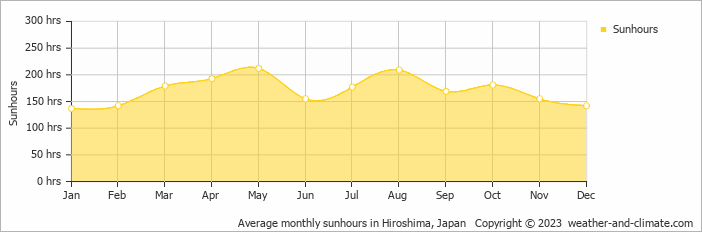
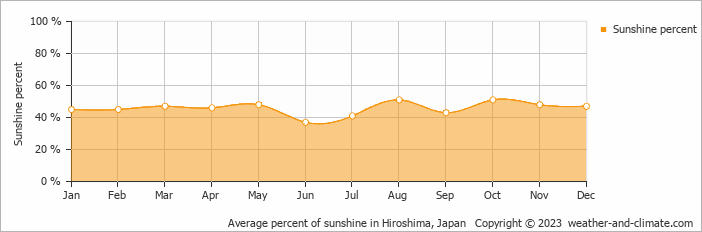
Fukuyama offers a pleasant mix of sunny and slightly overcast days. The difference in sunshine hours between May (7.1 hours daily) and January (4.6 hours daily) provides a bit of variety for visitors and residents.
Visit our detailed sunshine hours page for more information.
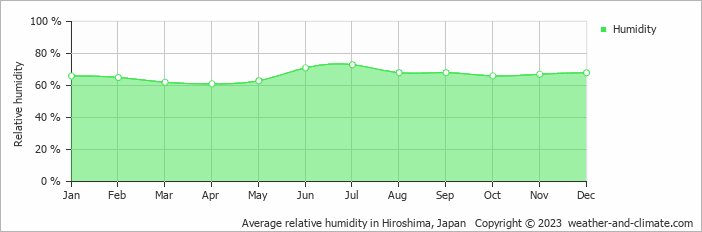
The relative humidity is high throughout the year in Fukuyama.
The city experiences its highest humidity in July, reaching 73%. In April, the humidity drops to its lowest level at 61%. What does this mean? Read our detailed page on humidity levels for further details.
Monthly ratings reflect general weather comfort, based on daytime temperature and rainfall. Swimming and winter conditions are highlighted separately where relevant.
April, May, October and November typically offer the most optimal weather in Fukuyama. In contrast, July and August tend to have less optimal conditions. Fukuyama has very warm summers and cold winters.
Daytime highs range from 11°C (52°F) in January to 33°C (91°F) in August. Nighttime lows range from 3°C (37°F) to 25°C (77°F). Temperatures vary considerably through the year.
Annual rainfall is around 1329 mm (52 in). June is the wettest month with 196 mm (7.7 in), while January is the driest with 50 mm (2 in).
Fukuyama receives around 2,051 hours of sunshine per year. May is the sunniest month with 212 hours, while January is the cloudiest with just 137 hours. Overall, Fukuyama enjoys abundant sunshine.
Fukuyama is highlighted - select any city to see its climate.
Where to go in September - average daytime high across popular destinations.
Need travel inspiration? Check out our bucket list articles and be inspired.
Chase the autumn leaves in Japan
Japan is one of these cases which turns into a gold, yellow and orange fairy tale starting from September. And we can honestly say: We cannot imagine a more beautiful season to visit Japan.
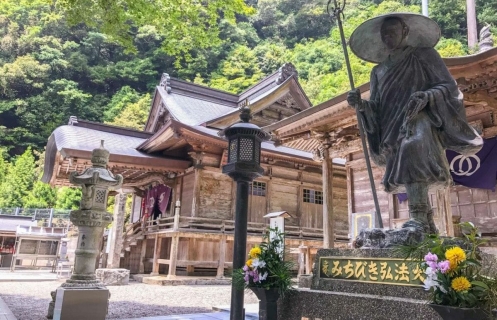 Walk the 88 temple circuit
We recommend walking the 88 temple circuit from April til October. Although June, July and August can be a bit wet, hot and humid.
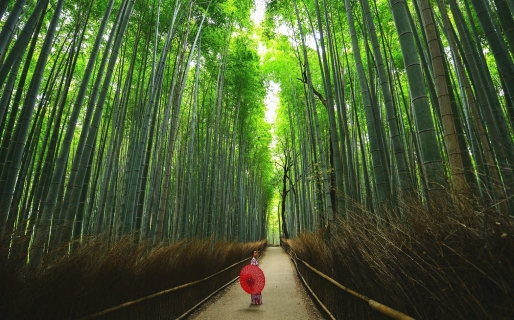 The famous bamboo forests of Arashiyama
The famous bamboo forests of Arashiyama lie just outside the city center of Kyoto and is unique in the world. If you look at photos of this bamboo forest, it looks like you have landed in a fairy-tale world.
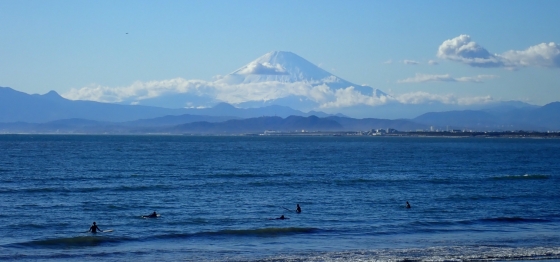 10 reasons why you should visit Japan in winter
Here are 10 reasons why you should plan a winter trip to Japan. During this period, popular sights are less busy and prices for flights and hotels much cheaper.