

















 10 Hidden gems in Asia you need to visit
Explore 10 hidden gems in Asia offering authentic experiences, from pristine beaches and remote islands to cultural treks and peaceful mountain villages.
Average temperatures, rainfall, sunshine and the best time to visit Cibodas.
 –
–
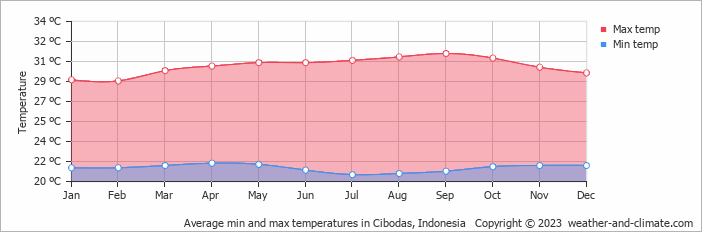
With consistently stable weather, Cibodas, Indonesia, sees little seasonal temperature change. Daytime highs average 30°C (86°F), ranging from 31°C (88°F) in September to 29°C (84°F) in February.
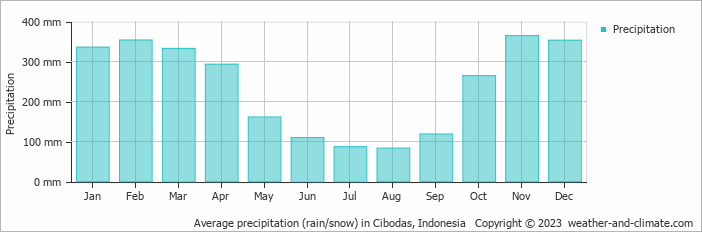
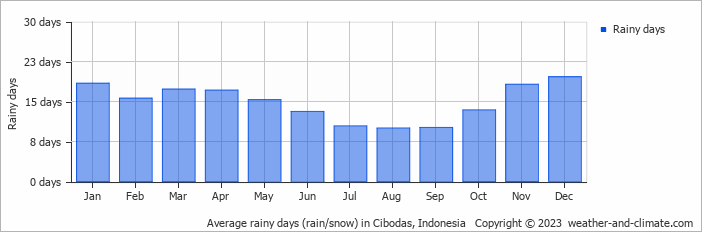
With around 2854 mm (112 in) of annual rainfall, Cibodas has a notably wet climate. However, this rainfall is not evenly distributed, the city has a distinct rainy season from October to April. The wettest month is November. The most sunshine falls in July, with an average of 8.3 hours of daily sunshine.
Pick a month to see the average temperature, rainfall and sunshine in Cibodas - and find the best time to visit.
The climate in Cibodas remains fairly constant, offering very warm temperatures throughout the year. Average daytime temperatures reach a very warm 31°C (88°F) in September. In February, the coolest month of the year, temperatures drop to a comfortable 29°C (84°F).
At night, temperatures range from around 22°C (72°F) in September to 21°C (70°F) in February.
Check out our detailed temperature page for more information.
Cibodas is known for its substantial rainfall, with annual precipitation reaching 2854 mm (112 in). Cibodas can be quite wet during November, receiving approximately 364 mm (14 in) of precipitation over 18 rainy days.
In contrast, during the driest month (August), you will experience much drier conditions, with 83 mm (3.3 in) of precipitation spread across 10 rainy days. For more details, please visit our Cibodas Precipitation page.
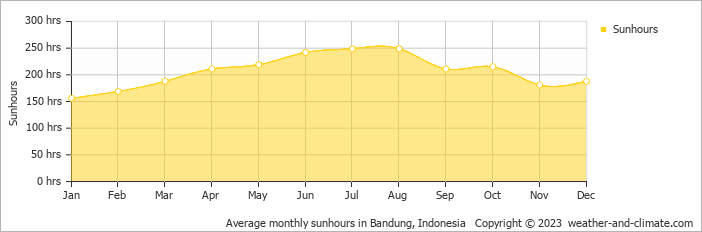
Cibodas experiences moderate variation in sunshine hours across the seasons. With 8.3 hours daily sunshine in July, it dips to 5.2 hours in January, offering a balanced mix of sunny and overcast days.
Visit our detailed sunshine hours page for more information.
Monthly ratings reflect general weather comfort, based on daytime temperature and rainfall. Swimming and winter conditions are highlighted separately where relevant.
July and August typically offer the most optimal weather in Cibodas. In contrast, January, February, March, April, October, November and December tend to have less optimal conditions. Cibodas has a distinct rainy season from October to April.
Daytime highs range from 29°C (84°F) in February to 31°C (88°F) in September. Nighttime lows range from 21°C (70°F) to 22°C (72°F). Temperatures stay relatively stable year-round.
Annual rainfall is around 2854 mm (112 in). November is the wettest month with 364 mm (14 in), while August is the driest with 83 mm (3.3 in).
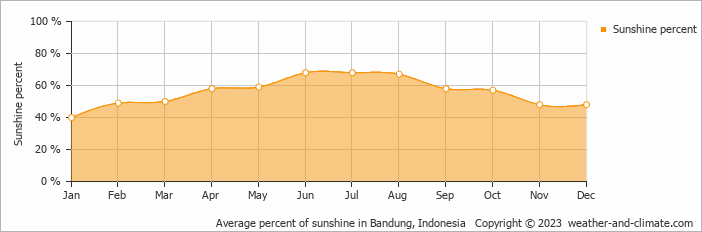
Cibodas receives around 2,478 hours of sunshine per year. July is the sunniest month with 249 hours, while January is the cloudiest with just 156 hours. Overall, Cibodas enjoys abundant sunshine.
Cibodas is highlighted - select any city to see its climate.
Where to go in September - average daytime high across popular destinations.
Need travel inspiration? Check out our bucket list articles and be inspired.
10 Hidden gems in Asia you need to visit
Explore 10 hidden gems in Asia offering authentic experiences, from pristine beaches and remote islands to cultural treks and peaceful mountain villages.
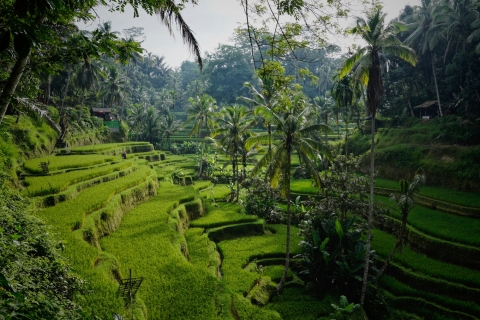 The ultimate guide to Ubud – everything you need to know to escape the crowds
There is a way to experience Ubud in a fantastic less crowded way and this article will be your guide how to do that. Find the best places to stay, where to eat and much more.
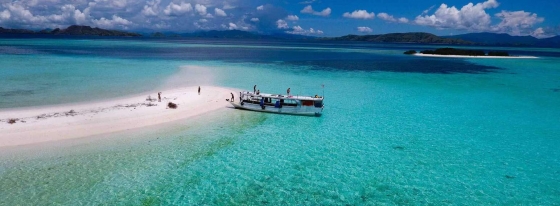 Top 5 hidden gem islands in Indonesia
Discover Indonesia's secret islands: pristine beaches, rich history, and vibrant culture await beyond Bali and Java. Dive into untouched paradise.
 Indonesia in July: Bali, Java or Lombok?
Compare July weather in Bali, Lombok, the Gili Islands, Yogyakarta and Jakarta to find Indonesia's driest, sunniest and best beach conditions.