

















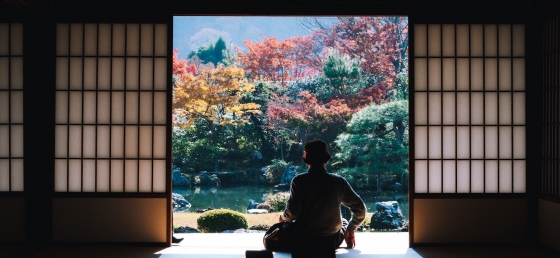
 Chase the autumn leaves in Japan
Japan is one of these cases which turns into a gold, yellow and orange fairy tale starting from September. And we can honestly say: We cannot imagine a more beautiful season to visit Japan.
Average temperatures, rainfall, sunshine and the best time to visit Urakawa.
 –
10-day forecastForecast
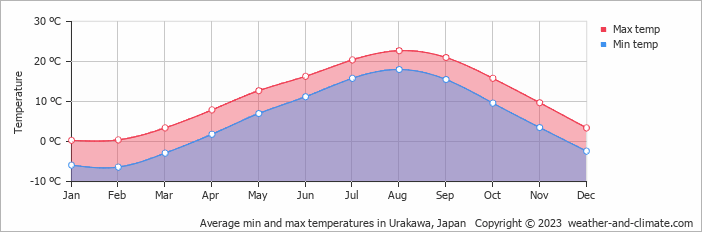
Urakawa, Japan, experiences significant temperature variation throughout the year. Summers bring daytime highs of 23°C (73°F) in August, while winters cool to 0°C (32°F) in January.
With around 1445 mm (57 in) of annual rain/snowfall, Urakawa has a notably wet climate. However, this rain/snowfall is not evenly distributed, the city has warm summers and very cold winters. The wettest month is August. The sunniest month is March, with 6.6 hours of sunshine per day on average.
Pick a month to see the average temperature, rainfall and sunshine in Urakawa - and find the best time to visit.
Depending on the time of the year, temperatures range from comfortable to very cold in Urakawa. Average daytime temperatures reach a comfortable 23°C (73°F) in August. In January, the coolest month of the year, temperatures drop to a very cold 0°C (32°F).
At night, temperatures range from around 18°C (64°F) in August to -6°C (21°F) in January.
Check out our detailed temperature page for more information.
Urakawa has a relatively rain/snowy climate with high precipitation levels, averaging 1445 mm (57 in) of rain/snowfall annually. Urakawa can be quite wet during August, receiving approximately 186 mm (7.3 in) of precipitation over 20 rainy days.
In contrast, during the driest month (February), you will experience much drier conditions, with 65 mm (2.6 in) of precipitation spread across 20 snowy days. For more details, please visit our Urakawa Precipitation page.


Urakawa can be enjoyed more throughout the sunniest month of March under a blue sky, with approximately 6.6 hours of sunshine daily. In contrast, the city experiences much darker days in December, with only 3.7 hours of sunlight per day.
Visit our detailed sunshine hours page for more information.


The relative humidity is high throughout the year in Urakawa.
The city experiences its highest humidity in July, reaching 91%. In December, the humidity drops to its lowest level at 65%. What does this mean? Read our detailed page on humidity levels for further details.

The average wind speed over the year ranges from 2 m/s (4 knots) to 5 m/s (10 knots). It is lower in July and higher in January, October, November and December. What does this mean?

Monthly ratings reflect general weather comfort, based on daytime temperature and rainfall. Swimming and winter conditions are highlighted separately where relevant.
July typically offers the most optimal weather in Urakawa. In contrast, January, February, March, April, May, November and December tend to have less optimal conditions. Urakawa has warm summers and very cold winters.
Daytime highs range from 0°C (32°F) in January to 23°C (73°F) in August. Nighttime lows range from -6°C (21°F) to 18°C (64°F). Temperatures vary considerably through the year.
Annual rainfall is around 1445 mm (57 in). August is the wettest month with 186 mm (7.3 in), while February is the driest with 65 mm (2.6 in).
Urakawa receives around 1,852 hours of sunshine per year. March is the sunniest month with 198 hours, while December is the cloudiest with just 111 hours.
Urakawa is highlighted - select any city to see its climate.
Where to go in November - average daytime high across popular destinations.
Not sure yet where to go? See where to go in Asia, month by month, in our weather planner.
Need travel inspiration? Check out our bucket list articles and be inspired.
Chase the autumn leaves in Japan
Japan is one of these cases which turns into a gold, yellow and orange fairy tale starting from September. And we can honestly say: We cannot imagine a more beautiful season to visit Japan.
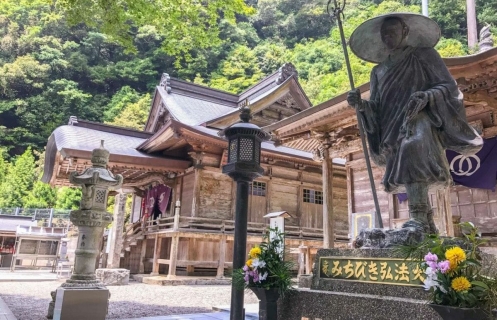 Walk the 88 temple circuit
We recommend walking the 88 temple circuit from April til October. Although June, July and August can be a bit wet, hot and humid.
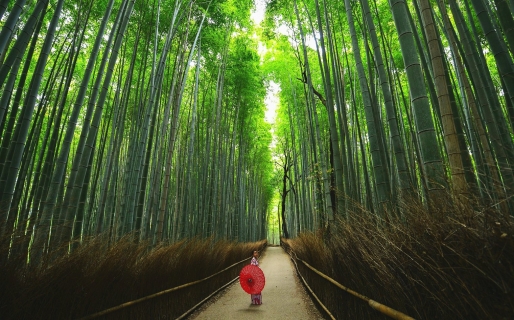 The famous bamboo forests of Arashiyama
 lie just outside the city center of Kyoto and is unique in the world. If you look at photos of this bamboo forest, it looks like you have landed in a fairy-tale world.
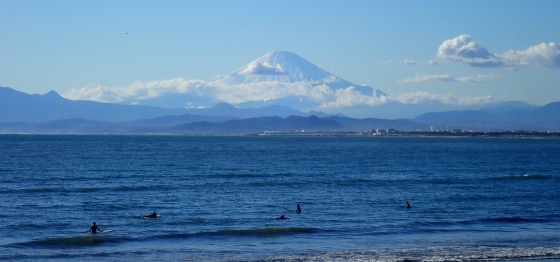 10 reasons why you should visit Japan in winter
Here are 10 reasons why you should plan a winter trip to Japan. During this period, popular sights are less busy and prices for flights and hotels much cheaper.