













 Visit the Kamchatka Peninsula
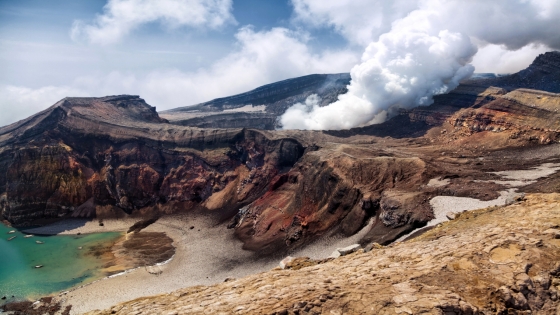
One of the most enchanting areas of Russia is the Kamchatka peninsula. It is how the earth must have looked like in prehistoric times.
This page shows both the average monthly rainfall and the number of rainy days in Teberda, Russia. The figures are based on a 30-year period (1990–2020) to provide a reliable average. Let's explore the details to provide you with a complete overview.
Teberda has a notably wet climate with abundant precipitation, recording 1613 mm (64 in) of rain/snowfall per year. It does, however, have a distinct rainy season during certain months. Have a look at our detailed charts below to see how precipitation varies throughout the year.
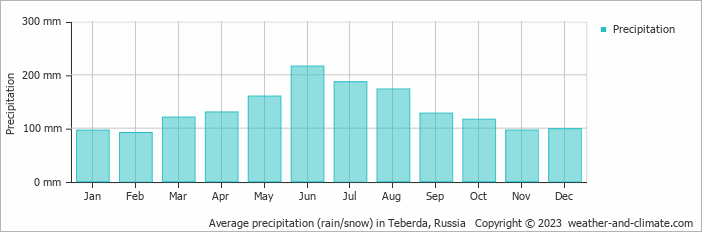
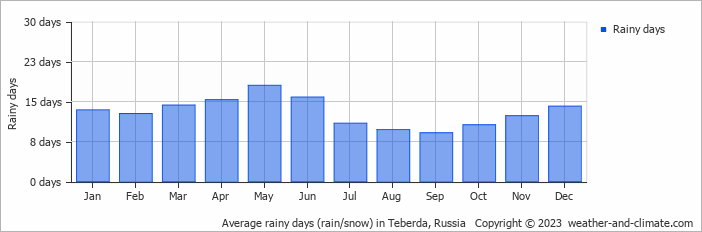
Significant seasonal changes in precipitation occur throughout the year. During the wettest month, June receives substantial rainfall, averaging 216 mm (8.5 in) of precipitation, recorded across 16 rainy days.
In contrast, the driest month, February brings less snowfall, with 91 mm (3.6 in) over 13 snowy days.
June, the wettest month, has a maximum daytime temperature of 16°C (61°F). During the driest month February you can expect a temperature of -2°C (28°F). For more detailed insights into the city's temperatures, visit our Teberda Temperature page.
The map below shows the annual precipitation across Russia. You can also select the different months in case you are interested in a specific month.
Teberda's average annual precipitation is 1613 mm (64 in). Let's compare this to some popular worldwide tourist destinations:
New York City, USA, receives 1276 mm (50 in) of rainfall annually, with precipitation evenly distributed throughout the year.
Beijing, China, receives 560 mm (22 in) of annual precipitation, concentrated in the summer months.
Perth, Australia, receives 565 mm (22 in) of rainfall annually, mostly during the winter months.
Kuala Lumpur, Malaysia, receives 2529 mm (100 in) of annual rainfall, characteristic of its equatorial tropical rainforest climate, with consistent rainfall throughout the year and peak months during March and November.
Precipitation amounts are measured using specific gauges installed at weather stations, collecting both rain and snow and any other type of precipitation. Rainfall is measured directly in millimeters, while that from snow and ice is obtained by melting it. Automated systems often incorporate heaters to make this easier.
Information from these stations is transmitted via Wi-Fi, satellite, GPS, or telephone connections to central monitoring networks. This information is immediately updated and integrated into weather models and forecasts.
The proximity of a location to a large body of water can significantly affect its rainfall patterns:
For more detailed information about Teberda's weather, including sunshine hours, humidity levels, and temperature data, visit our Teberda Climate page.
Pick a month to see the average temperature, rainfall and sunshine in Teberda - and find the best time to visit.
Temperature Rainfall
See the full Teberda climate overview or explore weather in Russia.
Where to go in October - average daytime high across popular destinations.
Sochi 20°C (68°F) Adler20°C (68°F) Anapa
 18°C (64°F) Gelendzhik
 18°C (64°F) Moscow
 10°C (50°F) Saint Petersburg9°C (48°F) Kazan9°C (48°F) Yekaterinburg7°C (45°F)
 Need travel inspiration? Check out our bucket list articles and be inspired.
Visit the Kamchatka Peninsula
One of the most enchanting areas of Russia is the Kamchatka peninsula. It is how the earth must have looked like in prehistoric times.
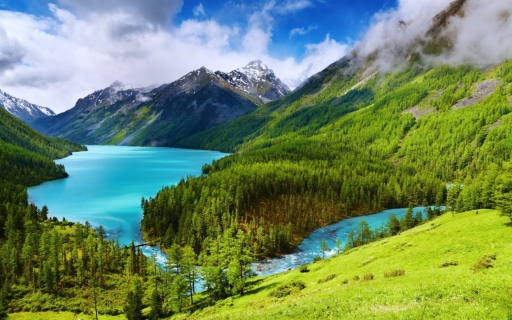 Be amazed by the Altai mountains
The Atlai mountains are a sparsely populated area that most tourists have not yet discovered. Definitely bucket list material for the adventurous travelers among us.
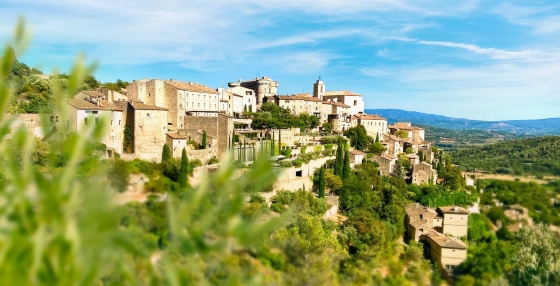
 The 10 most charming villages in France
Discover France's top 10 beautiful villages. From Normandy to the Côte d'Azur, experience quaint squares and cobbled streets. Which one will you visit this summer?

 The train journey from Bucharest to Brasov is one of the most beautiful in Romania
In three hours, you'll get from Bucharest to Brasov by train. It is one of the most beautiful routes in Romania, certainly the most beautiful that can be done by express train.