
















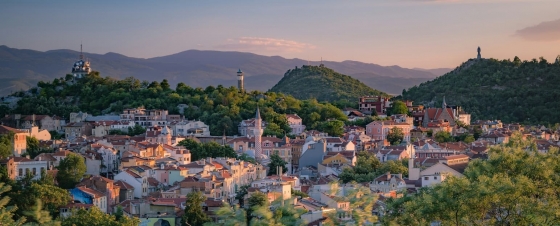
 7 of the most budget-friendly destinations in Europe
Discover Europe's top budget-friendly destinations including Budapest, Kotor, Krakow, and more, perfect for affordable and exciting travel.
This page shows both the average monthly rainfall and the number of rainy days in Świdnica, Lower Silesia, Poland. The numbers reflect climate data gathered over a 30-year period, from 1990 to 2020. Now, let's explore all the details to give you a full picture.
Generally, Świdnica experiences moderate precipitation patterns, averaging 790 mm (31 in) yearly.
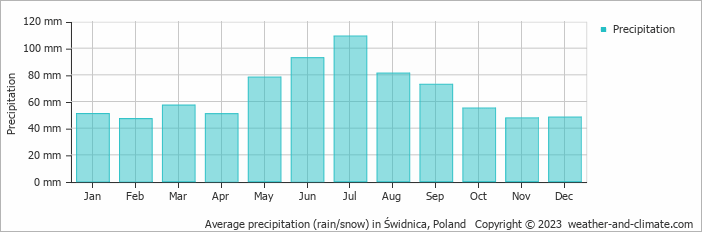
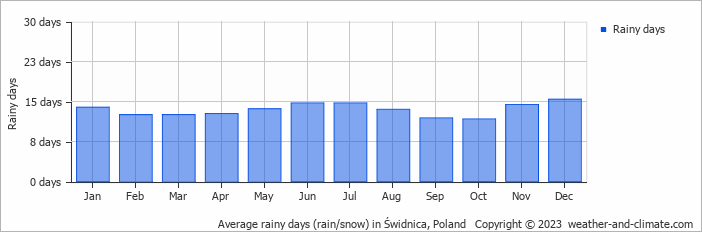
Significant seasonal changes in precipitation occur throughout the year. During the wettest month, July receives substantial rainfall, averaging 109 mm (4.3 in) of precipitation, recorded across 15 rainy days.
In contrast, the driest month, February brings less snow/rainfall, with 47 mm (1.9 in) over 13 snowy/rainy days.
July, the wettest month, has a maximum daytime temperature of 24°C (75°F). The city receives 231 hours of sunshine in this period. During the driest month February you can expect a temperature of 4°C (39°F). For more detailed insights into the city's temperatures, visit our Świdnica Temperature page.
The map below shows the annual precipitation across Poland. You can also select the different months in case you are interested in a specific month.
Świdnica's average annual precipitation is 790 mm (31 in). Let's compare this to some popular worldwide tourist destinations:
The climate in San Francisco, USA, is influenced by coastal weather, with 469 mm (18 in) of rainfall mostly during the winter months.
Beijing, China, receives 560 mm (22 in) of annual precipitation, concentrated in the summer months.
In Tokyo, Japan, the average annual precipitation is 1528 mm (60 in), with significant summer rains due to typhoon season.
Mumbai, India, experiences a tropical monsoon climate with 1860 mm (73 in) of annual rainfall, with the majority of precipitation happening during the monsoon season from June to September.
Precipitation amounts are measured using specific gauges installed at weather stations, collecting both rain and snow and any other type of precipitation. Rainfall is measured directly in millimeters, while that from snow and ice is obtained by melting it. Automated systems often incorporate heaters to make this easier.
Information from these stations is transmitted via Wi-Fi, satellite, GPS, or telephone connections to central monitoring networks. This information is immediately updated and integrated into weather models and forecasts.
For more detailed information about Świdnica's weather, including sunshine hours, humidity levels, and temperature data, visit our Świdnica Climate page.
Pick a month to see the average temperature, rainfall and sunshine in Świdnica - and find the best time to visit.
Temperature Rainfall Sunshine Humidity
See the full Świdnica climate overview or explore weather in Poland.
Where to go in October - average daytime high across popular destinations.
 Poznań
 14°C (57°F) Kraków14°C (57°F) Gdańsk13°C (55°F) Warsaw14°C (57°F) Sopot
 13°C (55°F) Kołobrzeg14°C (57°F) Gdynia13°C (55°F) Zakopane12°C (54°F)
Need travel inspiration? Check out our bucket list articles and be inspired.
7 of the most budget-friendly destinations in Europe
Discover Europe's top budget-friendly destinations including Budapest, Kotor, Krakow, and more, perfect for affordable and exciting travel.
 Bialowieza, the Last Primeval Forest
Being the last remaining segment of the once sprawling lowland forest that covered Europe, Bialowieza stands as the final stronghold of true wilderness on the continent.
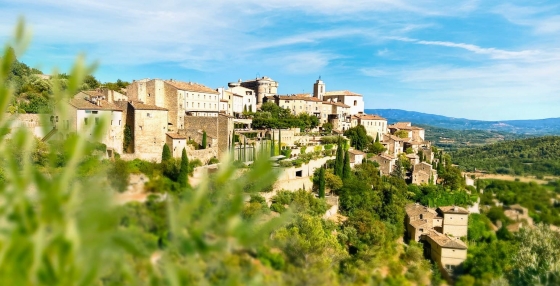
 The 10 most charming villages in France
Discover France's top 10 beautiful villages. From Normandy to the Côte d'Azur, experience quaint squares and cobbled streets. Which one will you visit this summer?
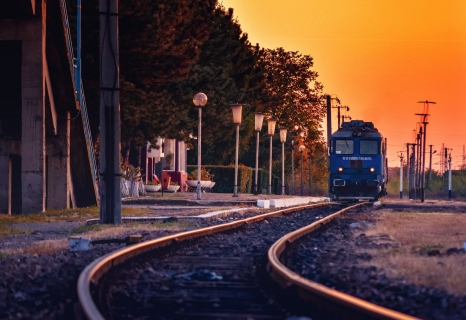
 The train journey from Bucharest to Brasov is one of the most beautiful in Romania
In three hours, you'll get from Bucharest to Brasov by train. It is one of the most beautiful routes in Romania, certainly the most beautiful that can be done by express train.