














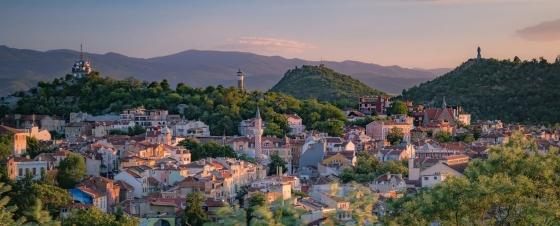
 7 of the most budget-friendly destinations in Europe
Discover Europe's top budget-friendly destinations including Budapest, Kotor, Krakow, and more, perfect for affordable and exciting travel.
This page shows both the average monthly rainfall and the number of rainy days in Starovice, South Moravian Region, Czech Republic. The figures are based on a 30-year period (1990–2020) to provide a reliable average. Let's explore the details to provide you with a complete overview.
On average, Starovice receives a reasonable amount of rain/snowfall, with an annual precipitation of 649 mm (26 in). Despite this overall moderate level, the city experiences distinct dry season during certain months throughout the year, as illustrated in the precipitation charts below.
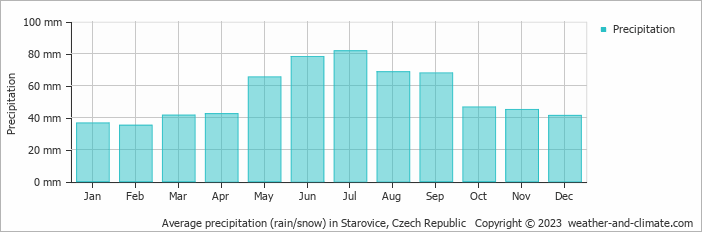
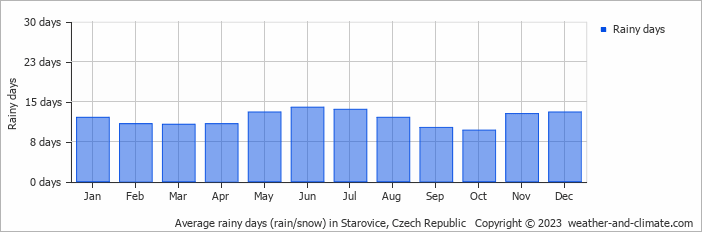
Significant seasonal changes in precipitation occur throughout the year. During the wettest month, July receives substantial rainfall, averaging 82 mm (3.2 in) of precipitation, recorded across 14 rainy days.
In contrast, the driest month, February brings less snow/rainfall, with 35 mm (1.4 in) over 11 snowy/rainy days.
July, the wettest month, has a maximum daytime temperature of 28°C (82°F). The city receives 245 hours of sunshine in this period. During the driest month February you can expect a temperature of 6°C (43°F). For more detailed insights into the city's temperatures, visit our Starovice Temperature page.
The map below shows the annual precipitation across Czech Republic. You can also select the different months in case you are interested in a specific month.
Starovice's average annual precipitation is 649 mm (26 in). Let's compare this to some popular worldwide tourist destinations:
In Barcelona, Spain, the average annual precipitation is 644 mm (25 in), evenly distributed across the year with no extreme wet or dry seasons.
In Seoul, South Korea, the average annual precipitation is 1237 mm (49 in), with most rain falling during the summer monsoon season.
Melbourne, Australia, has 690 mm (27 in) of rainfall annually, spread fairly evenly throughout the year.
Mumbai, India, experiences a tropical monsoon climate with 1860 mm (73 in) of annual rainfall, with the majority of precipitation happening during the monsoon season from June to September.
Precipitation amounts are measured using specific gauges installed at weather stations, collecting both rain and snow and any other type of precipitation. Rainfall is measured directly in millimeters, while that from snow and ice is obtained by melting it. Automated systems often incorporate heaters to make this easier.
Information from these stations is transmitted via Wi-Fi, satellite, GPS, or telephone connections to central monitoring networks. This information is immediately updated and integrated into weather models and forecasts.
The proximity of a location to a large body of water can significantly affect its rainfall patterns:
For more detailed information about Starovice's weather, including sunshine hours, humidity levels, and temperature data, visit our Starovice Climate page.
Pick a month to see the average temperature, rainfall and sunshine in Starovice - and find the best time to visit.
Temperature Rainfall Sunshine Humidity Wind Speed
See the full Starovice climate overview or explore weather in Czech Republic.
Where to go in October - average daytime high across popular destinations.
 Prague
 14°C (57°F) Brno
 14°C (57°F) Mariánské Lázně13°C (55°F) Český Krumlov13°C (55°F) Rokytnice nad Jizerou11°C (52°F) Karlovy Vary
 12°C (54°F) Špindlerův Mlýn11°C (52°F) Harrachov11°C (52°F)
 Need travel inspiration? Check out our bucket list articles and be inspired.
7 of the most budget-friendly destinations in Europe
Discover Europe's top budget-friendly destinations including Budapest, Kotor, Krakow, and more, perfect for affordable and exciting travel.
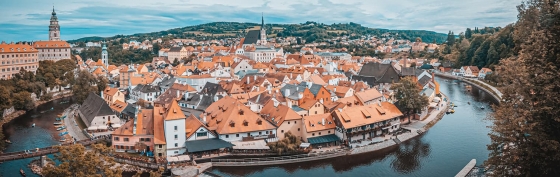 A magical trip to the fairytale town of Cesky Krumlov
Cesky Krumlov is as magical and beautiful as a storybook one. If you love castles and cobbled streets, this town is perfect for a getaway for you.
 Karlovy Vary: The Timeless Elegance of a Premier Spa Town
Karlovy Vary, a historic spa town in Bohemia known for its elegant 19th-century architecture, famous hot springs, and rich cultural heritage.
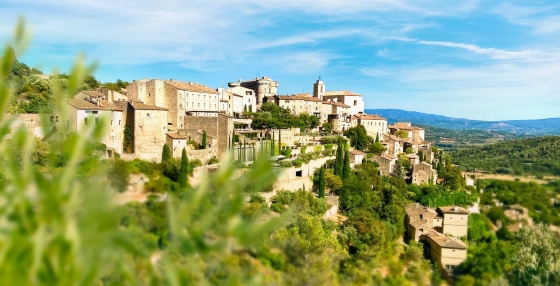
 The 10 most charming villages in France
Discover France's top 10 beautiful villages. From Normandy to the Côte d'Azur, experience quaint squares and cobbled streets. Which one will you visit this summer?