














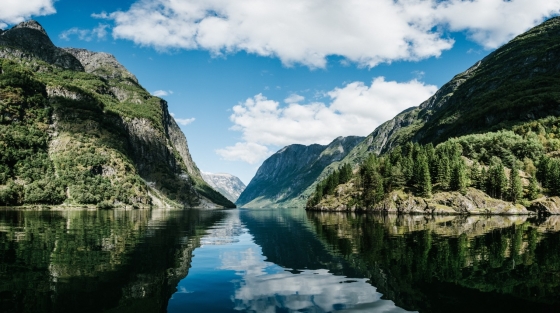
 The rugged landscape of the Norwegian fjords
This landscape is rated as the most beautiful in the world and it is something you need to experience at least once in your life.
This page shows both the average monthly rainfall and the number of rainy days in Lysekloster, Hordaland, Norway. The numbers reflect climate data gathered over a 30-year period, from 1990 to 2020. Now, let's break down all the details for a clearer picture.
Lysekloster has a relatively rain/snowy climate with high precipitation levels, averaging 2473 mm (97 in) of rain/snowfall annually. Despite the high annual total, it does experience a distinct rainy season during certain months. Examine our detailed charts below to understand these seasonal patterns.


While snow/rainfall varies throughout the year, each season offers its own charm. December brings wetter days averaging 262 mm (10 in) of precipitation, spread over 27 snowy/rainy days.
In contrast, May experiences a drier climate, with about 129 mm (5.1 in) of rainfall spread across 19 rainy days.
December, the wettest month, has a maximum daytime temperature of 5°C (41°F). The city receives 13 hours of sunshine in this period. During the driest month May you can expect a temperature of 14°C (57°F). For more detailed insights into the city's temperatures, visit our Lysekloster Temperature page.
The map below shows the annual precipitation across Norway. You can also select the different months in case you are interested in a specific month.
Lysekloster's average annual precipitation is 2473 mm (97 in). Let's compare this to some popular worldwide tourist destinations:
In Lisbon, Portugal, the average annual precipitation is 774 mm (30 in), characterized by wet winters and dry summers typical of the Mediterranean climate.
Osaka, Japan, experiences 1507 mm (59 in) of rainfall annually, spread across the year with wetter summers.
Perth, Australia, receives 565 mm (22 in) of rainfall annually, mostly during the winter months.
Bangkok, Thailand, experiences a tropical monsoon climate with 1668 mm (66 in) of annual rainfall, with the heaviest precipitation occurring during September and October.
Precipitation amounts are measured using specific gauges installed at weather stations, collecting both rain and snow and any other type of precipitation. Rainfall is measured directly in millimeters, while that from snow and ice is obtained by melting it. Automated systems often incorporate heaters to make this easier.
Information from these stations is transmitted via Wi-Fi, satellite, GPS, or telephone connections to central monitoring networks. This information is immediately updated and integrated into weather models and forecasts.
The proximity of a location to a large body of water can significantly affect its rainfall patterns:
For more detailed information about Lysekloster's weather, including sunshine hours, humidity levels, and temperature data, visit our Lysekloster Climate page.
Pick a month to see the average temperature, rainfall and sunshine in Lysekloster - and find the best time to visit.
Temperature Rainfall Sunshine Humidity Wind Speed Water Temp
See the full Lysekloster climate overview or explore weather in Norway.
Where to go in October - average daytime high across popular destinations.
Kristiansand 12°C (54°F) Stavanger12°C (54°F) Bergen11°C (52°F) Reine
 9°C (48°F) Trondheim9°C (48°F) Oslo9°C (48°F) Tromsø5°C (41°F) Hemsedal
 5°C (41°F)
Need travel inspiration? Check out our bucket list articles and be inspired.
The rugged landscape of the Norwegian fjords
This landscape is rated as the most beautiful in the world and it is something you need to experience at least once in your life.
 Discover Norway's Hidden Gem: The Littleisland Lighthouse
Explore Littleisland Lighthouse in Norway - a serene getaway offering unique stays, breathtaking views, and a journey into tranquil simplicity.
 The Majestic Geirangerfjord: Norway's Crown Jewel
Explore Norway's stunning Geirangerfjord, famous for its dramatic cliffs, waterfalls, and scenic routes. Breathtaking landscapes and outdoor adventures
 Swimming with orcas in Norway
The best travel period to travel to Norway for the orcas are the months October, November December, January and February. Swimming with orcas in Norway might be the bucket list trip of your life.