
















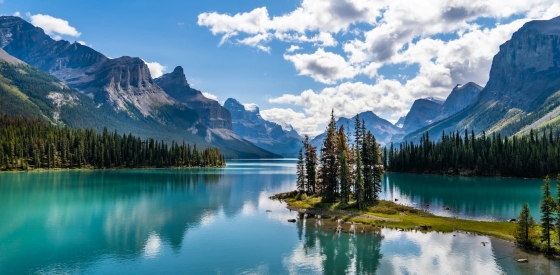
 The 5 most beautiful lakes in Canada
Explore Canada's stunning lakes: Lake Louise, Lake Superior, Maligne Lake, Emerald Lake, and Lake Okanagan, each offering unique beauty and activities.
This page shows both the average monthly rainfall and the number of rainy days in Le François, Martinique. Long-term data from 1990 to 2020 was used to calculate these averages. Now, let's explore all the details to give you a full picture.
Le François is known for its substantial rainfall, with annual precipitation reaching 1234 mm (49 in).
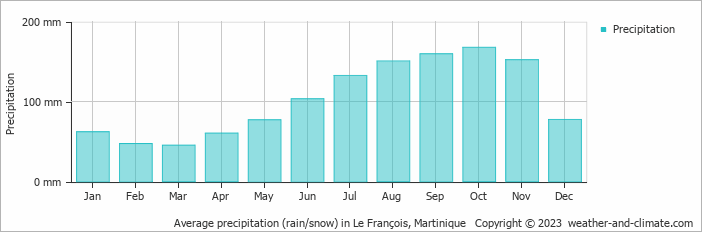
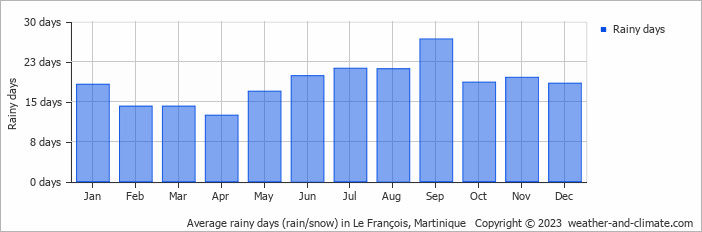
The climate in Le François shows significant variation throughout the year. Expect 168 mm (6.6 in) of precipitation during the wettest month October, distributed over 19 rainy days.
In contrast, March offers drier and sunnier days, with around 45 mm (1.8 in) of rainfall over 14 rainy days.
October, the wettest month, has a maximum daytime temperature of 29°C (84°F). The city receives 223 hours of sunshine in this period. During the driest month March you can expect a temperature of 27°C (81°F). For more detailed insights into the city's temperatures, visit our Le François Temperature page.
Browse day-by-day precipitation records for Le François spanning 51 years. Select any month and year to see actual rainfall and snowfall recorded on each day.
The map below shows the annual precipitation across Martinique. You can also select the different months in case you are interested in a specific month.
Le François's average annual precipitation is 1234 mm (49 in). Let's compare this to some popular worldwide tourist destinations:
Boston, USA, experiences 1238 mm (49 in) of annual precipitation, including significant snowfall during the winter.
Beijing, China, receives 560 mm (22 in) of annual precipitation, concentrated in the summer months.
In Tokyo, Japan, the average annual precipitation is 1528 mm (60 in), with significant summer rains due to typhoon season.
Mumbai, India, experiences a tropical monsoon climate with 1860 mm (73 in) of annual rainfall, with the majority of precipitation happening during the monsoon season from June to September.
Precipitation amounts are measured using specific gauges installed at weather stations, collecting both rain and snow and any other type of precipitation. Rainfall is measured directly in millimeters, while that from snow and ice is obtained by melting it. Automated systems often incorporate heaters to make this easier.
Information from these stations is transmitted via Wi-Fi, satellite, GPS, or telephone connections to central monitoring networks. This information is immediately updated and integrated into weather models and forecasts.
Precipitation has a very strong role in determining the local climate and ecosystem:
For more detailed information about Le François's weather, including sunshine hours, humidity levels, and temperature data, visit our Le François Climate page.
Pick a month to see the average temperature, rainfall and sunshine in Le François - and find the best time to visit.
Temperature Rainfall Sunshine Humidity Wind Speed Water Temp
See the full Le François climate overview or explore weather in Martinique.
Where to go in September - average daytime high across popular destinations.
 Le François
 30°C (86°F) Le Marin29°C (84°F) Les Anses-dʼArlets
 29°C (84°F) Le Diamant29°C (84°F) Sainte-Luce29°C (84°F) Sainte-Anne29°C (84°F) Fort-de-France30°C (86°F) Les Trois-Îlets29°C (84°F)
 Need travel inspiration? Check out our bucket list articles and be inspired.
The 5 most beautiful lakes in Canada
Explore Canada's stunning lakes: Lake Louise, Lake Superior, Maligne Lake, Emerald Lake, and Lake Okanagan, each offering unique beauty and activities.
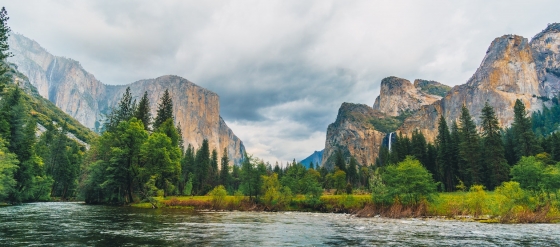
 Yosemite National Park is definitely worth a visit
Vast forests, blue lakes, towering sequoias, and majestic waterfalls hint at the beauty of Yosemite National Park—a true natural masterpiece.
 The 10 most alternative cities in the United States
Discover the top 10 fun and alternative U.S. cities rich in art, culture, and adventure. From Portland's hippy charm to Sedona's stunning landscapes.

 Lake Atitlan: the most beautiful lake in the world
At Lake Atitlan you will be enchanted by beautiful volcanoes, amazing sunsets and the serene tranquility. Mix this with the vibrant Mayan community and you'll understand why Atitlan has something magical.