



















 Warm Sea Without Extreme Heat: 8 Beach Destinations With Comfortable Weather
Love warm seawater but not extreme heat? Compare eight beach destinations where the sea stays warm while daytime temperatures remain comfortable.
This page shows both the average monthly rainfall and the number of rainy days in Cervera de Pisuerga, Castile and Leon, Spain. The figures are based on a 30-year period (1990–2020) to provide a reliable average. Now, let's explore all the details to give you a full picture.
Generally, Cervera de Pisuerga has a moderate amount of precipitation, averaging 908 mm (36 in) of rain/snowfall annually.


The wettest period in Cervera de Pisuerga occurs in May, which receives around 91 mm (3.6 in) of precipitation. During the driest month, August, Cervera de Pisuerga experiences moderate rainfall, totaling approximately 58 mm (2.3 in). The consistent precipitation levels throughout the year contribute to a relatively stable climate.
May, the wettest month, has a maximum daytime temperature of 17°C (63°F). During the driest month August you can expect a temperature of 24°C (75°F). For more detailed insights into the city's temperatures, visit our Cervera de Pisuerga Temperature page.
The map below shows the annual precipitation across Spain. You can also select the different months in case you are interested in a specific month.
Cervera de Pisuerga's average annual precipitation is 908 mm (36 in). Let's compare this to some popular worldwide tourist destinations:
In Toronto, Canada, annual precipitation averages 964 mm (38 in), with snowy winters and rainy summers.
Meanwhile, Buenos Aires, Argentina, enjoys a humid subtropical climate with 1000 mm (39 in) of annual rainfall, mostly in the summer.
Perth, Australia, receives 565 mm (22 in) of rainfall annually, mostly during the winter months.
Kuala Lumpur, Malaysia, receives 2529 mm (100 in) of annual rainfall, characteristic of its equatorial tropical rainforest climate, with consistent rainfall throughout the year and peak months during March and November.
Precipitation amounts are measured using specific gauges installed at weather stations, collecting both rain and snow and any other type of precipitation. Rainfall is measured directly in millimeters, while that from snow and ice is obtained by melting it. Automated systems often incorporate heaters to make this easier.
Information from these stations is transmitted via Wi-Fi, satellite, GPS, or telephone connections to central monitoring networks. This information is immediately updated and integrated into weather models and forecasts.
Precipitation has a very strong role in determining the local climate and ecosystem:
For more detailed information about Cervera de Pisuerga's weather, including sunshine hours, humidity levels, and temperature data, visit our Cervera de Pisuerga Climate page.
Pick a month to see the average temperature, rainfall and sunshine in Cervera de Pisuerga - and find the best time to visit.
Temperature Rainfall
See the full Cervera de Pisuerga climate overview or explore weather in Spain.
Where to go in November - average daytime high across popular destinations.
Need travel inspiration? Check out our bucket list articles and be inspired.
Warm Sea Without Extreme Heat: 8 Beach Destinations With Comfortable Weather
Love warm seawater but not extreme heat? Compare eight beach destinations where the sea stays warm while daytime temperatures remain comfortable.

 El Hierro: The smallest Canary island without mass tourism
Mainly nature lovers and those seeking tranquility go to El Hierro. The island is know for its beautiful mountains and you can wonder around for days here.
 Spain in October: Where Is It Warmest and Sunniest?
Discover where Spain is warmest in October, with climate comparisons for Seville, Alicante, Málaga, Tenerife, Madrid and Barcelona.
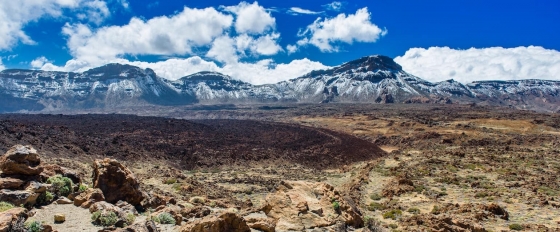 Visit national Park El Teide
This national park is truly a unique place that you should not miss. You will find landscapes that seem to come from another plane and you will feel tiny in these impressive surroundings.