

















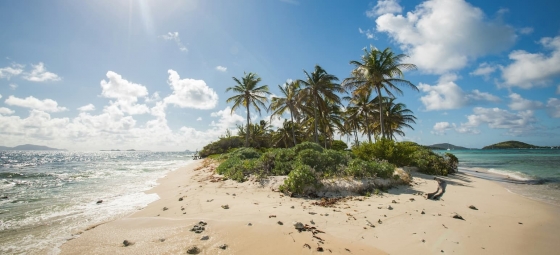
 10 Hidden gems in Asia you need to visit
Explore 10 hidden gems in Asia offering authentic experiences, from pristine beaches and remote islands to cultural treks and peaceful mountain villages.
This page shows both the average monthly rainfall and the number of rainy days in Banteay Chhmar, Banteay Meanchey Province, Cambodia. These values are calculated using 30 years of data (1990–2020) to ensure accuracy. Now, let's explore all the details to give you a full picture.
Banteay Chhmar is known for its substantial rainfall, with annual precipitation reaching 1277 mm (50 in). While the overall climate is wet, there are notable seasonal patterns that create interesting contrasts, as demonstrated in our graph below.


Significant seasonal changes in precipitation occur throughout the year. During the wettest month, September receives substantial rainfall, averaging 280 mm (11 in) of precipitation, recorded across 19 rainy days.
In contrast, the driest month, January brings less rainfall, with 8.9 mm (0.4 in) over a single rainy day.
September, the wettest month, has a maximum daytime temperature of 33°C (91°F). During the driest month January you can expect a temperature of 33°C (91°F). For more detailed insights into the city's temperatures, visit our Banteay Chhmar Temperature page.
Average daily rainfall for each day of the month based on long-term records. 50-year average (1976-2025)
Browse day-by-day precipitation records for Banteay Chhmar spanning 51 years. Select any month and year to see actual rainfall and snowfall recorded on each day.
The map below shows the annual precipitation across Cambodia. You can also select the different months in case you are interested in a specific month.
Banteay Chhmar's average annual precipitation is 1277 mm (50 in). Let's compare this to some popular worldwide tourist destinations:
In Toronto, Canada, annual precipitation averages 964 mm (38 in), with snowy winters and rainy summers.
In Shanghai, China, the annual average precipitation is 1347 mm (53 in), with a humid subtropical climate.
In Brisbane, Australia, the annual precipitation is 979 mm (39 in), making it wetter than Sydney.
Singapore, situated near the equator, gets 2581 mm (102 in) of rainfall annually, with no distinct dry season and consistent monthly precipitation.
Precipitation amounts are measured using specific gauges installed at weather stations, collecting both rain and snow and any other type of precipitation. Rainfall is measured directly in millimeters, while that from snow and ice is obtained by melting it. Automated systems often incorporate heaters to make this easier.
Information from these stations is transmitted via Wi-Fi, satellite, GPS, or telephone connections to central monitoring networks. This information is immediately updated and integrated into weather models and forecasts.
Precipitation has a very strong role in determining the local climate and ecosystem:
For more detailed information about Banteay Chhmar's weather, including sunshine hours, humidity levels, and temperature data, visit our Banteay Chhmar Climate page.
Pick a month to see the average temperature, rainfall and sunshine in Banteay Chhmar - and find the best time to visit.
Temperature Rainfall
See the full Banteay Chhmar climate overview or explore weather in Cambodia.
Where to go in November - average daytime high across popular destinations.
Need travel inspiration? Check out our bucket list articles and be inspired.
10 Hidden gems in Asia you need to visit
Explore 10 hidden gems in Asia offering authentic experiences, from pristine beaches and remote islands to cultural treks and peaceful mountain villages.

 Staying in an artwork
Situated between three of Cambodia's oldest nature parks you can find a work of art created by world-famous architect Bill Bensley called Shinta Mani Wild.
 Exploring Cambodia by Bicycle
Discover the wonders of Cambodia on a bicycle tour, exploring its history, culture, and breathtaking landscapes. Ideal for all levels of cyclists.
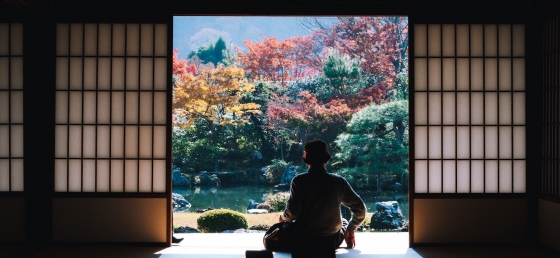
 Chase the autumn leaves in Japan
Japan is one of these cases which turns into a gold, yellow and orange fairy tale starting from September. And we can honestly say: We cannot imagine a more beautiful season to visit Japan.