















 Miliou in Cyprus
Milou is one of the greenest villages in the area, thanks to an abundant supply of spring water, surrounded by citrus groves, almond trees and vineyards.
This page shows both the average monthly rainfall and the number of rainy days in Famagusta, Famagusta District, Cyprus. The numbers reflect climate data gathered over a 30-year period, from 1990 to 2020. Now, let's explore all the details to give you a full picture.
Famagusta experiences desert-like conditions in terms of precipitation with almost no rainfall, generally receiving 250 mm (9.8 in) annually.
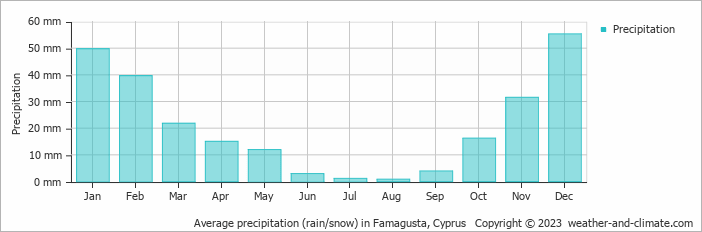
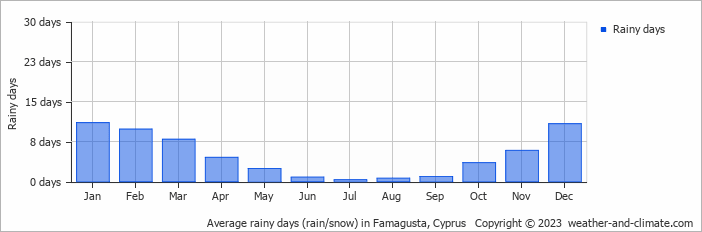
The seasons in Famagusta, bring significant changes in precipitation. The wettest month, December, receives moderate rainfall, with an average of 55 mm (2.2 in) of precipitation. This rainfall is distributed across 11 rainy days.
In contrast, the driest month, August, experiences much less rainfall, totaling 0.8 mm (0.03 in) over a single rainy day. These distinct seasonal differences provide diverse experiences throughout the year.December, the wettest month, has a maximum daytime temperature of 19°C (66°F). The city receives 186 hours of sunshine in this period. During the driest month August you can expect a temperature of 32°C (90°F). For more detailed insights into the city's temperatures, visit our Famagusta Temperature page.
The map below shows the annual precipitation across Cyprus. You can also select the different months in case you are interested in a specific month.
Famagusta's average annual precipitation is 250 mm (9.8 in). Let's compare this to some popular worldwide tourist destinations:
In Barcelona, Spain, the average annual precipitation is 644 mm (25 in), evenly distributed across the year with no extreme wet or dry seasons.
Beijing, China, receives 560 mm (22 in) of annual precipitation, concentrated in the summer months.
Adelaide, Australia, enjoys 511 mm (20 in) of annual precipitation, with dry summers and wet winters.
Kuala Lumpur, Malaysia, receives 2529 mm (100 in) of annual rainfall, characteristic of its equatorial tropical rainforest climate, with consistent rainfall throughout the year and peak months during March and November.
Precipitation amounts are measured using specific gauges installed at weather stations, collecting both rain and snow and any other type of precipitation. Rainfall is measured directly in millimeters, while that from snow and ice is obtained by melting it. Automated systems often incorporate heaters to make this easier.
Information from these stations is transmitted via Wi-Fi, satellite, GPS, or telephone connections to central monitoring networks. This information is immediately updated and integrated into weather models and forecasts.
Precipitation has a very strong role in determining the local climate and ecosystem:
For more detailed information about Famagusta's weather, including sunshine hours, humidity levels, and temperature data, visit our Famagusta Climate page.
Pick a month to see the average temperature, rainfall and sunshine in Famagusta - and find the best time to visit.
Temperature Rainfall Sunshine Humidity Wind Speed Water Temp
See the full Famagusta climate overview or explore weather in Cyprus.
Where to go in September - average daytime high across popular destinations.
Larnaca 31°C (88°F) Limassol30°C (86°F) Paralimni29°C (84°F) Ayia Napa29°C (84°F) Protaras29°C (84°F) Paphos City28°C (82°F) Coral Bay28°C (82°F) Polis Chrysochous28°C (82°F)
 Need travel inspiration? Check out our bucket list articles and be inspired.
Miliou in Cyprus
Milou is one of the greenest villages in the area, thanks to an abundant supply of spring water, surrounded by citrus groves, almond trees and vineyards.
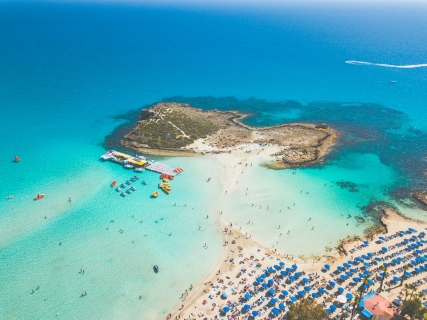
 Europe in November: Where to Find Winter Sun
Discover the warmest and sunniest places in Europe in November, with climate comparisons for Lanzarote, Tenerife, Cyprus, Malta, Madeira and more.
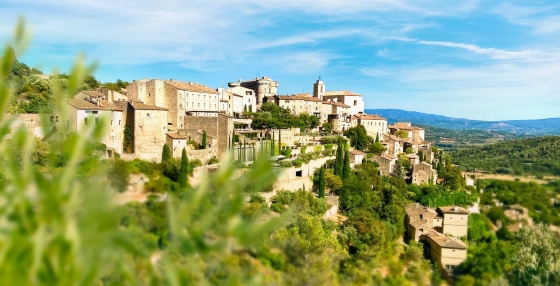
 The 10 most charming villages in France
Discover France's top 10 beautiful villages. From Normandy to the Côte d'Azur, experience quaint squares and cobbled streets. Which one will you visit this summer?

 The train journey from Bucharest to Brasov is one of the most beautiful in Romania
In three hours, you'll get from Bucharest to Brasov by train. It is one of the most beautiful routes in Romania, certainly the most beautiful that can be done by express train.