Vrsar Sunshine Hours by Month
When exploring climate, sunlight hours tell an important story. This page shows the total number of hours of direct sunlight per month and the average hours per day in Vrsar, Istria, Croatia. These averages rely on historical data collected over 30 years, from 1990 to 2020.
Monthly hours of sunshine
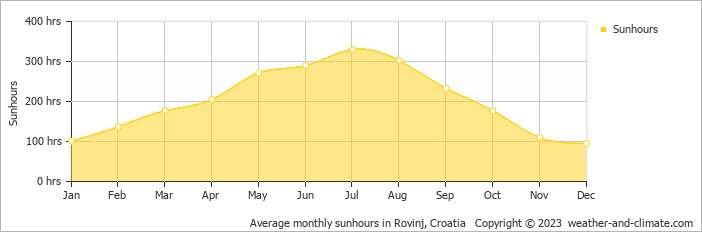
Seasonal sunshine in Vrsar varies. It peaks at 330 hours in July and drops to 95 hours in December. The total annual amount of sun is 2428 hours.
Daily hours of sunshine
For those who appreciate different seasons, Vrsar serves as an ideal destination. Expect longer, more sun-filled days in July with an average of 11.0 hours of sunshine daily, and embrace the darker days in December, offering only 3.2 hours of daily sunlight.
Vrsar vs Major Cities: Sunshine Compared
Vrsar enjoys an average of 2428 hours of sunshine annually. Let’s compare this with some popular tourist destinations:
In Barcelona, Spain, there are 2530 hours of sunshine annually and is a city that can be visited year-round.
In contrast, Brussels, Belgium, receives only about 1590 hours of sunshine per year, known for its frequently overcast and rainy skies.
Stockholm, Sweden, receives approximately 1907 hours of sunshine annually.
Adelaide, Australia, enjoys 2770 hours of sunshine annually, with long, sunny summers.
Related Climate Data for Vrsar
November, Vrsar’s wettest month, receives 66 mm (2.6 in) of rainfall and has a maximum daytime temperature of 15°C (59°F). During the driest month July you can expect a temperature of 28°C (82°F).
For more detailed insights into the city’s temperatures, check out our Temperature page. To explore more about precipitation patterns, visit our Vrsar Precipitation page.
Vrsar Weather by Month
Pick a month to see the average temperature, rainfall and sunshine in Vrsar - and find the best time to visit.




Vrsar 3-Day Forecast
Temperature Rainfall Sunshine Humidity
See the full Vrsar climate overview or explore weather in Croatia.
Popular this month
Where to go in August - average daytime high across popular destinations.










Bucket list
Need travel inspiration? Check out our bucket list articles and be inspired.
 Magical Split
The best travel time to Split in Croatia is from May til October and the best months are May, June and September.
Sail the crystal-clear waters of Croatia and enjoy its stunning coastline
Croatia is an idyllic sailing destination, boasting 1,777 miles (2,860 km) of beautiful beaches and pristine waters. With over 1,000 Islands dotting the Adriatic Sea, there's a perfect spot for everyone.
 Cycle the Danube trail
The Danube cycle route is one of the most popular cycling routes in Europe, and rightly so, because it is a varied route that is interesting both in terms of culture and nature.