



















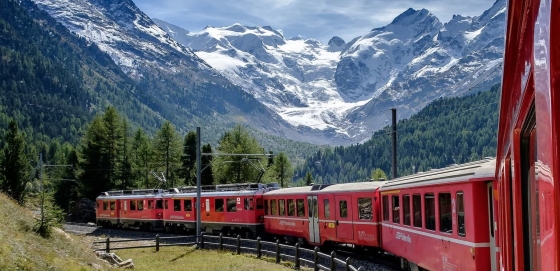
 The 5 most scenic train journeys in Switzerland
Explore Switzerland's top 5 train journeys, featuring breathtaking Alpine views and engineering marvels like the Glacier Express and Bernina Express.
Sunshine is key to understanding how a place experiences its seasons. This page shows the total number of hours of direct sunlight per month and the average hours per day in Sta Maria Val Müstair, Grisons, Switzerland. This average is based on long-term data collected between 1990 and 2020.
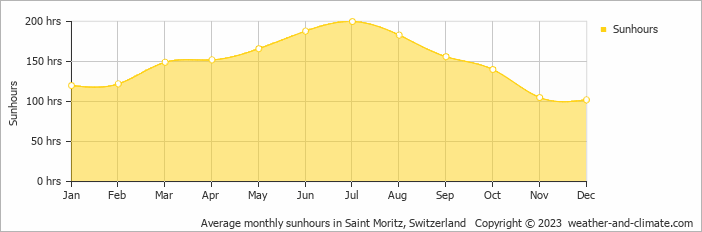
Those who love seasonal contrasts will appreciate Sta Maria Val Müstair. Expect long, bright days with 200 hours in July and darker periods with just 102 hours in December. The total annual amount of sun is 1783 hours.
This means the city can be enjoyed more throughout the sunniest month of July under a blue sky, with approximately 6.7 hours of sunshine daily. In contrast, the city experiences much darker days in December, with only 3.4 hours of sunlight per day.
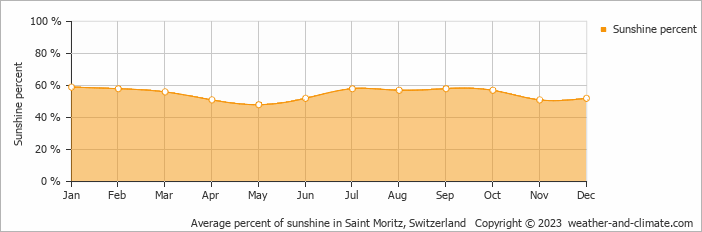
On average the sun shines 59% of the time during the day in January, the highest percentage of any month. May has the lowest percentage at 48%.
Sta Maria Val Müstair enjoys an average of 1783 hours of sunshine annually. Let’s compare this with some popular tourist destinations:
Athens, Greece, enjoys 2769 hours of sunshine each year, making it one of the sunniest destinations in the Mediterranean region.
In contrast, Juneau, Alaska, receives only about 1523 hours of sunshine per year and is known for its very short days in winter and frequently overcast conditions.
Toronto, Canada, sees around 2071 hours of sunshine each year, with especially long, bright summer days.
In Tokyo, Japan, the average annual sunshine is 1930 hours, with sunny periods between rainy seasons.
June, Sta Maria Val Müstair’s wettest month, receives 105 mm (4.1 in) of rainfall and has a maximum daytime temperature of 13°C (55°F). During the driest month February you can expect a temperature of -5°C (23°F).
For more detailed insights into the city’s temperatures, check out our Temperature page. To explore more about precipitation patterns, visit our Sta Maria Val Müstair Precipitation page.
Pick a month to see the average temperature, rainfall and sunshine in Sta Maria Val Müstair - and find the best time to visit.
Temperature Rainfall Sunshine Humidity
See the full Sta Maria Val Müstair climate overview or explore weather in Switzerland.
Where to go in September - average daytime high across popular destinations.
Zürich 20°C (68°F) Crans-Montana15°C (59°F) Engelberg
 15°C (59°F) Nendaz15°C (59°F) Saas-Fee12°C (54°F) Davos13°C (55°F) Grindelwald13°C (55°F) Zermatt11°C (52°F)
 Need travel inspiration? Check out our bucket list articles and be inspired.
The 5 most scenic train journeys in Switzerland
Explore Switzerland's top 5 train journeys, featuring breathtaking Alpine views and engineering marvels like the Glacier Express and Bernina Express.
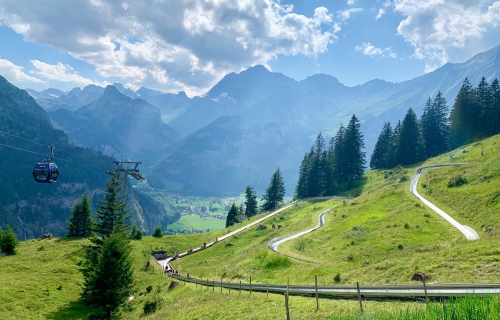 You'll love this Mountain roller coaster
Hotel Oeschinensee’s mountain coaster is a summer toboggan that you want to add to your bucket list. You'll get in your cart, sit down and fly across the track while enjoying the beautiful mountain scenery around you.
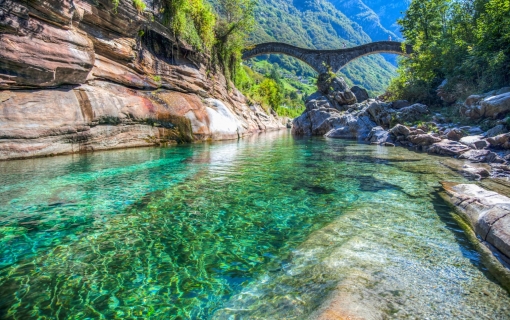 The Verzasca Valley
You can visit the Verzasca Valley in any season. It's an amazing place for swimming and it is a paradise for hikers. A must see for the bucket list.
 Balloon at Chateau D'oex
If you are looking for a special place to visit in Europe in January we recommend visiting the annual balloon festival in Château-d'Oex, Switzerland.