














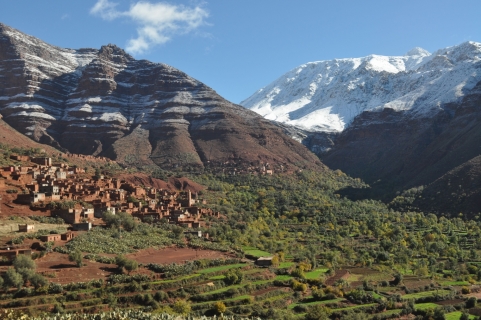
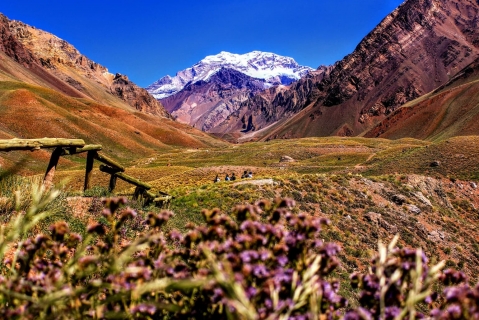
 The Atlas Mountains in Morocco
This mountain range is the second highest mountains in the world and is certainly one of the most natural and wonderful mountains you could ever visit. One for the bucket list for sure.
Sunshine plays a big role in understanding the climate of a city. This page shows the total number of hours of direct sunlight per month and the average hours per day in Rabat, Rabat-Salé-Kénitra, Morocco. These values are calculated using 30 years of data (1990–2020) to ensure accuracy.
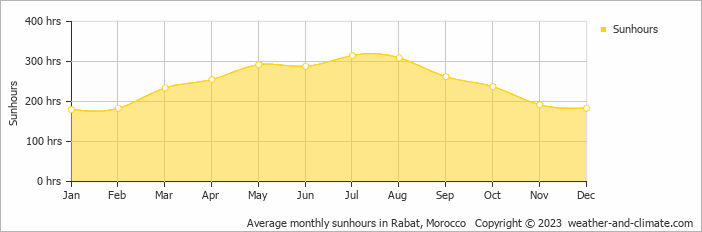
If you're visiting Rabat, timing is key. In July, you can enjoy up to 315 hours of sunshine, while the shorter days of January provide just 180 hours. The total annual amount of sun is 2930 hours.
In Rabat, summer days are longer and more sunny, with daily sunshine hours peaking at 10.5 hours in July. As the darker season arrives, the brightness of the sun becomes less. January sees a soft sun for only 6.0 hours per day.
Rabat enjoys an average of 2930 hours of sunshine annually. Let’s compare this with some popular tourist destinations:
In Barcelona, Spain, there are 2530 hours of sunshine annually and is a city that can be visited year-round.
Manchester, UK, experiences just around 1420 hours of sunshine annually.
In Seoul, South Korea, there are approximately 2133 hours of sunshine per year, mostly during spring and autumn.
In Brisbane, Australia, the annual sunshine averages 2999 hours, making it one of Australia’s sunniest cities.
November, Rabat’s wettest month, receives 2.1 mm (0.1 in) of rainfall and has a maximum daytime temperature of 21°C (70°F). During the driest month July you can expect a temperature of 28°C (82°F).
For more detailed insights into the city’s temperatures, check out our Temperature page. To explore more about precipitation patterns, visit our Rabat Precipitation page.
Pick a month to see the average temperature, rainfall and sunshine in Rabat - and find the best time to visit.
Temperature Rainfall Sunshine Humidity
See the full Rabat climate overview or explore weather in Morocco.
Where to go in September - average daytime high across popular destinations.
Merzouga 37°C (99°F) Fez
 31°C (88°F) Marrakech31°C (88°F) Agadir
 28°C (82°F) Rabat27°C (81°F) Tangier27°C (81°F) Casablanca27°C (81°F) Essaouira25°C (77°F)
 Need travel inspiration? Check out our bucket list articles and be inspired.
The Atlas Mountains in Morocco
This mountain range is the second highest mountains in the world and is certainly one of the most natural and wonderful mountains you could ever visit. One for the bucket list for sure.
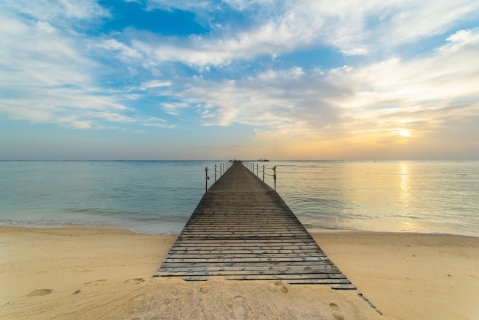
 Where to Go for Christmas: Sun, Value and Fewer Crowds
Where can you find warm Christmas weather without peak-season prices and huge crowds? Compare Marsa Alam, The Gambia, Vietnam, Agadir and Cap Skirring.
 Warm Days, Cool Nights: 8 Destinations With the Perfect Day-Night Temperature
Prefer warm sunny days but cool evenings? Compare eight destinations with daytime temperatures of around 25–30°C, cooler nights, low rainfall and plenty of sunshine.
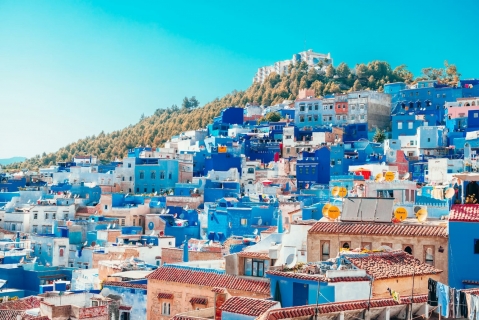 Morocco in October: Where Is the Best Weather?
Compare Morocco weather in October for Marrakesh, Agadir, Essaouira, Fez and Merzouga to find the warmest, driest and sunniest places.