
















 Discover Kok Kood: a hidden gem in Thailand
Discover the hidden gem of Thailand - Koh Kood! Explore stunning beaches, waterfalls and eco-friendly resorts while enjoying a peaceful atmosphere away from the crowds.
In climate discussions, the hours of sunlight reveal much about a location. This page shows the total number of hours of direct sunlight per month and the average hours per day in Ko Lanta, Koh Lanta, Thailand. These values are calculated using 30 years of data (1990–2020) to ensure accuracy.
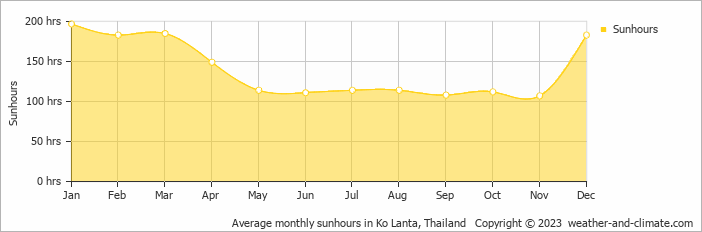
Sunshine in Ko Lanta varies greatly throughout the year. The sunniest month, January, reaches an impressive 197 hours, while November, the darkest month, offers only 107 hours. The total annual amount of sun is 1677 hours.
Seasonal changes in sunshine hours are quite obvious in Ko Lanta. While January receives considerable daily sunshine with up to 6.6 hours, November marks the darkest time of the year, where sunshine is scarce with only 3.6 hours of sunlight per day.
Ko Lanta enjoys an average of 1677 hours of sunshine annually. Let’s compare this with some popular tourist destinations:
Seville, Spain, enjoys an impressive 2920 hours of sunshine per year, making it an ideal destination even in winter.
In contrast, Brussels, Belgium, receives only about 1590 hours of sunshine per year, known for its frequently overcast and rainy skies.
In Seoul, South Korea, there are approximately 2133 hours of sunshine per year, mostly during spring and autumn.
In Tokyo, Japan, the average annual sunshine is 1930 hours, with sunny periods between rainy seasons.
October, Ko Lanta’s wettest month, receives 84 mm (3.3 in) of rainfall and has a maximum daytime temperature of 29°C (84°F). During the driest month February you can expect a temperature of 31°C (88°F).
For more detailed insights into the city’s temperatures, check out our Temperature page. To explore more about precipitation patterns, visit our Ko Lanta Precipitation page.
Pick a month to see the average temperature, rainfall and sunshine in Ko Lanta - and find the best time to visit.
Temperature Rainfall Sunshine Humidity
See the full Ko Lanta climate overview or explore weather in Thailand.
Where to go in October - average daytime high across popular destinations.
Bangkok 33°C (91°F) Chiang Mai
 32°C (90°F) Jomtien Beach32°C (90°F) Ao Nang Beach30°C (86°F) Hua Hin31°C (88°F) Patong Beach29°C (84°F) Ko Lanta29°C (84°F)
 Need travel inspiration? Check out our bucket list articles and be inspired.
Discover Kok Kood: a hidden gem in Thailand
Discover the hidden gem of Thailand - Koh Kood! Explore stunning beaches, waterfalls and eco-friendly resorts while enjoying a peaceful atmosphere away from the crowds.

 Warm Days, Cool Nights: 8 Destinations With the Perfect Day-Night Temperature
Prefer warm sunny days but cool evenings? Compare eight destinations with daytime temperatures of around 25–30°C, cooler nights, low rainfall and plenty of sunshine.

 Where to Travel in July and August: Mexico, Thailand, Indonesia or Somewhere Else?
Compare July and August weather in Mexico, Thailand, Indonesia, Zanzibar and Sri Lanka, using historical climate data for temperature, rainfall and sunshine.
 Discover Thailand: An Ultimate Guide for Yogis
Explore Thailand's best for yogis: serene retreats, spiritual growth, and adventure. Dive into yoga, meditation, and nature's tranquility for an unforgettable journey.