


















 Hike the South West Coast Path
The South West Coast Path means breathtaking nature, kind people and delicious food everywhere you go. It is an unforgettable experience and you need to add it to your bucket list.
Sunshine plays a big role in understanding the climate of a city. This page shows the total number of hours of direct sunlight per month and the average hours per day in Hale, Merseyside, United Kingdom. These values are calculated using 30 years of data (1990–2020) to ensure accuracy.
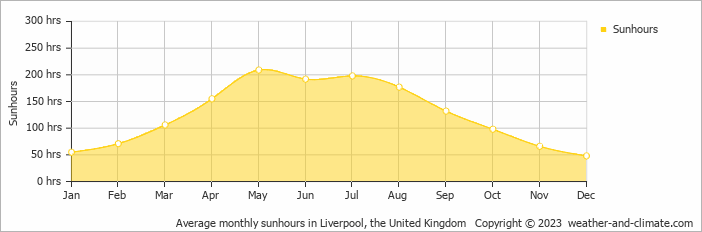
Sunshine in Hale varies greatly throughout the year. The sunniest month, May, reaches an impressive 209 hours, while December, the darkest month, offers only 48 hours. The total annual amount of sun is 1507 hours.
This means the city can be enjoyed more throughout the sunniest month of May under a blue sky, with approximately 7.0 hours of sunshine daily. In contrast, the city experiences much darker days in December, with only 1.6 hours of sunlight per day.
Hale enjoys an average of 1507 hours of sunshine annually. Let’s compare this with some popular tourist destinations:
Athens, Greece, enjoys 2769 hours of sunshine each year, making it one of the sunniest destinations in the Mediterranean region.
Manchester, UK, experiences just around 1420 hours of sunshine annually.
In Shanghai, China, the annual average sunshine is 1780 hours, with cloudier weather in summer.
Perth, Australia, enjoys 3180 hours of sunshine annually, the highest among major Australian cities.
August, Hale’s wettest month, receives 91 mm (3.6 in) of rainfall and has a maximum daytime temperature of 21°C (70°F). During the driest month March you can expect a temperature of 11°C (52°F).
For more detailed insights into the city’s temperatures, check out our Temperature page. To explore more about precipitation patterns, visit our Hale Precipitation page.
Pick a month to see the average temperature, rainfall and sunshine in Hale - and find the best time to visit.
Temperature Rainfall Sunshine Humidity
See the full Hale climate overview or explore weather in the United Kingdom.
Where to go in October - average daytime high across popular destinations.
London 16°C (61°F) Bath15°C (59°F) Torquay16°C (61°F) Manchester14°C (57°F) York15°C (59°F) Blackpool
 15°C (59°F) Edinburgh13°C (55°F) Glasgow14°C (57°F)
 Need travel inspiration? Check out our bucket list articles and be inspired.
Hike the South West Coast Path
The South West Coast Path means breathtaking nature, kind people and delicious food everywhere you go. It is an unforgettable experience and you need to add it to your bucket list.
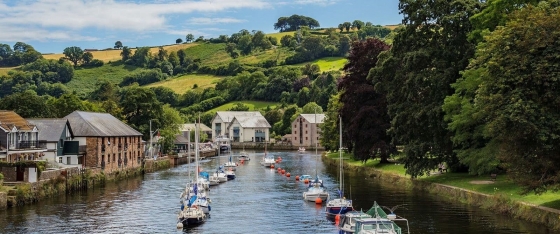 Welcome to Totnes, the hidden treasure of South Devon
Totnes is a place where historical richness fuses effortlessly with a vibrant alternative culture and breathtaking natural surroundings. The town pulses with an amazing community spirit that you'll feel around every corner.
 London's coolest neighborhoods you'll want to visit
Discover the 6 coolest neighborhoods in London for your trip! Explore vibrant Shoreditch, lively Soho, alternative Camden, and many more.
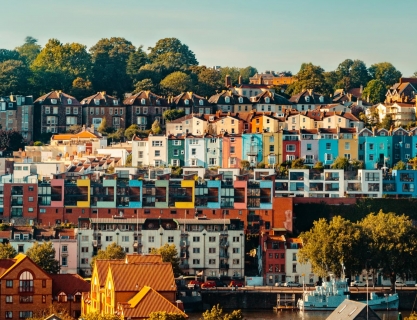 10 cities you should definitely visit in the UK
Discover the top 10 most fun and alternative cities in the UK, rich in art, culture, and adventure. Explore vibrant neighborhoods and unique places.