Flirsch Weather & Climate: Best Time to Visit
Average temperatures, rainfall, sunshine and the best time to visit Flirsch.
Climate overview of Flirsch
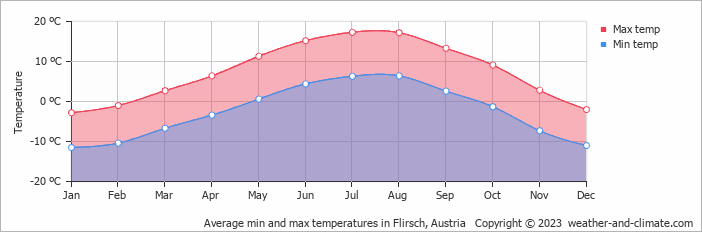
Flirsch, Tyrol, Austria, experiences significant temperature variation throughout the year. Summers bring daytime highs of 17°C (63°F) in July, while winters cool to -3°C (27°F) in January.
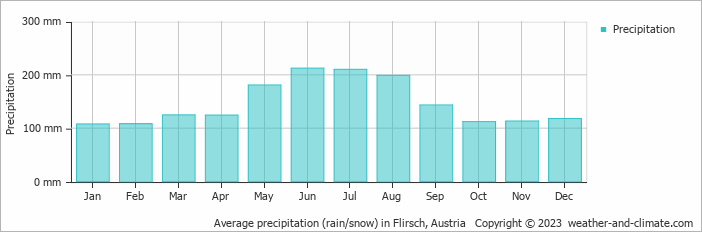
The city receives considerable rain/snowfall, with around 1752 mm (69 in) annually. June is the wettest month. It has a distinct rainy season from May to August, with mild summers and very cold winters.
Flirsch Weather by Month
Pick a month to see the average temperature, rainfall and sunshine in Flirsch - and find the best time to visit.



Monthly Temperature in Flirsch
Depending on the time of the year, temperatures range from moderate to very cold in Flirsch. Typically, average maximum daytime temperatures range from a moderate 17°C (63°F) in July to a very cold -3°C (27°F) in the coolest month, January.
Nights vary from 6°C (43°F) in July to around -12°C (10°F) during the colder months.
Check out our detailed temperature page for more information.
Temperature ranges by month
Rainfall in Flirsch
Flirsch has a relatively rain/snowy climate with high precipitation levels, averaging 1752 mm (69 in) of rain/snowfall annually. Flirsch offers a pleasant mix of wetter and slightly drier months. The difference in precipitation between the wettest month June (212 mm (8.3 in)) and the driest month January (108 mm (4.3 in)) is not too significant. For more details, please visit our Flirsch Precipitation page.
The mean monthly precipitation over the year, including rain, hail, and snow
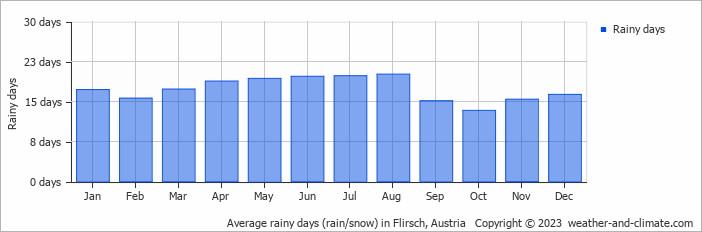
The average number of days each month with precipitation
Humidity in Flirsch by Month
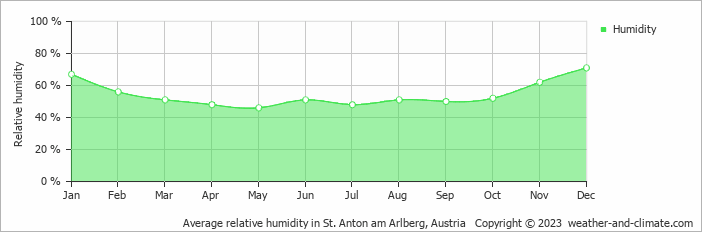
The relative humidity is moderate throughout the year in Flirsch.
The city experiences its highest humidity in December, reaching 71%. In May, the humidity drops to its lowest level at 46%. What does this mean? Read our detailed page on humidity levels for further details.
Relative humidity over the year
Best Time to Visit Flirsch
Monthly ratings reflect general weather comfort, based on daytime temperature and rainfall. Swimming and winter conditions are highlighted separately where relevant.
- Warmest weather: July and August
- Fewer rainy days: February, September, October, November and December
- Seasonal pattern: A distinct rainy season from May to August, with mild summers and very cold winters
- Coldest conditions: January, with freezing nights around -12°C (10°F).
Frequently asked questions about the climate in Flirsch
What is the best time to visit Flirsch?
Flirsch has a distinct rainy season from May to August, with mild summers and very cold winters.
What temperatures can I expect in Flirsch?
Daytime highs range from -3°C (27°F) in January to 17°C (63°F) in July. Nighttime lows range from -12°C (10°F) to 6°C (43°F). Temperatures vary considerably through the year.
How much rain does Flirsch get?
Annual rainfall is around 1752 mm (69 in). June is the wettest month with 212 mm (8.3 in), while January is the driest with 108 mm (4.3 in).
Flirsch 3-Day Forecast
Flirsch on the map
Flirsch is highlighted - select any city to see its climate.
Popular this month
Where to go in August - average daytime high across popular destinations.














Bucket list
Need travel inspiration? Check out our bucket list articles and be inspired.
 Ski Arlberg is the snow mecca of the Alps
Ski Arlberg is one of the most extensive and snow-sure ski resorts in Austria. In this area you will find challenging slopes, bustling après-ski and a combination of sporty and traditional villages.
Snowbombing Festival in Austria
Snowbombing Festival in Austria. Imagine that you can combine your favorite festival with all the benefits of a winter sports holiday.
Cycle the Danube trail
The Danube cycle route is one of the most popular cycling routes in Europe, and rightly so, because it is a varied route that is interesting both in terms of culture and nature.