Here you can view the typical wind conditions throughout the year in Ligist, (Styria), Austria.
Data from: Graz, Austria (16 KM, 10 Miles).
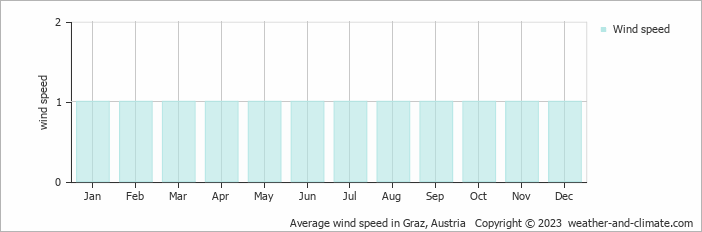
Wind speed in Ligist varies across the year, ranging from
1 m/s (2 knots) to 1 m/s (2 knots).
With an average of 1 m/s (2 knots) during January, February, March, April, May, June, July, August, September, October, November and December, the air remains quite still most of the time. Daily variations range from completely calm periods to gentle breezes reaching 3 m/s (6 knots). At this low average, you'll barely notice air movement against your face. Converting to other units, this equals 3.6 km/h or 2.2 mph.
Weather experts classify this as "light air" on the Beaufort scale. Smoke from chimneys rises almost straight up with minimal drift. Leaves typically stay motionless, though occasional light stirring may occur. These conditions create a relaxed atmosphere where wind seldom interferes with plans or comfort.
For more detailed information about Ligist’s weather,
including monthly rainfall, sunshine hours, and humidity levels, visit our Ligist climate page.






















 Ski Arlberg is the snow mecca of the Alps