Average monthly wind speed in Ljubljana
The mean monthly wind speed over the year in Ljubljana (Osrednjeslovenska), Slovenia.
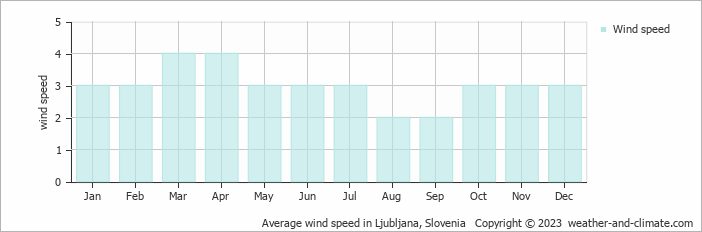
These figures come from monthly climatological averages showing that Ljubljana sees peak wind speeds of 4 m/s (8 knots) during its windiest period and minimum speeds of 2 m/s (4 knots) during its calmest season.
During August and September, Ljubljana maintains a 2 m/s (4 knots) wind speed average, producing gentle air movement. Some days will be calm while others may experience more wind. At the average speed, you'll feel light air pressure on exposed skin and observe subtle leaf movement. Converting to familiar units, this equals 7.2 km/h or 4.5 mph. Despite occasional breezes, the wind is usually light enough to spend time outdoors.
The windiest time of year, March and April has average wind speeds of 4 m/s (8 knots). This means typical days have strong breezes that make flags snap and clothing flap. Walking against the wind takes slight effort. The speed translates to 14.4 kilometers per hour or 8.9 miles per hour. While some periods are calmer or gustier, windy weather is the norm.
For more detailed information about Ljubljana’s weather, including monthly rainfall, sunshine hours, and humidity levels, visit our Ljubljana climate page.
Ljubljana Weather by Month
Pick a month to see the average temperature, rainfall and sunshine in Ljubljana - and find the best time to visit.



Ljubljana 3-Day Forecast
Temperature Rainfall Sunshine Humidity Wind Speed
See the full Ljubljana climate overview or explore weather in Slovenia.
Popular this month
Where to go in September - average daytime high across popular destinations.
 Piran
Piran 24°C (75°F) Portorož24°C (75°F) Maribor
 21°C (70°F) Ljubljana21°C (70°F) Bled19°C (66°F) Bovec19°C (66°F) Bohinj19°C (66°F) Kranjska Gora18°C (64°F)














Bucket list
Need travel inspiration? Check out our bucket list articles and be inspired.
Go to Bovec in Slovenia
With mountains that linger in the blue sky, an emerald-green river Bovec offers picturesque scenes that are a must see for your bucket list.
Experience Dazzling Fairy Tales In The Lake Bled Of Slovenia
Slovenia's most well-known tourist destination is Lake Bled, which is still relatively undiscovered when compared to other European attractions despite its growing notoriety.