

















 Hike the South West Coast Path
The South West Coast Path means breathtaking nature, kind people and delicious food everywhere you go. It is an unforgettable experience and you need to add it to your bucket list.
Average temperatures, rainfall, sunshine and the best time to visit Wolverhampton.
 –
–
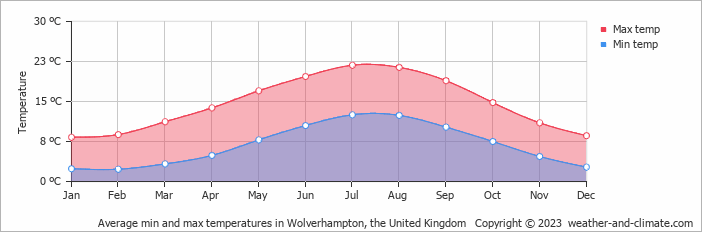
Temperatures in Wolverhampton, West Midlands, United Kingdom, vary greatly throughout the year. July is the hottest month at 22°C (72°F), while January is the coldest at 8°C (46°F).
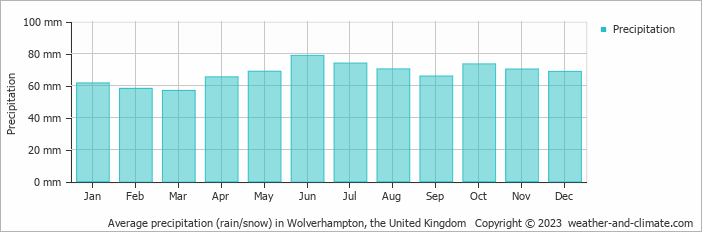
With around 812 mm (32 in) of annual rain/snowfall, the city has moderate precipitation levels. June is the wettest month and March the driest. It also has pleasant summers and cold winters. July is the sunniest month, averaging 6.2 hours of sunshine per day.
Pick a month to see the average temperature, rainfall and sunshine in Wolverhampton - and find the best time to visit.
The climate in Wolverhampton is known for significant temperature differences throughout the year, making the weather dynamic. Typically, average maximum daytime temperatures range from a pleasant 22°C (72°F) in July to a chilly 8°C (46°F) in the coolest month, January.
Nights vary from 13°C (55°F) in July to around 2°C (36°F) during the colder months.
Check out our detailed temperature page for more information.
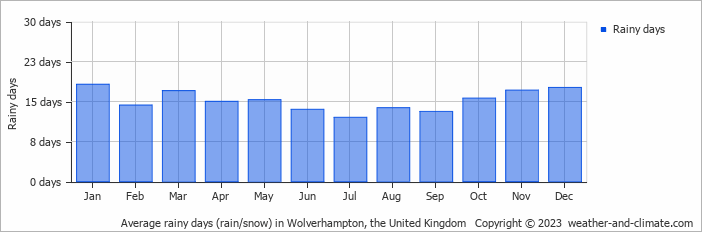
Generally, Wolverhampton receives mid-range precipitation levels, with 812 mm (32 in) annually. Precipitation levels in Wolverhampton remain relatively steady throughout the year. June has the most rain, with 79 mm (3.1 in) over 14 days. In the driest month March, this drops slightly to 57 mm (2.2 in), making the city's climate fairly predictable. For more details, please visit our Wolverhampton Precipitation page.
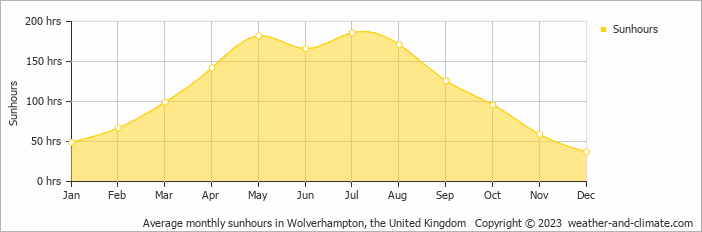
For those who appreciate different seasons, Wolverhampton serves as an ideal destination. Expect longer, more sun-filled days in July with an average of 6.2 hours of sunshine daily, and embrace the darker days in December, offering only 1.2 hours of daily sunlight.
Visit our detailed sunshine hours page for more information.
Monthly ratings reflect general weather comfort, based on daytime temperature and rainfall. Swimming and winter conditions are highlighted separately where relevant.
June, July and August typically offer the most optimal weather in Wolverhampton. In contrast, January, February and December tend to have less optimal conditions. Wolverhampton has pleasant summers and cold winters.
Daytime highs range from 8°C (46°F) in January to 22°C (72°F) in July. Nighttime lows range from 2°C (36°F) to 13°C (55°F). Temperatures vary considerably through the year.
Annual rainfall is around 812 mm (32 in). June is the wettest month with 79 mm (3.1 in), while March is the driest with 57 mm (2.2 in).
Wolverhampton receives around 1,380 hours of sunshine per year. July is the sunniest month with 186 hours, while December is the cloudiest with just 37 hours.
Wolverhampton is highlighted - select any city to see its climate.
Where to go in October - average daytime high across popular destinations.
London 16°C (61°F) Bath15°C (59°F) Torquay16°C (61°F) Manchester14°C (57°F) York15°C (59°F) Blackpool
 15°C (59°F) Edinburgh13°C (55°F) Glasgow14°C (57°F)
 Need travel inspiration? Check out our bucket list articles and be inspired.
Hike the South West Coast Path
The South West Coast Path means breathtaking nature, kind people and delicious food everywhere you go. It is an unforgettable experience and you need to add it to your bucket list.
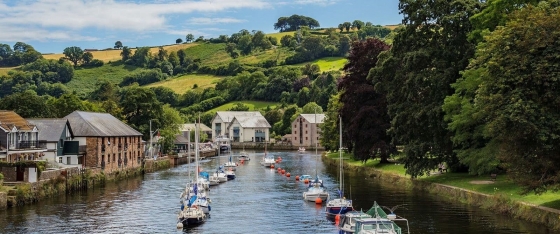 Welcome to Totnes, the hidden treasure of South Devon
Totnes is a place where historical richness fuses effortlessly with a vibrant alternative culture and breathtaking natural surroundings. The town pulses with an amazing community spirit that you'll feel around every corner.
 London's coolest neighborhoods you'll want to visit
Discover the 6 coolest neighborhoods in London for your trip! Explore vibrant Shoreditch, lively Soho, alternative Camden, and many more.
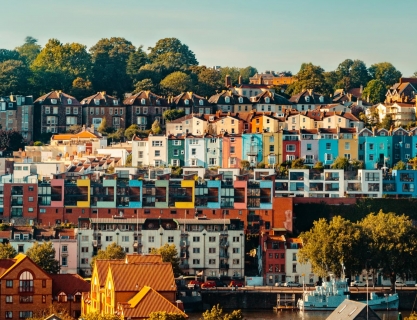 10 cities you should definitely visit in the UK
Discover the top 10 most fun and alternative cities in the UK, rich in art, culture, and adventure. Explore vibrant neighborhoods and unique places.