
















 Chase the autumn leaves in Japan
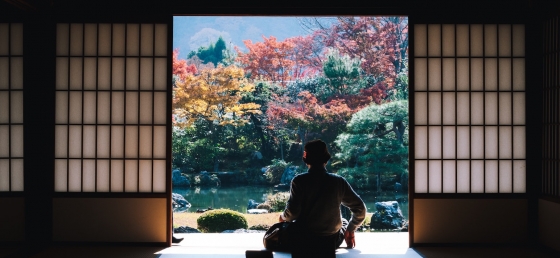
Japan is one of these cases which turns into a gold, yellow and orange fairy tale starting from September. And we can honestly say: We cannot imagine a more beautiful season to visit Japan.
Average temperatures, rainfall, sunshine and the best time to visit Shari Town.
 –
–
Shari Town, located on the Shiretoko Peninsula in Hokkaido, Japan, serves as a main gateway to Shiretoko National Park. This is one of the most remote and wild natural areas in the country. The weather changes significantly with the seasons. Summers are pleasant, while winters can be very cold with frequent snowfall. Rain and snow are common throughout the year, shaping the region’s dramatic scenery. Let’s break down all the climate details for a clearer picture.
Pick a month to see the average temperature, rainfall and sunshine in Shari Town - and find the best time to visit.
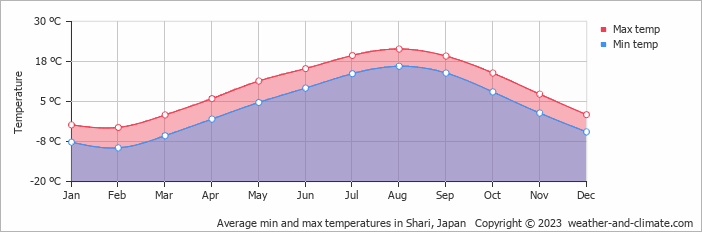
Depending on the time of the year, temperatures range from pleasant to very cold in Shari Town. Average daytime temperatures reach a pleasant 21°C (70°F) in August. In February, the coolest month of the year, temperatures drop to a very cold -3°C (27°F).
At night, temperatures range from around 16°C (61°F) in August to -10°C (14°F) in February.
Check out our detailed temperature page for more information.
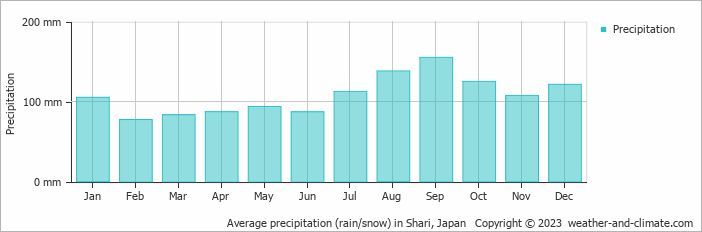
Shari Town has a relatively rain/snowy climate with high precipitation levels, averaging 1291 mm (51 in) of rain/snowfall annually. Shari Town experiences moderate seasonal variation in rainfall, with monthly averages ranging from 155 mm (6.1 in) in September, the wettest month, and 77 mm (3 in) in February, the driest month. For more details, please visit our Shari Town Precipitation page.
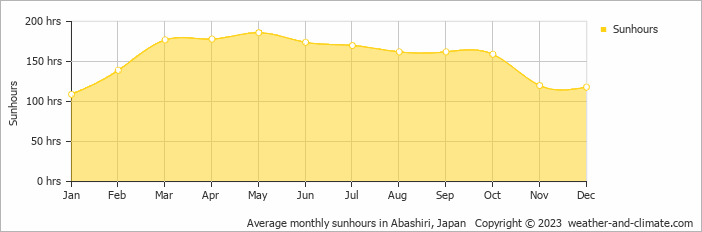
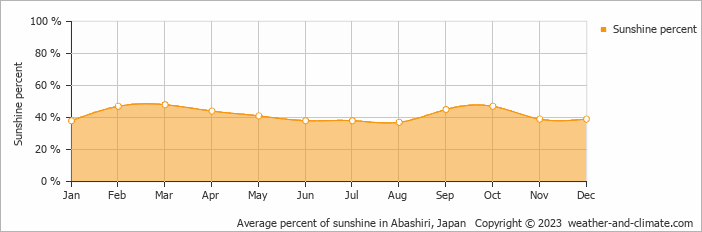
Shari Town can be enjoyed more throughout the sunniest month of May under a blue sky, with approximately 6.2 hours of sunshine daily. In contrast, the city experiences much darker days in January, with only 3.6 hours of sunlight per day.
Visit our detailed sunshine hours page for more information.
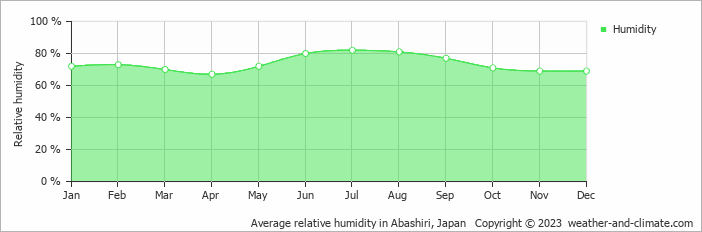
The relative humidity is high throughout the year in Shari Town.
The city experiences its highest humidity in July, reaching 82%. In April, the humidity drops to its lowest level at 67%. What does this mean? Read our detailed page on humidity levels for further details.
Monthly ratings reflect general weather comfort, based on daytime temperature and rainfall. Swimming and winter conditions are highlighted separately where relevant.
August typically offers the most optimal weather in Shari Town. In contrast, January, February, March, April, November and December tend to have less optimal conditions. Shari Town has pleasant summers and very cold winters.
Daytime highs range from -3°C (27°F) in February to 21°C (70°F) in August. Nighttime lows range from -10°C (14°F) to 16°C (61°F). Temperatures vary considerably through the year.
Annual rainfall is around 1291 mm (51 in). September is the wettest month with 155 mm (6.1 in), while February is the driest with 77 mm (3 in).
Shari Town receives around 1,854 hours of sunshine per year. May is the sunniest month with 186 hours, while January is the cloudiest with just 109 hours.
Shari Town is highlighted - select any city to see its climate.
Where to go in October - average daytime high across popular destinations.
Naha 28°C (82°F) Osaka
 24°C (75°F) Kyoto23°C (73°F) Tokyo23°C (73°F) Hakone21°C (70°F) Hakuba17°C (63°F) Sapporo16°C (61°F) Niseko15°C (59°F)
 Need travel inspiration? Check out our bucket list articles and be inspired.
Chase the autumn leaves in Japan
Japan is one of these cases which turns into a gold, yellow and orange fairy tale starting from September. And we can honestly say: We cannot imagine a more beautiful season to visit Japan.
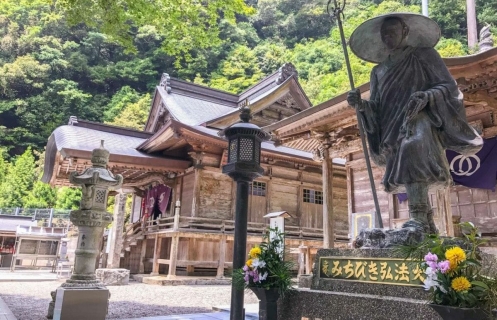 Walk the 88 temple circuit
We recommend walking the 88 temple circuit from April til October. Although June, July and August can be a bit wet, hot and humid.
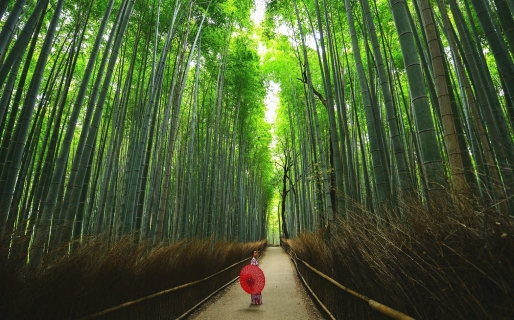 The famous bamboo forests of Arashiyama
The famous bamboo forests of Arashiyama lie just outside the city center of Kyoto and is unique in the world. If you look at photos of this bamboo forest, it looks like you have landed in a fairy-tale world.
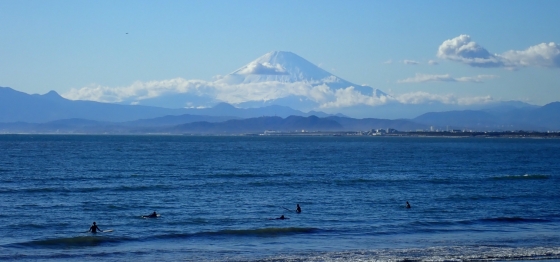 10 reasons why you should visit Japan in winter
Here are 10 reasons why you should plan a winter trip to Japan. During this period, popular sights are less busy and prices for flights and hotels much cheaper.