

















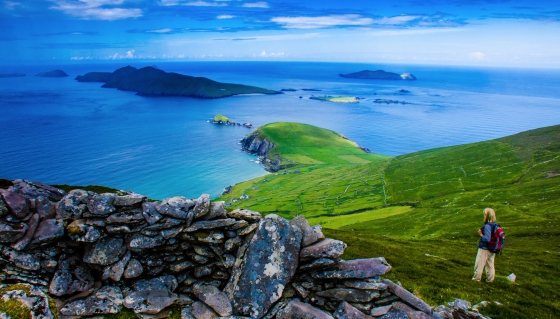
 Go to Dingle in Ireland
Dolphins, Whales and breathtaking views. The colorful fishing village Dingle in Ireland has it all and this town is a must for your bucket list.
Average temperatures, rainfall, sunshine and the best time to visit Portmarnock.
 –
–
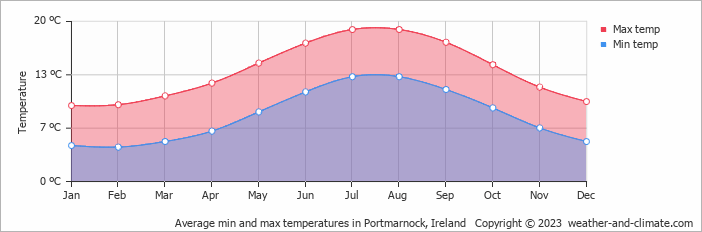
Portmarnock, Dublin County, Ireland, has a moderate seasonal temperature range, with July reaching 19°C (66°F) and January cooling to 10°C (50°F).
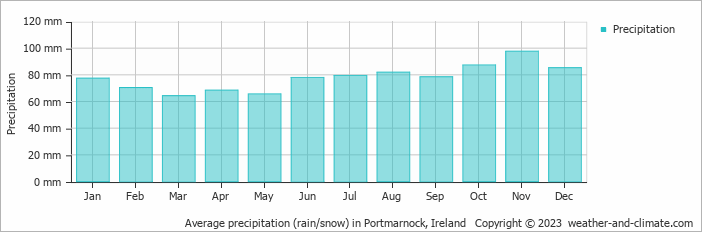
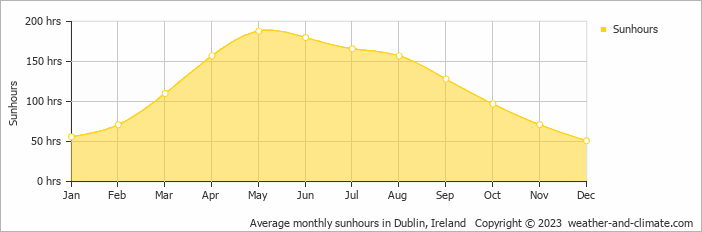
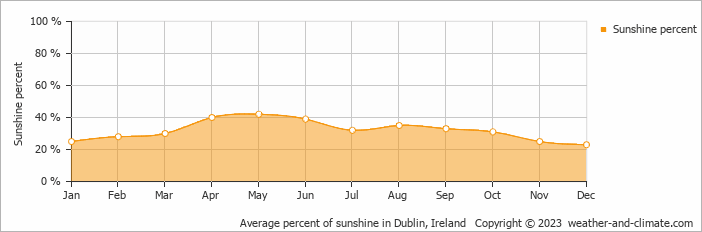
The city receives around 934 mm (37 in) of rainfall per year. November is the wettest month and March the driest. Sunshine peaks in May, when the city sees around 6.3 hours of sunshine per day.
Pick a month to see the average temperature, rainfall and sunshine in Portmarnock - and find the best time to visit.
The weather in Portmarnock changes moderately throughout the year, offering enough variation to appreciate each season. On average, daytime temperatures range from a pleasant 19°C (66°F) in July to a chilly 10°C (50°F) in January.
Nighttime temperatures range from 13°C (55°F) in July to 4°C (39°F) in January.
Check out our detailed temperature page for more information.
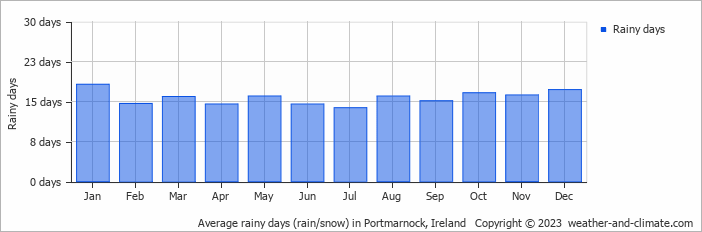
Generally, Portmarnock experiences moderate precipitation patterns, averaging 934 mm (37 in) yearly. The wettest period in Portmarnock occurs in November, which receives around 98 mm (3.9 in) of precipitation. During the driest month, March, Portmarnock experiences moderate rainfall, totaling 64 mm (2.5 in). The consistent precipitation levels throughout the year contribute to a relatively stable climate. For more details, please visit our Portmarnock Precipitation page.
In Portmarnock, summer days are longer and more sunny, with daily sunshine hours peaking at 6.3 hours in May. As the darker season arrives, the brightness of the sun becomes less. December sees a soft sun for only 1.7 hours per average day.
Visit our detailed sunshine hours page for more information.
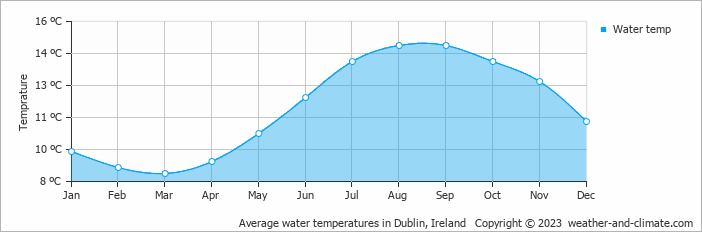
The mean water temperature over the year ranges from 8°C (46°F) in March to 15°C (59°F) in August.
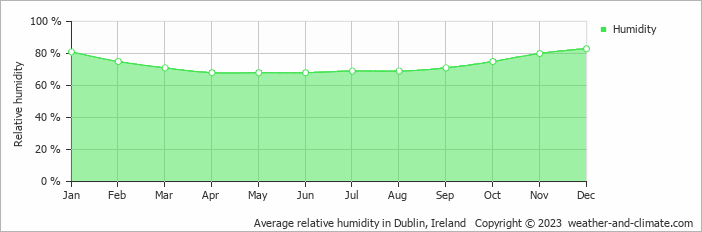
The relative humidity is high throughout the year in Portmarnock.
The city experiences its highest humidity in December, reaching 83%. In April, the humidity drops to its lowest level at 68%. What does this mean? Read our detailed page on humidity levels for further details.
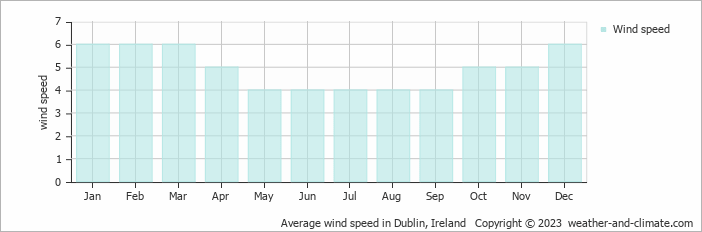
The mean wind speed varies between 4 m/s (8 knots) and 6 m/s (12 knots) throughout the year. It is lowest in May, June, July, August and September and highest during January, February, March and December. What does this mean?
Monthly ratings reflect general weather comfort, based on daytime temperature and rainfall. Swimming and winter conditions are highlighted separately where relevant.
July and August typically offer the most optimal weather in Portmarnock. In contrast, January, February and December tend to have less optimal conditions.
Daytime highs range from 10°C (50°F) in January to 19°C (66°F) in July. Nighttime lows range from 4°C (39°F) to 13°C (55°F).
Annual rainfall is around 934 mm (37 in). November is the wettest month with 98 mm (3.9 in), while March is the driest with 64 mm (2.5 in).
Portmarnock receives around 1,432 hours of sunshine per year. May is the sunniest month with 188 hours, while December is the cloudiest with just 51 hours.
Portmarnock is highlighted - select any city to see its climate.
Where to go in September - average daytime high across popular destinations.
Westport 17°C (63°F) Doolin17°C (63°F) Kilkenny18°C (64°F) Cork18°C (64°F) Kenmare18°C (64°F) Killarney17°C (63°F) Galway18°C (64°F) Dublin18°C (64°F)
 Need travel inspiration? Check out our bucket list articles and be inspired.
Go to Dingle in Ireland
Dolphins, Whales and breathtaking views. The colorful fishing village Dingle in Ireland has it all and this town is a must for your bucket list.
 An Irish adventure like no other in Killarney National Park
Head down to the South West part of the country, County Kerry, to the small town of Killarney. If you want to experience what Ireland is really all about
 Horseback riding in Ireland
Ireland is the most ideal place in the world for horseback riding. Combine this with the most hospitable people you will ever encounter and you have an unforgettable dream trip to add to your bucket list.

 The 10 most charming villages in France
Discover France's top 10 beautiful villages. From Normandy to the Côte d'Azur, experience quaint squares and cobbled streets. Which one will you visit this summer?