














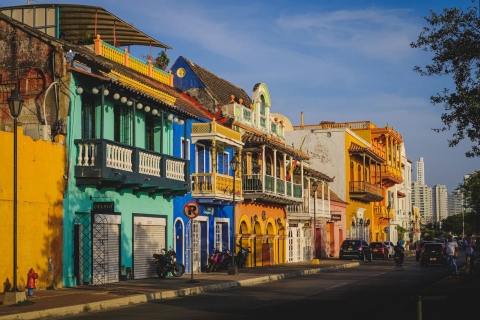
 The 10 most alternative cities in South America
Discover South America's top 10 alternative cities! From Valparaíso's vibrant streets to La Paz's high-altitude charm and Medellín's innovative spirit.
Average temperatures, rainfall, sunshine and the best time to visit Petrohué.
 –
–
Petrohué, Los Lagos, Chile, sees big temperature differences between seasons, with February peaking at 20°C (68°F) and July dropping to 8°C (46°F).
With around 3278 mm (129 in) of annual rain/snowfall, Petrohué has a notably wet climate. However, this rain/snowfall is not evenly distributed, the city has pleasant summers and cold winters. The wettest month is June. January is the sunniest month, averaging 7.0 hours of sunshine per day.
Pick a month to see the average temperature, rainfall and sunshine in Petrohué - and find the best time to visit.
Visitors to Petrohué can expect significant temperature changes throughout the year. Average daytime temperatures reach a pleasant 20°C (68°F) in February. In July, the coolest month of the year, temperatures drop to a chilly 8°C (46°F).
At night, temperatures range from around 10°C (50°F) in February to 2°C (36°F) in July.
Check out our detailed temperature page for more information.

Petrohué is known for its substantial rain/snowfall, with annual precipitation reaching 3278 mm (129 in). Petrohué can be quite wet during June, receiving approximately 467 mm (18 in) of precipitation over 13 rainy days.
In contrast, during the driest month (January), you will experience much drier conditions, with 151 mm (5.9 in) of precipitation spread across 4 rainy days. For more details, please visit our Petrohué Precipitation page.


Petrohué can be enjoyed more throughout the sunniest month of January under a blue sky, with approximately 7.0 hours of sunshine daily. In contrast, the city experiences much darker days in June, with only 1.9 hours of sunlight per day.
Visit our detailed sunshine hours page for more information.

The city experiences its highest humidity in June, reaching 90%. In December, the humidity drops to its lowest level at 79%. What does this mean? Read our detailed page on humidity levels for further details.

Monthly ratings reflect general weather comfort, based on daytime temperature and rainfall. Swimming and winter conditions are highlighted separately where relevant.
February typically offers the most optimal weather in Petrohué. In contrast, April, May, June, July, August, September, October, November and December tend to have less optimal conditions. Petrohué has pleasant summers and cold winters.
Daytime highs range from 8°C (46°F) in July to 20°C (68°F) in February. Nighttime lows range from 2°C (36°F) to 10°C (50°F). Temperatures vary considerably through the year.
Annual rainfall is around 3278 mm (129 in). June is the wettest month with 467 mm (18 in), while January is the driest with 151 mm (5.9 in).
Petrohué receives around 1,596 hours of sunshine per year. January is the sunniest month with 210 hours, while June is the cloudiest with just 57 hours.
Petrohué is highlighted - select any city to see its climate.
Where to go in October - average daytime high across popular destinations.
 San Pedro de Atacama23°C (73°F) Hanga Roa
 21°C (70°F) Santiago21°C (70°F) La Serena
 21°C (70°F) Viña del Mar17°C (63°F) Valparaíso16°C (61°F) Pucón
 15°C (59°F)
 Need travel inspiration? Check out our bucket list articles and be inspired.
The 10 most alternative cities in South America
Discover South America's top 10 alternative cities! From Valparaíso's vibrant streets to La Paz's high-altitude charm and Medellín's innovative spirit.
 Torres del Paine
Torres del Paine is an huge national park on the border with Argentina. It is possible to walk here along craters, high-rising mountain ridges, over glaciers and through vast majestic tundra.
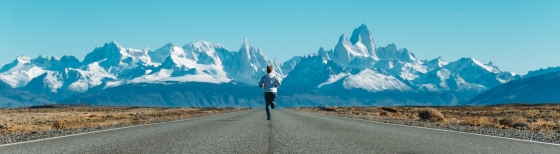 Explore Patagonia
A tour through Patagonia brings you to the end of the world. That’s why Patagonia is a bucket list destination for many. We recommend to visit Patagonia from November to early March.
 Enjoy the silence and peace in a spectacular landscape
This lodge guarantees privacy and exclusivity for those seeking to get away from mass tourism and enjoy the silence and peace in a spectacular landscape.