
















 The 10 most alternative cities in South America
Discover South America's top 10 alternative cities! From Valparaíso's vibrant streets to La Paz's high-altitude charm and Medellín's innovative spirit.
Average temperatures, rainfall, sunshine and the best time to visit Palmas.
 –
–
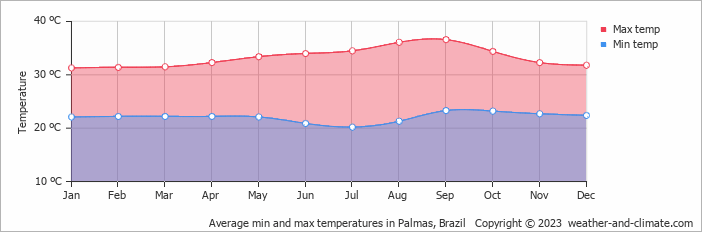
Palmas, Tocantins, Brazil, enjoys a steady climate throughout the year, with daytime temperatures typically around 33°C (91°F). September is the warmest month at 37°C (99°F), while January is the coolest at 31°C (88°F).
The city receives considerable rainfall, with around 1874 mm (74 in) annually. January is the wettest month. It has distinct dry (June to September) and wet (November to April) seasons. The most sunshine falls in August, with an average of 9.6 hours of daily sunshine.
Pick a month to see the average temperature, rainfall and sunshine in Palmas - and find the best time to visit.
The temperature in Palmas remains steady throughout the year, providing a consistently very hot climate. Typically, average maximum daytime temperatures range from a very hot 37°C (99°F) in September to a very warm 31°C (88°F) in the coolest month, January.
Nights vary from 23°C (73°F) in September to around 20°C (68°F) during the colder months.
Check out our detailed temperature page for more information.
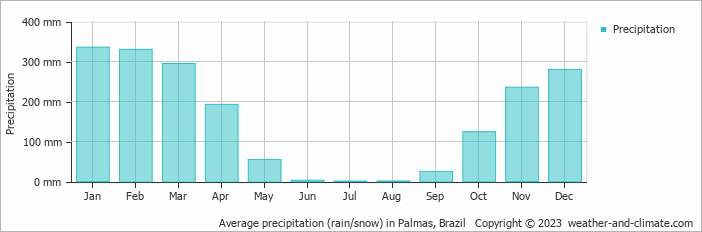
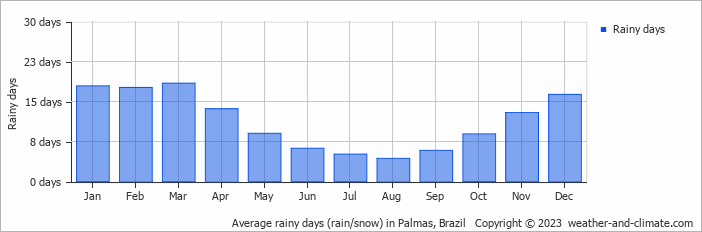
Palmas has a relatively rainy climate with high precipitation levels, averaging 1874 mm (74 in) of rainfall annually. The climate in Palmas shows significant variation throughout the year. Expect heavy rainfall in January, the wettest month, with an average of 335 mm (13 in) of precipitation over 18 rainy days.
In contrast, the driest month July offers drier and sunnier days, with around 0.6 mm (0.02 in) of rainfall over 5 rainy days. For more details, please visit our Palmas Precipitation page.
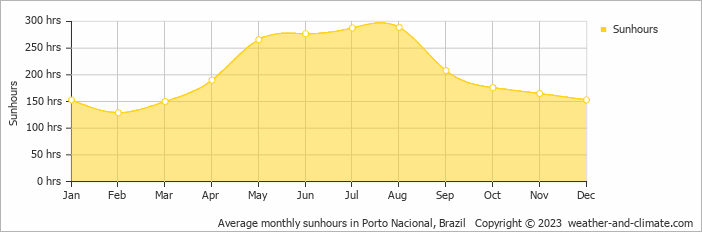
For those who appreciate different seasons, Palmas serves as an ideal destination. Expect longer, more sun-filled days in August with an average of 9.6 hours of sunshine daily, and embrace the darker days in February, offering only 4.3 hours of daily sunlight.
Visit our detailed sunshine hours page for more information.
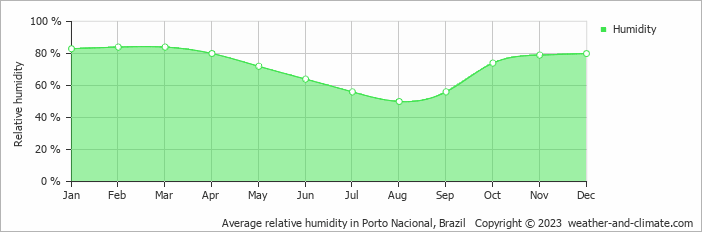
The relative humidity is high throughout the year in Palmas.
The city experiences its highest humidity in February, reaching 84%. In August, the humidity drops to its lowest level at 50%. What does this mean? Read our detailed page on humidity levels for further details.
Monthly ratings reflect general weather comfort, based on daytime temperature and rainfall. Swimming and winter conditions are highlighted separately where relevant.
May typically offers the most optimal weather in Palmas. In contrast, January, February, March, April, June, July, August, September, October, November and December tend to have less optimal conditions. Palmas has distinct dry (June to September) and wet (November to April) seasons.
Daytime highs range from 31°C (88°F) in January to 37°C (99°F) in September. Nighttime lows range from 20°C (68°F) to 23°C (73°F). Temperatures stay relatively stable year-round.
Annual rainfall is around 1874 mm (74 in). January is the wettest month with 335 mm (13 in), while July is the driest with 0.6 mm (0.02 in).
Palmas receives around 2,444 hours of sunshine per year. August is the sunniest month with 289 hours, while February is the cloudiest with just 129 hours. Overall, Palmas enjoys abundant sunshine.
Palmas is highlighted - select any city to see its climate.
Where to go in September - average daytime high across popular destinations.
Need travel inspiration? Check out our bucket list articles and be inspired.
The 10 most alternative cities in South America
Discover South America's top 10 alternative cities! From Valparaíso's vibrant streets to La Paz's high-altitude charm and Medellín's innovative spirit.

 The 5 most tranquil retreats in the Amazon Rainforest, Brazil
Discover top sustainable lodges in the Amazon. Enjoy unique wildlife, eco-friendly stays, and immersive experiences at Anavilhanas, Cristalino, and more.
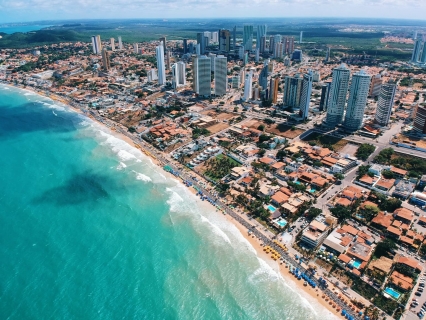 Brazil in November: Where Is the Best Weather?
Discover where Brazil has the best weather in November, comparing Fortaleza, Salvador, Rio, São Paulo, Florianópolis, Brasília and Foz do Iguaçu.
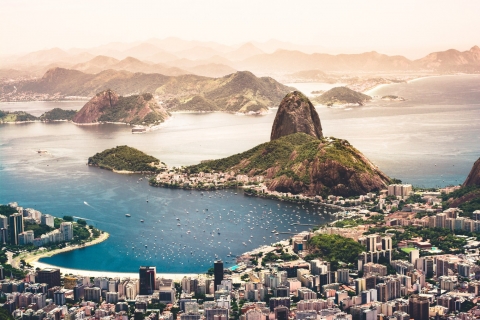 An alternative way to discover Rio de Janeiro
Don't feel like seeing the traditional tourist sights in Rio de Janeiro? We have made an overview of the sights in Rio de Janeiro that you must see if you want to visit Rio in an alternative way.