

















 The 10 most alternative cities in South America
Discover South America's top 10 alternative cities! From Valparaíso's vibrant streets to La Paz's high-altitude charm and Medellín's innovative spirit.
Average temperatures, rainfall, sunshine and the best time to visit Mauá.
 –
–
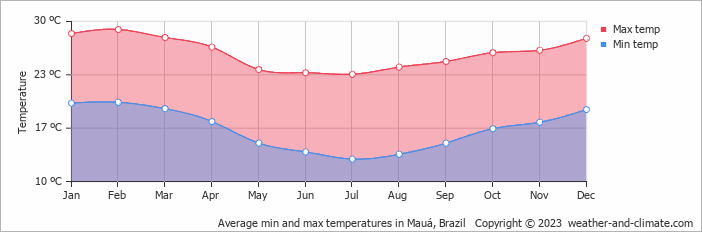
Mauá, São Paulo State, Brazil, enjoys a steady climate throughout the year, with daytime temperatures typically around 26°C (79°F). February is the warmest month at 29°C (84°F), while July is the coolest at 23°C (73°F).
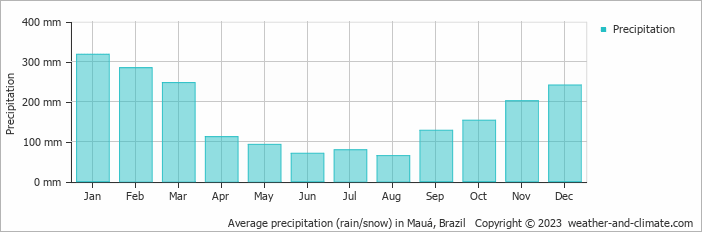
Rainfall is high, totalling around 1988 mm (78 in) per year. January is the wettest month and August the driest. The city also experiences a distinct rainy season from November to March. The most sunshine falls in July, with an average of 6.2 hours of daily sunshine.
Pick a month to see the average temperature, rainfall and sunshine in Mauá - and find the best time to visit.
The temperature in Mauá remains steady throughout the year, providing a consistently comfortable climate. Average maximum daytime temperatures range from a comfortable 29°C (84°F) in February, the warmest time of the year, to a comfortable 23°C (73°F) during cooler months like July.
At night, you can expect temperatures ranging from 20°C (68°F) in February to around 13°C (55°F) during July.
Check out our detailed temperature page for more information.
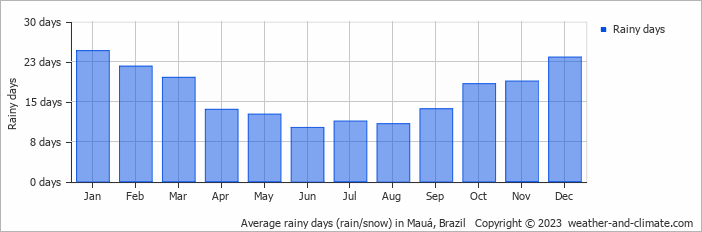
Mauá has a relatively rainy climate with high precipitation levels, averaging 1988 mm (78 in) of rainfall annually. Significant seasonal changes in precipitation occur throughout the year. In the wettest month, January it receives heavy rainfall, averaging 318 mm (13 in) of precipitation, recorded across 25 rainy days. In contrast, the driest month August brings less rainfall, with 64 mm (2.5 in) over 11 rainy days. For more details, please visit our Mauá Precipitation page.
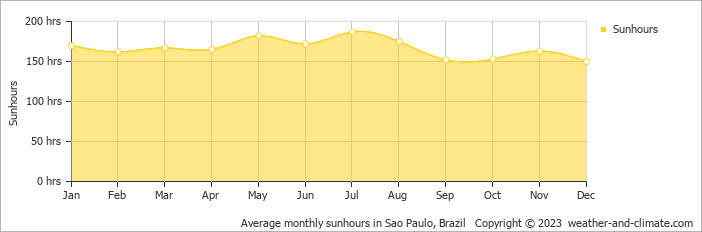
While the amount of sunshine in Mauá varies throughout the year, all seasons offer their own charm. Enjoy up to 6.2 hours of daily sun in July, and experience slightly darker atmosphere in December, with about 5.0 hours of daily sunlight.
Visit our detailed sunshine hours page for more information.
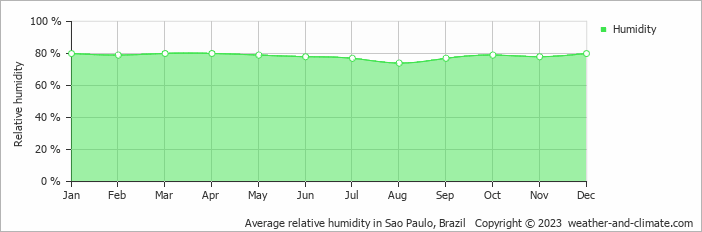
The relative humidity is high throughout the year in Mauá.
The city experiences its highest humidity in January, reaching 80%. In August, the humidity drops to its lowest level at 74%. What does this mean? Read our detailed page on humidity levels for further details.
Monthly ratings reflect general weather comfort, based on daytime temperature and rainfall. Swimming and winter conditions are highlighted separately where relevant.
May, June, July and August typically offer the most optimal weather in Mauá. In contrast, January and February tend to have less optimal conditions. Mauá has a distinct rainy season from November to March.
Daytime highs range from 23°C (73°F) in July to 29°C (84°F) in February. Nighttime lows range from 13°C (55°F) to 20°C (68°F). Temperatures stay relatively stable year-round.
Annual rainfall is around 1988 mm (78 in). January is the wettest month with 318 mm (13 in), while August is the driest with 64 mm (2.5 in).
Mauá receives around 1,998 hours of sunshine per year. July is the sunniest month with 187 hours, while December is the cloudiest with just 150 hours.
Mauá is highlighted - select any city to see its climate.
Where to go in September - average daytime high across popular destinations.
Need travel inspiration? Check out our bucket list articles and be inspired.
The 10 most alternative cities in South America
Discover South America's top 10 alternative cities! From Valparaíso's vibrant streets to La Paz's high-altitude charm and Medellín's innovative spirit.

 The 5 most tranquil retreats in the Amazon Rainforest, Brazil
Discover top sustainable lodges in the Amazon. Enjoy unique wildlife, eco-friendly stays, and immersive experiences at Anavilhanas, Cristalino, and more.
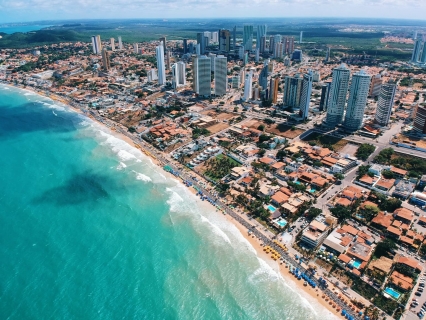 Brazil in November: Where Is the Best Weather?
Discover where Brazil has the best weather in November, comparing Fortaleza, Salvador, Rio, São Paulo, Florianópolis, Brasília and Foz do Iguaçu.
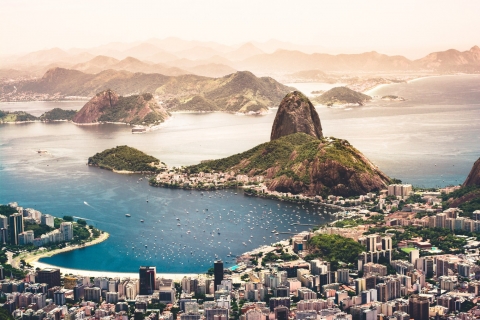 An alternative way to discover Rio de Janeiro
Don't feel like seeing the traditional tourist sights in Rio de Janeiro? We have made an overview of the sights in Rio de Janeiro that you must see if you want to visit Rio in an alternative way.