Kula Weather & Climate: Best Time to Visit
Average temperatures, rainfall, sunshine and the best time to visit Kula.
Climate overview of Kula
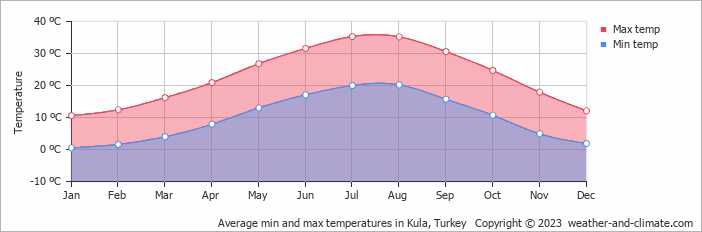
Kula, Aegean Region, Turkey, experiences significant temperature variation throughout the year. Summers bring daytime highs of 35°C (95°F) in July, while winters cool to 11°C (52°F) in January.
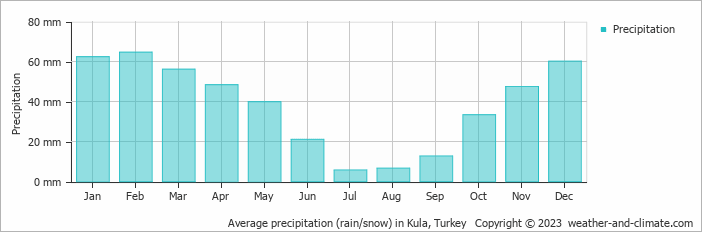
The city has a relatively dry climate, receiving around 458 mm (18 in) of rain/snowfall per year. It does experience a distinct dry season from May to October, with very hot summers and cold winters. February is the wettest month and July the driest.
Kula Weather by Month
Pick a month to see the average temperature, rainfall and sunshine in Kula - and find the best time to visit.
Monthly Temperature in Kula
Depending on the time of the year, temperatures range from very hot to chilly in Kula. On average, daytime temperatures range from a very hot 35°C (95°F) in July to a chilly 11°C (52°F) in January.
Nighttime temperatures range from 20°C (68°F) in July to 1°C (34°F) in January.
Check out our detailed temperature page for more information.
Temperature ranges by month
Rainfall in Kula
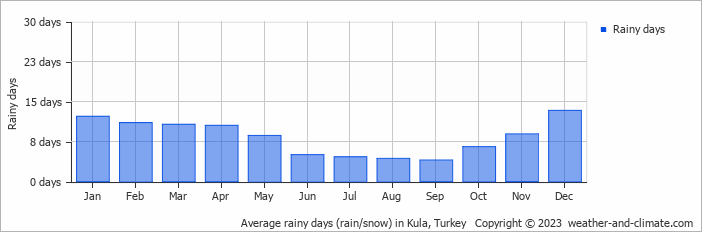
Kula has a relatively dry climate with low precipitation, averaging 458 mm (18 in) of rain/snowfall annually. The seasons in Kula bring significant changes in precipitation. The wettest month, February, receives moderate rainfall, with an average of 65 mm (2.6 in) of precipitation. This rainfall is distributed across 11 rainy days.
In contrast, the driest month, July, experiences much less rainfall, totaling 5.7 mm (0.2 in) over 5 rainy days. These distinct seasonal differences provide diverse experiences throughout the year. For more details, please visit our Kula Precipitation page.
The mean monthly precipitation over the year, including rain, hail, and snow

Best Time to Visit Kula
Monthly ratings reflect general weather comfort, based on daytime temperature and rainfall. Swimming and winter conditions are highlighted separately where relevant.
- Best overall: April, May and October
- Warmest weather: July and August
- Fewest rainy days: June, July, August and September
- Seasonal pattern: A distinct dry season from May to October, with very hot summers and cold winters
Frequently asked questions about the climate in Kula
What is the best time to visit Kula?
April, May and October typically offer the most optimal weather in Kula. In contrast, July and August tend to have less optimal conditions. Kula has a distinct dry season from May to October, with very hot summers and cold winters.
What temperatures can I expect in Kula?
Daytime highs range from 11°C (52°F) in January to 35°C (95°F) in July. Nighttime lows range from 1°C (34°F) to 20°C (68°F). Temperatures vary considerably through the year.
How much rain does Kula get?
Annual rainfall is around 458 mm (18 in). February is the wettest month with 65 mm (2.6 in), while July is the driest with 5.7 mm (0.2 in).
Kula 3-Day Forecast
Kula on the map
Kula is highlighted - select any city to see its climate.
Popular this month
Where to go in September - average daytime high across popular destinations.
Bucket list
Need travel inspiration? Check out our bucket list articles and be inspired.
An idyllic and beautiful place to stay and eat near Saklikent National Park in Turkey
Serene Saklikent National Park near Fethiye, Turkey, with breathtaking gorges, tranquil restaurant, and unique experiences in nature. Perfect for a peaceful escape.
Sailing the Turquoise Coast: Discovering Turkey's Blue Voyage
Discover the beauty of Turkey's Turquoise Coast on a sailboat adventure, exploring ancient ruins, sun-soaked beaches, and lively harbor towns.
Balloon in Cappadocia Turkey
The best view of the special landscape of Cappadocia is from the air. It is a great idea to take a balloon trip at sunrise. An experience that belongs on your bucket list.
Istanbul, where East meets West
Istanbul, one of the most amazing cities in the world. It's a buzzing city and a mix of European and Asian, like a summer day in Madrid with a touch of Bangkok.