



















 Costa Rica in February: Pacific or Caribbean Coast?
Compare Costa Rica weather in February, from dry and sunny Tamarindo to wetter Puerto Viejo, plus Jacó, Arenal and San José.
Average temperatures, rainfall, sunshine and the best time to visit Jaloba.
 –
–
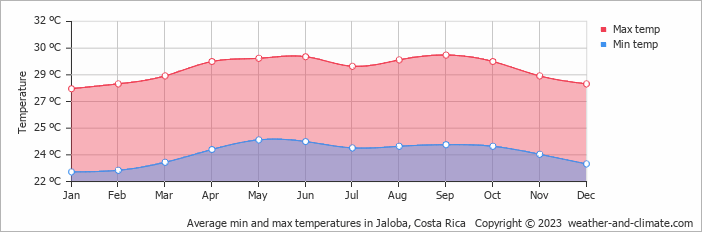
The climate in Jaloba, Costa Rica, is remarkably consistent, with temperatures year-round averaging 29°C (84°F). The warmest month is September at 30°C (86°F), and the coolest is January at 28°C (82°F).
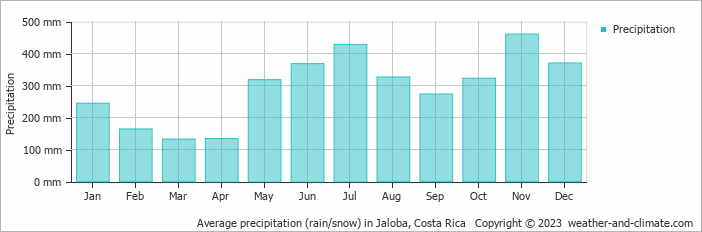
The city receives considerable rainfall, with around 3537 mm (139 in) annually. November is the wettest month. Sunshine peaks in March, when the city sees around 5.9 hours of sunshine per day.
Pick a month to see the average temperature, rainfall and sunshine in Jaloba - and find the best time to visit.
In Jaloba temperatures are generally consistent throughout the year. Typically, average maximum daytime temperatures range from a comfortable 30°C (86°F) in September to a comfortable 28°C (82°F) in the coolest month, January.
Nights vary from 25°C (77°F) in September to around 23°C (73°F) during the colder months.
Check out our detailed temperature page for more information.
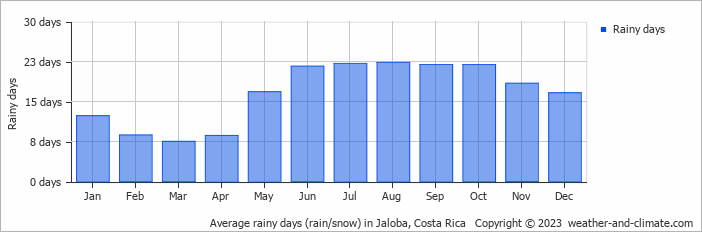
Jaloba experiences significant rainfall throughout the year, averaging 3537 mm (139 in) of precipitation annually. The climate in Jaloba shows significant variation throughout the year. Expect heavy rainfall in November, the wettest month, with an average of 460 mm (18 in) of precipitation over 18 rainy days.
In contrast, the driest month March offers drier and sunnier days, with around 132 mm (5.2 in) of rainfall over 8 rainy days. For more details, please visit our Jaloba Precipitation page.
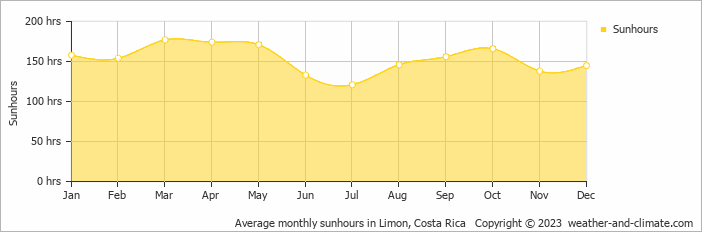
Jaloba offers a pleasant mix of sunny and slightly overcast days. The difference in sunshine hours between March (5.9 hours daily) and July (4.0 hours daily) provides a bit of variety for visitors and residents.
Visit our detailed sunshine hours page for more information.
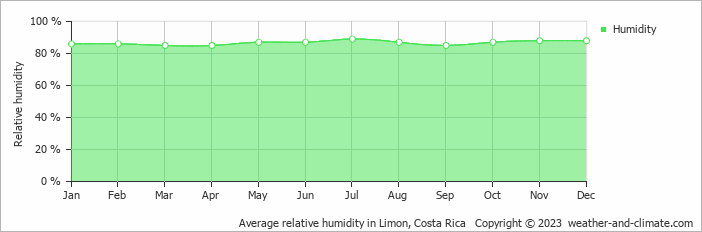
The city experiences its highest humidity in July, reaching 89%. In March, the humidity drops to its lowest level at 85%. What does this mean? Read our detailed page on humidity levels for further details.
Monthly ratings reflect general weather comfort, based on daytime temperature and rainfall. Swimming and winter conditions are highlighted separately where relevant.
February and March typically offer the most optimal weather in Jaloba. In contrast, May, June, July, August, September, October, November and December tend to have less optimal conditions.
Daytime highs range from 28°C (82°F) in January to 30°C (86°F) in September. Nighttime lows range from 23°C (73°F) to 25°C (77°F). Temperatures stay relatively stable year-round.
Annual rainfall is around 3537 mm (139 in). November is the wettest month with 460 mm (18 in), while March is the driest with 132 mm (5.2 in).
Jaloba receives around 1,839 hours of sunshine per year. March is the sunniest month with 177 hours, while July is the cloudiest with just 121 hours.
Jaloba is highlighted - select any city to see its climate.
Where to go in September - average daytime high across popular destinations.
Tamarindo 30°C (86°F) Cahuita29°C (84°F) Santa Teresa29°C (84°F) Herradura28°C (82°F) Puerto Viejo de Talamanca29°C (84°F) Fortuna29°C (84°F) Jacó28°C (82°F) San José24°C (75°F)
 Need travel inspiration? Check out our bucket list articles and be inspired.
Costa Rica in February: Pacific or Caribbean Coast?
Compare Costa Rica weather in February, from dry and sunny Tamarindo to wetter Puerto Viejo, plus Jacó, Arenal and San José.
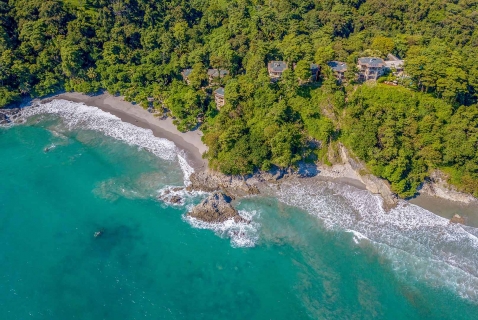 Where the rain forest meets the ocean
I promise that you will not find a better location, better views, nicer rooms or lovelier staff anywhere in Costa Rica. This place really goes above and beyond.
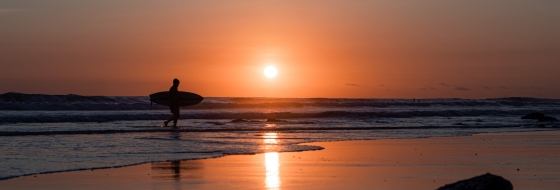 Exploring Santa Teresa, Costa Rica: A Traveler's Guide
Immerse yourself in the laid-back charm of Santa Teresa, Costa Rica. Discover stunning beaches, vibrant dining spots, unique shops, and diverse activities in our comprehensive guide
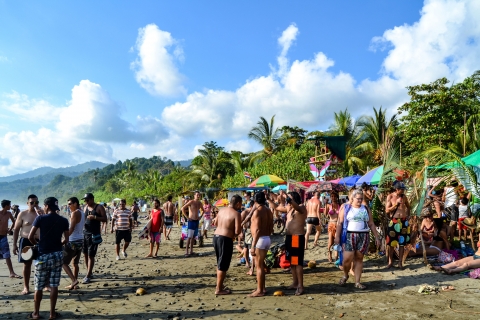 Envision Festival
This event happens once a year in Uvita de Puntarenas and attracts people from all over the world. This festival is a must add to your bucket list.