















 7 of the most budget-friendly destinations in Europe
Discover Europe's top budget-friendly destinations including Budapest, Kotor, Krakow, and more, perfect for affordable and exciting travel.
Average temperatures, rainfall, sunshine and the best time to visit Falsztyn.
 –
10-day forecastForecast
–
10-day forecastForecast
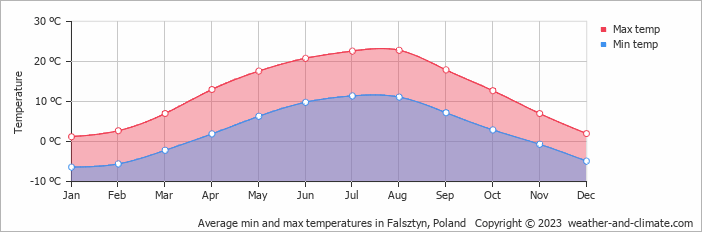
Falsztyn, Lesser Poland, Poland, sees big temperature differences between seasons, with August peaking at 23°C (73°F) and January dropping to 1°C (34°F).
The city receives considerable rain/snowfall, with around 1078 mm (42 in) annually. July is the wettest month. It has warm summers and very cold winters. The most sunshine falls in July, with an average of 6.6 hours of daily sunshine.
Pick a month to see the average temperature, rainfall and sunshine in Falsztyn - and find the best time to visit.
Visitors to Falsztyn can expect significant temperature changes throughout the year. Typically, average maximum daytime temperatures range from a comfortable 23°C (73°F) in August to a very cold 1°C (34°F) in the coolest month, January.
Nights vary from 11°C (52°F) in August to around -6°C (21°F) during the colder months.
Check out our detailed temperature page for more information.
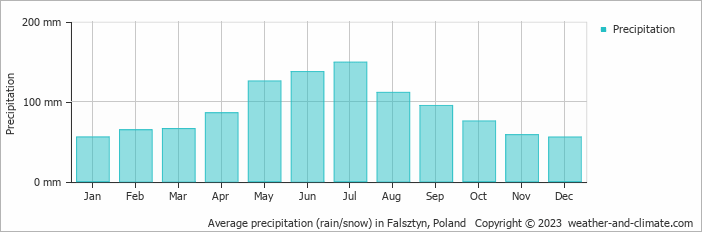
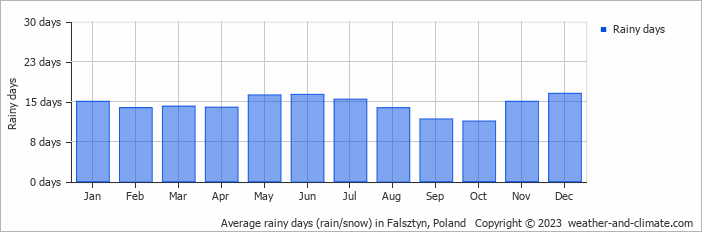
Falsztyn is known for its substantial rain/snowfall, with annual precipitation reaching 1078 mm (42 in). The climate in Falsztyn shows significant variation throughout the year. Expect high rainfall in July, the wettest month, with an average of 149 mm (5.9 in) of precipitation over 15 rainy days.
In contrast, the driest month December offers drier and sunnier days, with around 55 mm (2.2 in) of snow/rainfall over 17 snowy/rainy days. For more details, please visit our Falsztyn Precipitation page.
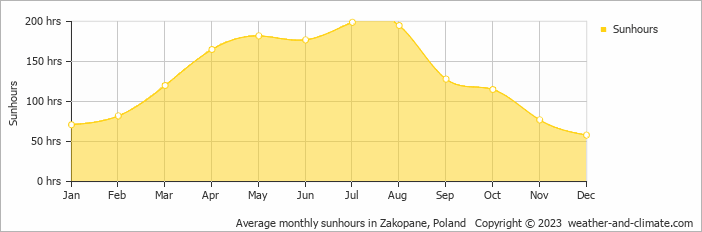
For those who appreciate different seasons, Falsztyn serves as an ideal destination. Expect longer, more sun-filled days in July with an average of 6.6 hours of sunshine daily, and embrace the darker days in December, offering only 1.9 hours of daily sunlight.
Visit our detailed sunshine hours page for more information.
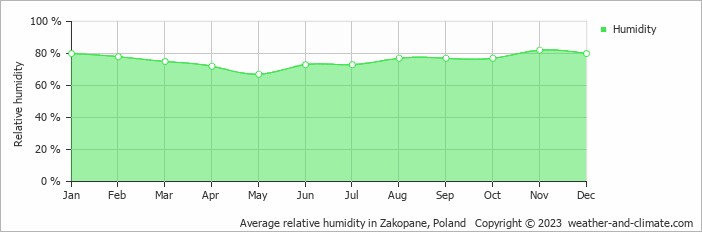
The relative humidity is high throughout the year in Falsztyn.
The city experiences its highest humidity in November, reaching 82%. In May, the humidity drops to its lowest level at 67%. What does this mean? Read our detailed page on humidity levels for further details.
Monthly ratings reflect general weather comfort, based on daytime temperature and rainfall. Swimming and winter conditions are highlighted separately where relevant.
June, July, August and September typically offer the most optimal weather in Falsztyn. In contrast, January, February, March, November and December tend to have less optimal conditions. Falsztyn has warm summers and very cold winters.
Daytime highs range from 1°C (34°F) in January to 23°C (73°F) in August. Nighttime lows range from -6°C (21°F) to 11°C (52°F). Temperatures vary considerably through the year.
Annual rainfall is around 1078 mm (42 in). July is the wettest month with 149 mm (5.9 in), while December is the driest with 55 mm (2.2 in).
Falsztyn receives around 1,569 hours of sunshine per year. July is the sunniest month with 199 hours, while December is the cloudiest with just 58 hours.
Falsztyn is highlighted - select any city to see its climate.
Where to go in October - average daytime high across popular destinations.
 Poznań
 14°C (57°F) Kraków14°C (57°F) Gdańsk13°C (55°F) Warsaw14°C (57°F) Sopot13°C (55°F) Kołobrzeg14°C (57°F) Gdynia13°C (55°F) Zakopane12°C (54°F)
 Need travel inspiration? Check out our bucket list articles and be inspired.
7 of the most budget-friendly destinations in Europe
Discover Europe's top budget-friendly destinations including Budapest, Kotor, Krakow, and more, perfect for affordable and exciting travel.
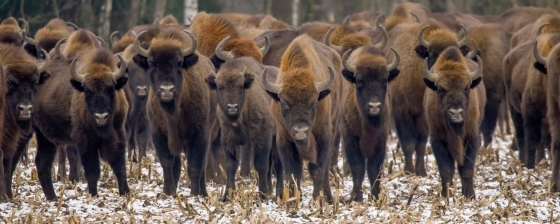 Bialowieza, the Last Primeval Forest
Being the last remaining segment of the once sprawling lowland forest that covered Europe, Bialowieza stands as the final stronghold of true wilderness on the continent.
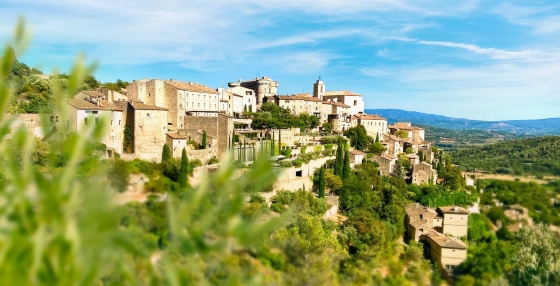
 The 10 most charming villages in France
Discover France's top 10 beautiful villages. From Normandy to the Côte d'Azur, experience quaint squares and cobbled streets. Which one will you visit this summer?
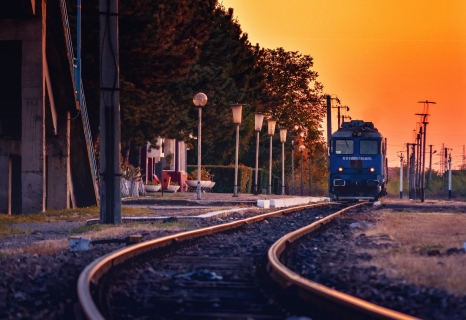
 The train journey from Bucharest to Brasov is one of the most beautiful in Romania
In three hours, you'll get from Bucharest to Brasov by train. It is one of the most beautiful routes in Romania, certainly the most beautiful that can be done by express train.