














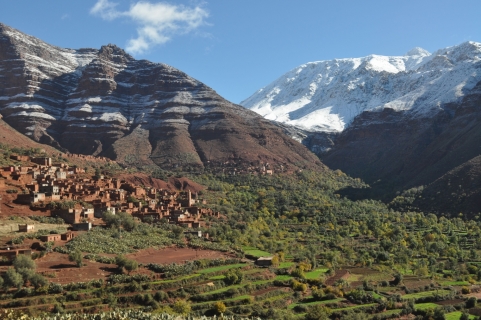
 The Atlas Mountains in Morocco
This mountain range is the second highest mountains in the world and is certainly one of the most natural and wonderful mountains you could ever visit. One for the bucket list for sure.
Average temperatures, rainfall, sunshine and the best time to visit El Harkat.
 –
–
The climate in El Harkat, Marrakesh-Safi, Morocco, is marked by large temperature swings across the seasons, ranging from 35°C (95°F) in July to 18°C (64°F) in January.
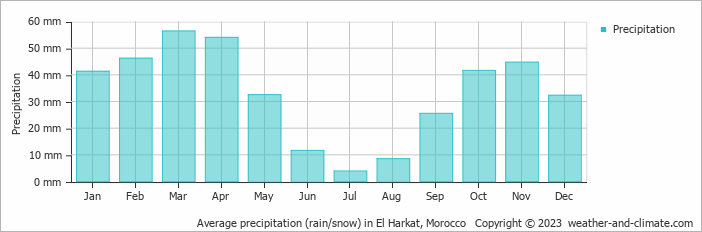
The city tends toward dry conditions, with around 399 mm (16 in) of rainfall per year. It does, however, have a distinct dry season from May to September, with very warm summers and mild winters. July is the sunniest month, averaging 11.2 hours of sunshine per day.
Pick a month to see the average temperature, rainfall and sunshine in El Harkat - and find the best time to visit.
In El Harkat, temperatures differ significantly between summer and winter months. Typically, average maximum daytime temperatures range from a very warm 35°C (95°F) in July to a moderate 18°C (64°F) in the coolest month, January.
Nights vary from 19°C (66°F) in July to around 4°C (39°F) during the colder months.
Check out our detailed temperature page for more information.

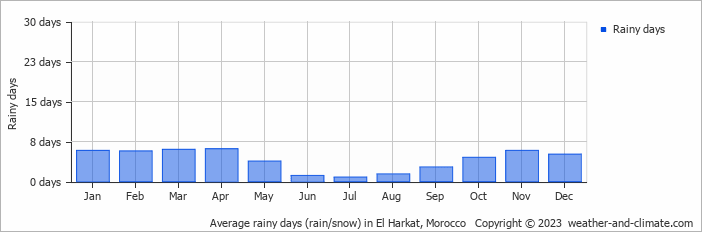
El Harkat typically sees modest rainfall throughout the year, with an average annual precipitation of 399 mm (16 in). The climate in El Harkat shows significant variation throughout the year. Expect moderate rainfall in March, the wettest month, with an average of 56 mm (2.2 in) of precipitation over 6 rainy days.
In contrast, the driest month July offers drier and sunnier days, with around 3.9 mm (0.2 in) of rainfall over a single rainy day. For more details, please visit our El Harkat Precipitation page.
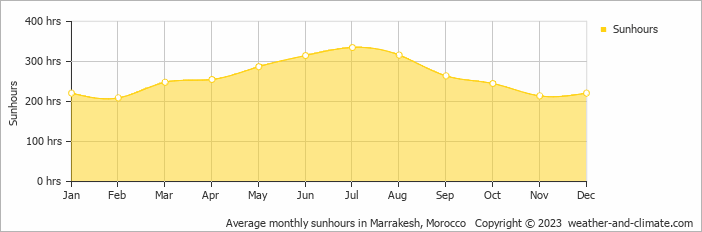
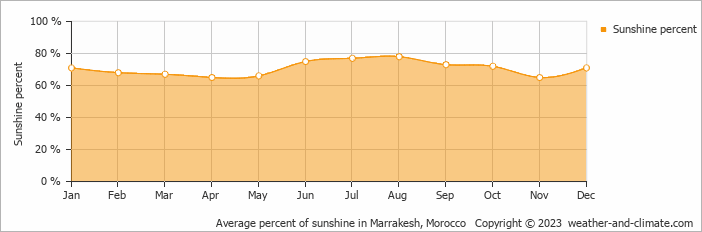
El Harkat offers a pleasant mix of sunny and slightly overcast days. The difference in sunshine hours between July (11.2 hours daily) and February (7.0 hours daily) provides a bit of variety for visitors and residents.
Visit our detailed sunshine hours page for more information.
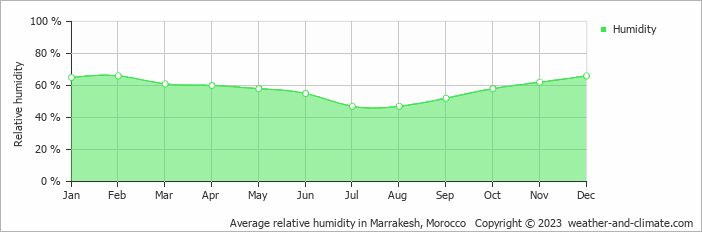
The relative humidity is moderate throughout the year in El Harkat.
The city experiences its highest humidity in February, reaching 66%. In July, the humidity drops to its lowest level at 47%. What does this mean? Read our detailed page on humidity levels for further details.
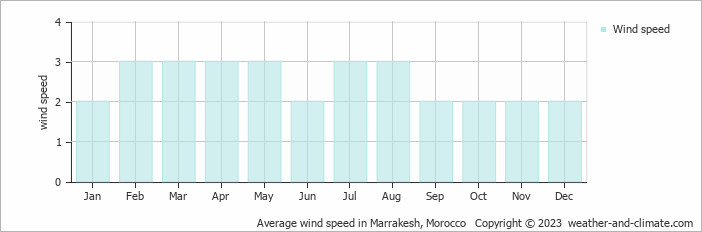
The average wind speed over the year ranges from 2 m/s (4 knots) to 3 m/s (6 knots). It is lower in January, June, September, October, November and December and higher in February, March, April, May, July and August. What does this mean?
Monthly ratings reflect general weather comfort, based on daytime temperature and rainfall. Swimming and winter conditions are highlighted separately where relevant.
March, April, May, October and November typically offer the most optimal weather in El Harkat. In contrast, July and August tend to have less optimal conditions. El Harkat has a distinct dry season from May to September, with very warm summers and mild winters.
Daytime highs range from 18°C (64°F) in January to 35°C (95°F) in July. Nighttime lows range from 4°C (39°F) to 19°C (66°F). Temperatures vary considerably through the year.
Annual rainfall is around 399 mm (16 in). March is the wettest month with 56 mm (2.2 in), while July is the driest with 3.9 mm (0.2 in).
El Harkat receives around 3,130 hours of sunshine per year. July is the sunniest month with 335 hours, while February is the cloudiest with just 209 hours. Overall, El Harkat enjoys abundant sunshine.
El Harkat is highlighted - select any city to see its climate.
Where to go in October - average daytime high across popular destinations.
Merzouga30°C (86°F) Marrakech 28°C (82°F) Fez27°C (81°F) Agadir26°C (79°F) Rabat25°C (77°F) Casablanca25°C (77°F) Essaouira24°C (75°F) Tangier24°C (75°F)
 Need travel inspiration? Check out our bucket list articles and be inspired.
The Atlas Mountains in Morocco
This mountain range is the second highest mountains in the world and is certainly one of the most natural and wonderful mountains you could ever visit. One for the bucket list for sure.
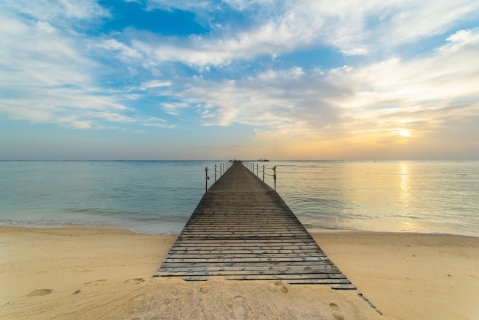
 Where to Go for Christmas: Sun, Value and Fewer Crowds
Where can you find warm Christmas weather without peak-season prices and huge crowds? Compare Marsa Alam, The Gambia, Vietnam, Agadir and Cap Skirring.
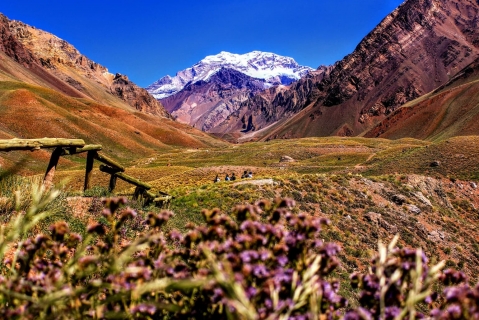
 Warm Days, Cool Nights: 8 Destinations With the Perfect Day-Night Temperature
Prefer warm sunny days but cool evenings? Compare eight destinations with daytime temperatures of around 25–30°C, cooler nights, low rainfall and plenty of sunshine.
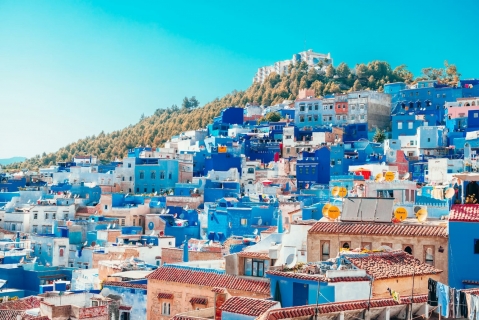 Morocco in October: Where Is the Best Weather?
Compare Morocco weather in October for Marrakesh, Agadir, Essaouira, Fez and Merzouga to find the warmest, driest and sunniest places.